This Shabbat, we delve into the Torah portion of Noah, which culminates in a significant verse stating, “And Terah took his son Abram, his grandson Lot, and his daughter-in-law Sarai, and they went out from Ur of the Chaldees to go to the land of Canaan.” This passage not only represents a pivotal moment in biblical history but also marks the beginning of a remarkable journey for Abraham and his family.
Exploring the Land of Abraham
Jewish travelers often seek to go beyond mere readings of the Torah; they are driven to experience the locations that shaped biblical narratives. In this quest, the Bible transforms from a collection of stories into a living landscape beneath one’s feet. Each trip becomes an adventure of discovery, as we contemplate what life was like for Abraham as he forged his path.
Traveling to Ur of the Chaldees, known in contemporary terms as Urfa in southeastern Turkey, we uncover a rich tapestry of history. Located about 80 km from the Euphrates River and only a short flight from Israel, Urfa is steeped in biblical significance. Though the Turkish government renamed it Sanlıurfa in 1984, many call it “the City of the Prophets,” a nod to its historical connections to Abraham.
A Spiritual Journey in Urfa
Visiting Urfa isn’t just about seeing ancient ruins; it’s an immersive spiritual experience. Unlike typical tourist sites, where one merely snaps photos and moves on, Urfa invites reflection and contemplation. The atmosphere, filled with the scent of grilled meat and vibrant markets, evokes a deep connection to the region’s rich heritage.
At the heart of the city lies a hill adorned with ancient fortress remnants, referred to by locals as “Nimrod’s Throne.” Below this hill is a small cave revered as the birthplace of Abraham. This sacred site is surrounded by tradition, including a synagogue that existed there approximately 1,700 years ago, marking it as a significant pilgrimage location for both Jews and Christians.
As one descends into the cave, the surroundings transform dramatically. The dim light and the embrace of the stony architecture draw visitors deeper into the essence of what it means to stand in this historically rich locale. Among its enduring features, a natural spring flows from the rock, suggesting that this hallowed ground has sustained life for millennia. The rhythmic dripping of water creates an almost meditative atmosphere, allowing visitors to reflect on the deep historical impact of the man born there.
Connecting the Past and Present
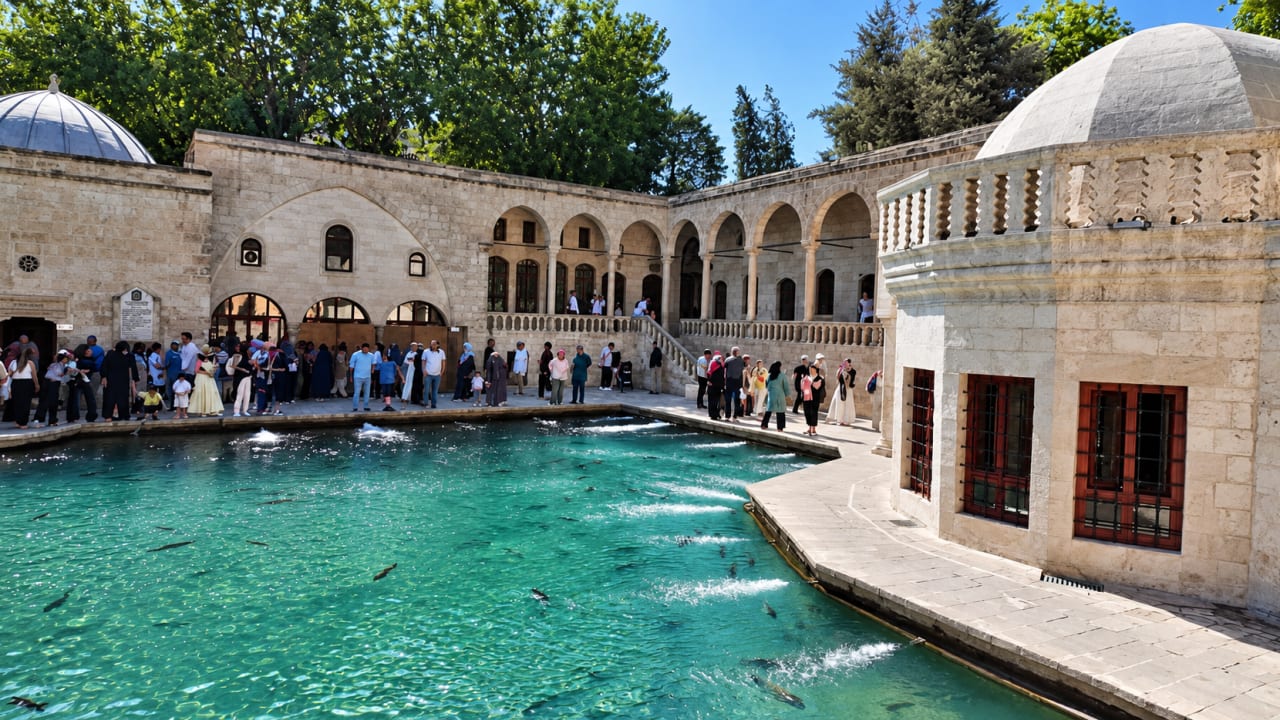
Abraham’s birthplace has become a centerpiece for spiritual seekers from various faiths. The mosque situated near the cave and the nearby Abraham’s Pool, where large carp are considered sacred, highlight the city’s lasting allure. According to local tradition, the fish in the pool symbolize a miraculous event in Abraham’s life, making it a fascinating link between ancient stories and modern experience.
Despite the tumultuous events of history, including the eventual dispersion of the vibrant Jewish community from Urfa, traces of their legacy persist. For centuries, Jews thrived here, contributing to the fabric of the city. Many later migrated to the Land of Israel, retracing Abraham’s own steps toward spiritual fulfillment.
As modern-day visitors leave Urfa, they carry with them not just memories but a continuation of the story. Each footprint retraces a rich narrative that connects the ancient with the contemporary, illustrating that even though journeys may change, the essence of those who have walked before us remains.
In Urfa, the age-old call to “lech lecha” (go forth) resonates, serving as both a historical reminder and a personal invitation for each traveler to engage in their own journey of discovery, reflection, and faith.