
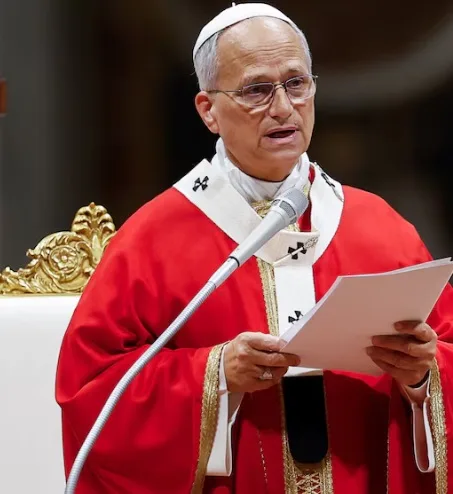
Pope Leo has recently reiterated his opposition to the death penalty, asserting that it undermines the inherent value of human life and robs individuals of their opportunity for redemption. This declaration comes on the heels of a controversial announcement from the Pentagon, which plans to livestream an execution for the first time in U.S. history.
Pentagon’s Historic Livestream Initiative
The U.S. military is preparing to broadcast the execution of Nidal Hasan, the individual responsible for the tragic Fort Hood shooting in 2009 that resulted in the deaths of 13 people. Defence Secretary Pete Hegseth confirmed the livestream plan on Thursday, a move that has ignited significant debate across various sectors. This unprecedented decision raises ethical questions regarding the glorification of violence and the implications of making an execution a public spectacle.
Pope Leo’s Stance Against Capital Punishment
In a social media post, Pope Leo emphasized that society can uphold the common good and ensure justice without resorting to capital punishment. His remarks align with the Catholic Church’s longstanding position that the death penalty is “inadmissible.” He argued that executing individuals is an affront to both their dignity and the fundamental right to life. By timing his message with the World Day Against the Death Penalty, Pope Leo is amplifying the conversation around this contentious issue, advocating for alternatives that prioritize rehabilitation over retribution.
Opposition and Controversy
The Pentagon’s decision to allow a live broadcast of the execution has met with pushback from various stakeholders, including legislators, religious groups, and human rights advocates. This backlash underscores a growing sentiment that the public display of such an act could desensitize people to violence and diminish the seriousness of taking a life, even in the context of punishment. Many are concerned that presenting capital punishment as entertainment contradicts the principles of justice and humanity, a point underscored by Pope Leo in his call for greater compassion within the justice system.
The Broader Implications
As discussions around the death penalty continue, the implications of this forthcoming execution extend beyond the individual case. It prompts a broader evaluation of how societies view justice and punishment. The idea that executing someone can be justified raises questions about societal values and the potential for reform in the judicial process. Pope Leo’s condemnation highlights the necessity for dialogue and action toward solutions that consider both accountability and the dignity of individuals, regardless of their actions.
By fostering awareness and advocating for meaningful change, both the Pope and various detractors of the Pentagon’s livestream initiative are steering the conversation toward the possibility of a justice system that emphasizes mercy and the potential for redemption, rather than one that perpetuates cycles of violence.