
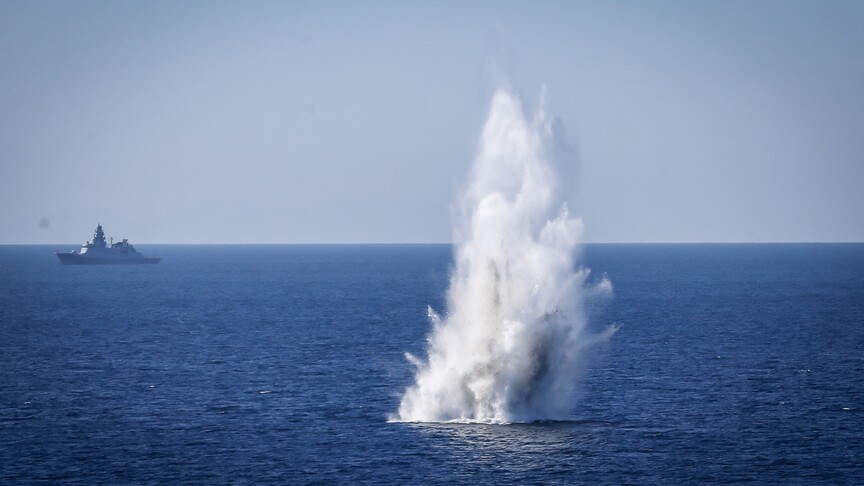
On October 10, 2026, a significant incident took place in the Strait of Hormuz, underscoring the region’s escalating tensions. The Islamic Revolutionary Guard Corps (IRGC) of Iran reported that an oil supertanker encountered a naval mine while trying to exit the strait via an unauthorized route, leading to a massive explosion.
Details of the Incident
According to the IRGC’s statement, the supertanker, which has the capacity to transport approximately 2 million barrels of oil, had turned off its navigation systems prior to attempting the crossing. The explosion was powerful enough to be witnessed from nearby coastal areas. The IRGC issued a stern warning emphasizing the dire consequences for any vessel that disregards regulations in the busy Strait of Hormuz, stating, “the fate of every vessel that ignores the rules in the Strait of Hormuz is a horrific fire.”
As of this report, there was no information available regarding the identity of the vessel, its crew, or any potential casualties resulting from this incident. Just a day prior, Iranian state television had reported several heavy explosions in the strait, suggesting that unauthorized oil tankers might have struck mines. This reiterates the increasing hazards in the already volatile region.
The Broader Context
Tensions in the Strait of Hormuz have been heightened since mid-July, when Iran announced the closure of the strait due to the resumption of U.S. attacks. This closure was prompted by escalating military actions following U.S.-Iran conflicts. The U.S. and Israel had launched a significant military engagement against Iran on February 28, which resulted in numerous fatalities. Iran retaliated, causing casualties among American and Israeli forces, but a ceasefire was eventually established in April.
Despite the cessation of direct hostilities, U.S. strikes on Iranian positions have continued amid stalled diplomatic negotiations. The lack of progress is evident, particularly in discussions surrounding navigation rights in the Strait of Hormuz, a critical artery for global energy trade. As geopolitical tensions remain palpable, navigation through this vital waterway is fraught with uncertainty.
Implications for Global Shipping
The recent incident with the supertanker has raised alarms about maritime safety in one of the world’s most crucial shipping lanes. The Strait of Hormuz is a critical conduit for oil and gas supplies, and any disruption can have significant repercussions for global markets. Higher risks of naval mines and military confrontations may deter vessels from using this route, leading to increased shipping costs and delays.
As countries worldwide monitor the situation closely, the potential for further escalations looms large. With threats from Iran regarding the targeting of vessels using unauthorized routes, shipping companies must weigh the risks associated with navigating through the Strait of Hormuz.
In conclusion, the explosion of the oil supertanker is a stark reminder of the fragile security landscape in the Strait of Hormuz. The ongoing tensions between Iran, the U.S., and regional players suggest that the situation is unlikely to stabilize soon. As stakeholders consider their options, global shipping might face a future defined by caution and increased operational challenges.