
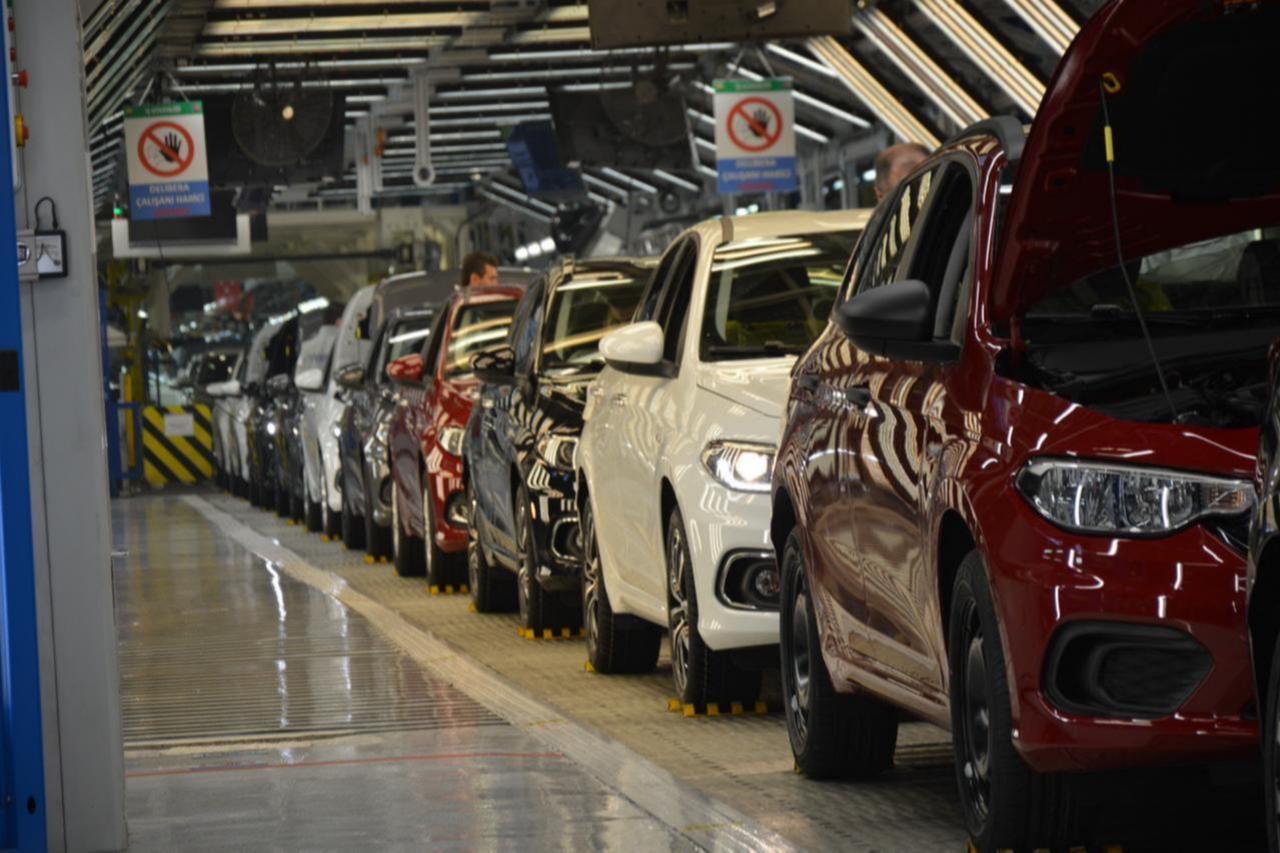
Türkiye’s automotive industry showcased significant growth in 2025, producing 1.42 million vehicles and surpassing Canada in the global manufacturing landscape. This development was highlighted by data from the International Organization of Motor Vehicle Manufacturers (OICA), indicating that Türkiye continues to solidify its place as a key player in the global automotive market.
Türkiye’s Performance in the Global Automotive Sector
In 2025, the worldwide vehicle production reached an impressive 96.38 million units, reflecting a year-on-year increase of 3.9%. Türkiye’s own output not only grew by 4% to 1.42 million vehicles, but it also ranked 13th among the top automotive producers globally. This milestone positioned Türkiye ahead of several prominent manufacturing nations, including Canada, Indonesia, Slovakia, and the United Kingdom. Despite its achievements, Türkiye fell short of breaking into the top 12, which is currently held by Czechia at 1.45 million vehicles.
Canada’s decline contributed significantly to Türkiye’s rise in rankings, as its production dropped, allowing Türkiye to leapfrog into a higher position. In contrast, other European nations faced varied manufacturing outcomes. For instance, Germany managed a 2% increase to 4.15 million vehicles, while Spain saw a decrease of 4.3% to 2.27 million. Notably, Italy experienced a steep reduction of 19.8% in its automotive production figures, culminating in 474,044 vehicles, whereas the UK faced a decline of 15.5%.
China Maintains Dominance in Vehicle Production
China retained its title as the world’s largest vehicle producer for the 17th consecutive year, with an output of 34.53 million vehicles—an increase of 10.4% from the previous year. This monumental achievement expanded China’s lead over the United States, which remained in second place by producing 10.24 million vehicles. The sheer volume of Chinese production dwarfs that of many other nations, as its annual output surpassed Brazil’s total production by around 3.2 million vehicles.
Other top contenders included Japan, which produced 8.41 million vehicles, and India, finishing fourth with an increase of 7.9% to 6.49 million. Meanwhile, South Korea’s production declined slightly by 0.6%, resulting in 4.10 million vehicles. Similarly, Indonesia’s output fell by 4.1%, and Malaysia faced a decline of 5.4%, illustrating a challenging environment for several automotive manufacturers across the globe.
Regional Insights: Shifting Trends in Production
Asia and Oceania demonstrated robust growth in vehicle production in 2025, totaling 59.21 million vehicles—a 7.6% increase from the previous year. Europe, on the other hand, recorded a slight decline of 0.8% with an output of 17.20 million units. The Americas experienced a more substantial downturn, with production falling to 18.74 million vehicles, a decrease of 2.1%.
Within North America, a collective reduction of around 491,000 vehicles marked a 3.1% yearly decline among the United States, Canada, and Mexico. Canada experienced the most significant drop, with a 7.6% decrease to 1.24 million vehicles produced. The automotive landscape in South America was more positive, however, with an uptick of 2.8% to 3.17 million vehicles, primarily driven by Brazil’s growth.
Finally, Africa’s production dynamics presented a mixed picture, totaling 1.23 million vehicles—almost unchanged from the previous year. While Morocco faced a notable decline in output, South Africa managed a modest increase, showcasing the varied automotive capabilities across the continent.
As Türkiye continues to navigate its position in this competitive industry, it aims to further boost production and innovate within its automotive sector, potentially impacting global rankings in the coming years.