
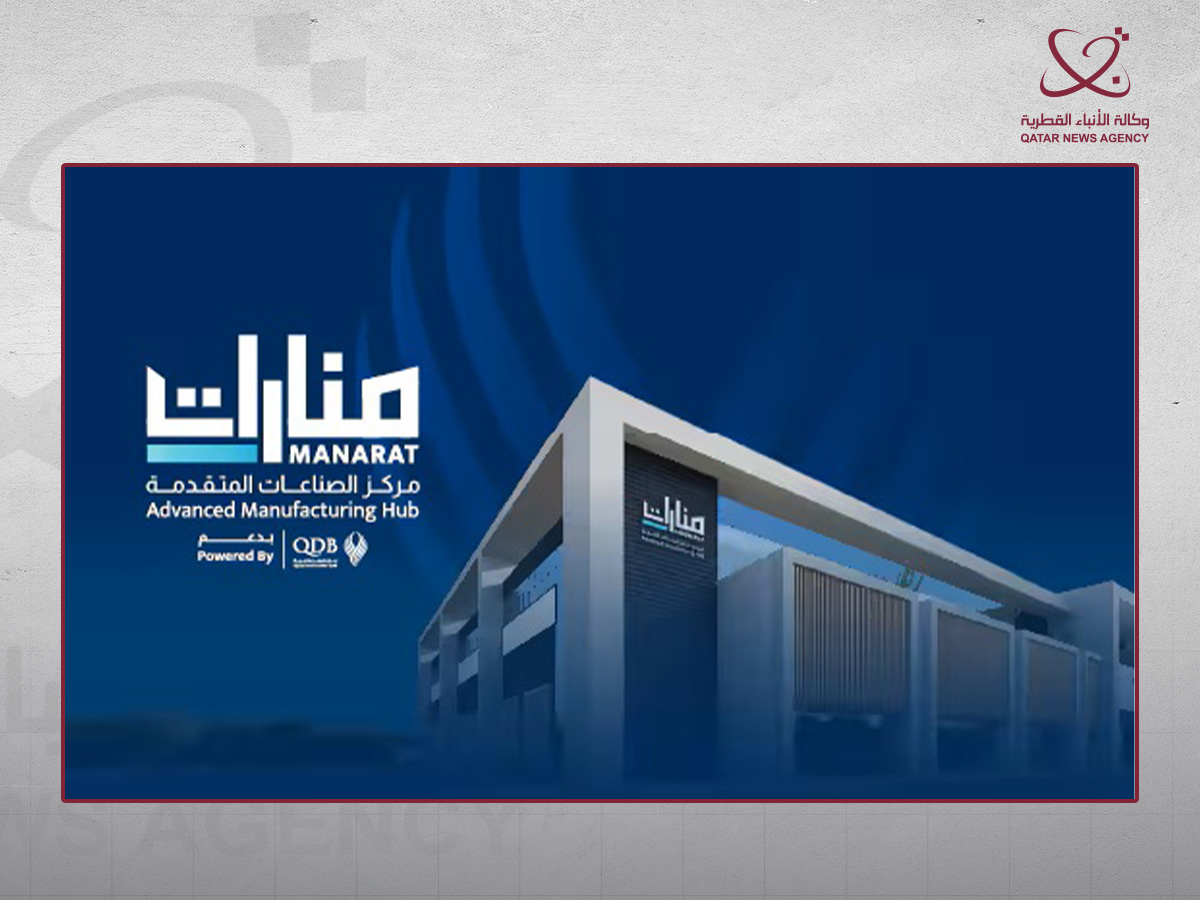
Qatar is taking significant strides toward enhancing its industrial landscape through initiatives that focus on leveraging advanced technologies. The Qatar Development Bank (QDB) plays a vital role in this transformation, spearheading efforts that empower local businesses to thrive in today’s competitive global market.
Available Support Mechanisms
According to Dr. Hamad Salem Mejegheer, Executive Director of Advisory at QDB, various support mechanisms are in place to foster industrial growth. These include financing options accessible through the National Funding Gate (Tamkeen), designed specifically to assist applicants with capital and operational expenses. Alongside funding, services such as consultancy and training are tailored to enhance operational efficiency and encourage the uptake of innovative manufacturing solutions. Additionally, QDB provides export support, encompassing financing, insurance, and practical assistance in integrating with both regional and global supply chains.
Dr. Mejegheer emphasized that unit lease agreements for industrial spaces can extend up to five years, with a renewable option and an initial grace period of six months. To successfully launch projects at the center, prospective applicants must showcase the technical and economic viability of their proposals, establish market demand, and submit comprehensive operational plans that highlight readiness to adopt technologies associated with the Fourth Industrial Revolution.
Project Launch Procedures and Requirements
Once a project receives approval, necessary steps are taken to ensure compliance and readiness. This includes thorough document verification, preparation of lease agreements, and plan reviews. The interior fit-out is executed, requiring approval from QDB and relevant authorities such as Civil Defence and KAHRAMAA. Manufacturing can commence once all fit-out, compliance approvals, and utility activations are complete.
Dr. Mejegheer also noted that the initiative supports a new industrial zone featuring 12 units measuring 1,210 square meters and four units of 695 square meters, all equipped with adaptable power supplies, air conditioning, and comprehensive safety systems.
Facilitating Knowledge Exchange
The Center for the Fourth Industrial Revolution at Qatar’s Ministry of Finance, led by Dr. Abdulaziz Al Ali, plays a crucial role in facilitating knowledge transfer. The center collaborates with local partners, the World Economic Forum, and other global Fourth Industrial Revolution Centers to bring the best practices in smart manufacturing to Qatar. Dr. Al Ali highlighted ongoing studies and discussions aimed at introducing advanced global methodologies to improve local manufacturing capabilities.
The center is actively working alongside the World Economic Forum’s Advanced Manufacturing and Supply Chains Center to launch sub-projects with QDB and the Ministry of Commerce and Industry (MOCI). He elaborated on the transformative technologies expected to shape the future of manufacturing, which include the Industrial Internet of Things (IIoT) and Industrial Artificial Intelligence (AI). These innovations promise to enhance productivity, improve quality, and enable predictive maintenance, thereby streamlining operations across the sector.
Industry Goals and Future Outlook
Abdulla Ghanim Al Maadeed, Director of the Industrial Development Department at MOCI, highlighted the Advanced Manufacturing Hub (Manarat) as a crucial initiative designed to support Qatar’s vision for a more advanced industrial sector. The overarching goal is to create an enabling environment that encourages the integration of technologies such as AI and automation into local factories, enhancing their efficiency and competitiveness.
As Qatar strives to adapt to rapid global economic changes, the ability to innovate with data and digital solutions is becoming a keystone in determining the country’s standing within international value chains. Manarat not only offers industrial units but also represents a shift toward a modernized industrial model in Qatar. It aims to balance improving existing manufacturing efficiency while fostering the development of a new wave of advanced, globally competitive factories. Through such initiatives, Qatar aspires to position its industries among the global leaders in smart manufacturing, creating an integrated ecosystem that combines technology, finance, and market access to realize a robust industrial future.