
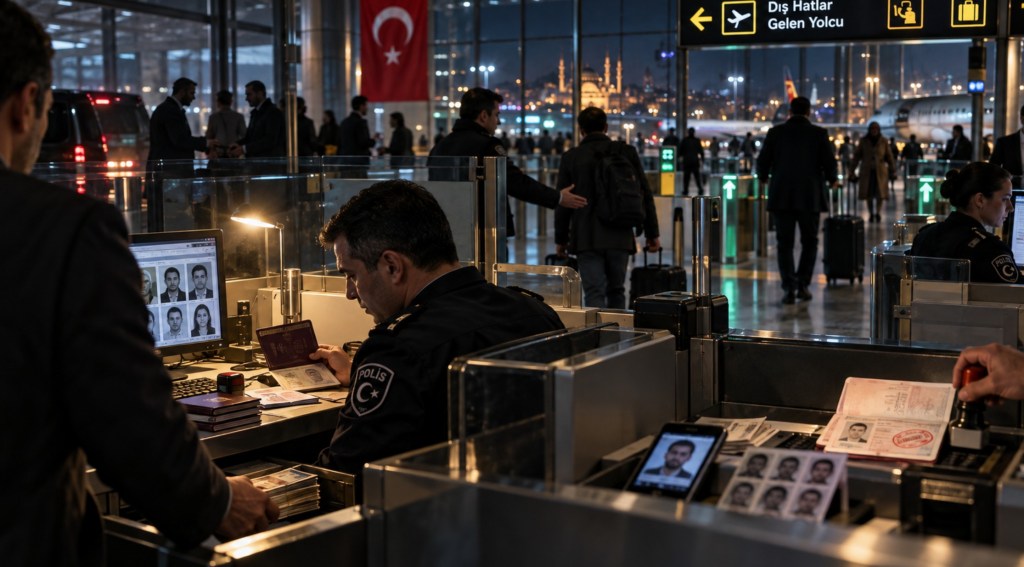
In a startling revelation, a clandestine operation has been uncovered, enabling individuals to enter Turkey without undergoing standard immigration protocols or leaving any official trace of their entry. This scheme was brought to light through a legal case that exposed a corrupt police officer, who allegedly operated within a broader network, manipulating the nation’s border security in exchange for bribes while stationed at Istanbul’s primary international airport.
Corruption Within Turkey’s Immigration System
The case raises alarming questions about the susceptibility of Turkey’s immigration system to corruption, suggesting that organized crime networks may exploit vulnerabilities for their purposes. The April 29, 2025, ruling from Turkey’s Supreme Court of Appeals (Yargıtay) revealed that a police officer in charge of passport control at Istanbul Atatürk Airport facilitated clandestine entries in two ways. First, he registered fake entries for individuals who had already entered Turkey outside authorized checkpoints. Secondly, he failed to document the arrivals of foreign passengers coming through the airport.
These illicit operations pose potential advantages for fugitives, international criminals, and those aiming to bypass immigration regulation. Although the ruling does not specify the beneficiaries or their links to organized crime, the complexity of the operation hints at a more extensive network involving other intermediaries.
Details of the Illicit Operation
The Supreme Court provided a detailed account of the methods employed to subvert standard border control practices. The police officer utilized his position to assist individuals in establishing a formal entry record without subjecting them to the typical scrutinies conducted at border crossings. He also allowed foreign nationals arriving on international flights to bypass official registration altogether.
Photographs of specific passengers were reportedly sent to the officer ahead of their arrivals. Once those individuals approached his checkpoint, he would let them in without logging their entry. This method eliminated the possibility of an overt transaction at the airport, helping avoid detection by other officials or travelers. However, the investigation did not pursue leads on who collected these photographs or how they were sent, raising concerns over potential high-level involvement in the scheme.
Legal Implications of the Uncovered Scheme
The case commenced in Istanbul’s criminal courts and initially concluded with the acquittal of the defendants, despite substantial evidence, including the officer’s own confession. This raised suspicions that the network behind the scheme may have manipulated legal outcomes. However, the Istanbul Regional Court of Appeals later overturned the acquittal and convicted both men, sentencing the officer to over three years in prison for accepting bribes.
Surprisingly, on January 31, 2019, the Supreme Court overturned the conviction, a decision that suggests the officer may have enjoyed protective connections within Turkish law enforcement. This ruling sent a troublesome message about accountability among officials entrusted with maintaining the nation’s immigration integrity. The scheme effectively exposed a systemic vulnerability, showing that a corrupt official could falsely make certain individuals appear to have entered the country legitimately.
The Broader Crime Landscape in Turkey
This case shines a light on a larger security issue: how many individuals have entered Turkey through similarly corrupt practices and evaded official documentation? Over the past decade, numerous well-known organized crime figures and drug traffickers have reportedly found refuge in Turkey, with some acquiring residence permits and even citizenship under fraudulent identities. Despite international pressure, many remain untouched, raising questions about their connections to Turkish authorities and the protections they receive.
In conclusion, the unearthing of this immigration control scheme not only underscores the potential corruption within Turkey’s border security but also raises critical questions about the extent of organized crime’s infiltration into various state institutions. The ongoing challenges in addressing this issue further complicate Turkey’s trajectory in handling immigration and upholding its legal systems.