
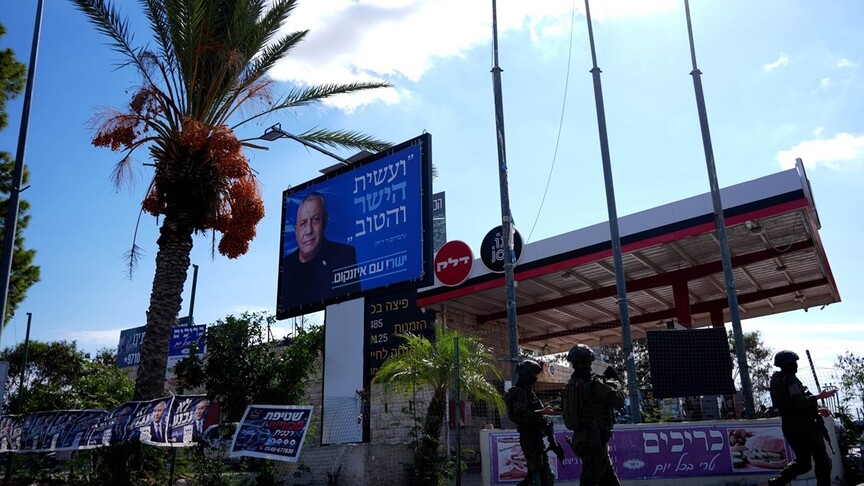
In a recent political landscape in Israel, a poll has revealed intriguing insights regarding the upcoming elections. With the race heating up for the prime ministerial seat, recent voter sentiments show a shifting tide away from long-standing leadership as Israelis prepare to cast their votes on October 27.
Poll Results Favor Eisenkot Over Netanyahu
The survey, released by the public broadcaster KAN, indicates a notable advantage for Gadi Eisenkot, the former Israeli Army Chief of Staff. The poll shows Eisenkot leading Prime Minister Benjamin Netanyahu by a margin of 43% to 38% regarding who is perceived as more capable of leading the nation. This marks a significant moment for Eisenkot, whose Yashar party is projected to gain 22 seats in the 120-member Knesset, surpassing Netanyahu’s Likud party, which is anticipated to secure 20 seats—a decrease from the previous week’s poll.
Despite some gains, Netanyahu’s coalition has struggled to solidify a parliamentary majority. With only 53 seats projected for his bloc, they remain eight seats short of the 61 needed to form an effective government. This suggests a potential deadlock in parliamentary negotiations should the results hold.
Electoral Dynamics and Party Projections
The dynamics in the upcoming elections showcase a complex landscape. Eisenkot’s bloc is forecast to claim 50 seats, while 17 seats are expected to go to parties that do not belong to either major camp. Observations suggest that Arab parties, for example, are projected to collectively earn 13 seats, with the Joint List estimated to secure eight and the United Arab List, led by Mansour Abbas, anticipated to gain five.
Within Netanyahu’s coalition, the results reveal mixed fortunes for various factions. National Security Minister Itamar Ben-Gvir’s Jewish Power party is expected to garner nine seats, with United Torah Judaism and Shas receiving eight and seven seats respectively. The Religious Zionism–Zehut alliance is projected to achieve five seats, indicating that traditional support for Netanyahu’s bloc may be fragmenting.
Voter Sentiment and Potential Uncertainty
The poll however reveals significant uncertainty among voters, with 30% undecided on their party preferences and 21% contemplating abstaining from voting altogether. This level of indecision emphasizes the shifting political climate in Israel, as many citizens grapple with their choices ahead of the elections.
Moreover, the survey highlights a desire for transparency in political discourse, as 54% of respondents expressed support for a televised debate between Netanyahu and Eisenkot. This included 38% of likely Likud voters, showing a healthy interest in engaging with the candidates and understanding their positions.
The results suggest a challenging road ahead for both Netanyahu’s coalition and the opposing Jewish bloc, as neither appears positioned to independently secure the requisite majority for government formation. With a high level of electoral uncertainty and divided voter allegiances, the upcoming elections are shaping up to be both pivotal and unpredictable in the future trajectory of Israeli politics.