
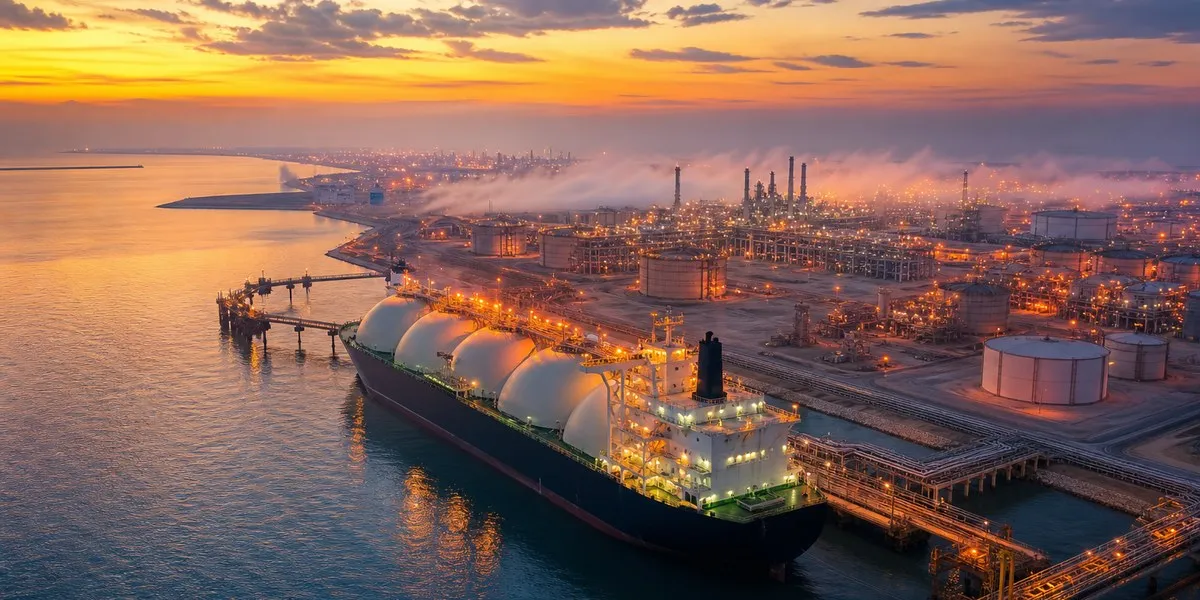
In Qatar, the export of liquefied natural gas (LNG) continues to face substantial limitations despite a modest recovery in oil shipments passing through the Strait of Hormuz. According to data from analytics company Kpler, LNG shipments from Qatar are projected to drop significantly to 0.6 million tonnes in October, a stark decrease from 1.6 million tonnes in September. This contraction is likely related to a surge in assaults on ships in the area.
### Current LNG Export Trends
September marked the highest volume of LNG exports since the onset of regional conflict, yet these figures were still only a fraction of the pre-war export levels. Kpler reports that the total export in September amounted to less than 25% of what was typically sent out before hostilities began. Notably, around one-third of the LNG shipped in September went to Kuwait, with the remainder primarily destined for markets in China, India, and other countries across Asia.
### Oil Shipments Show Resilience
In contrast to the LNG sector, oil shipments from the Middle East through the Strait of Hormuz have rebounded at a faster pace. In September alone, shipments reached approximately 16 million barrels per day, which is around 80% of the pre-conflict norms. This resurgence has allowed regional players like Saudi Arabia, the UAE, Kuwait, and Iraq to ramp up production considerably. However, the recovery in LNG transport remains sluggish, especially as QatarEnergy has issued force majeure notices, indicating challenges in delivering cargoes to numerous clients in Asia and Europe. The gap in the fleet between oil tankers and LNG carriers poses additional complications, as the latter are often more expensive to operate.
### Production Challenges for Qatar
As the world’s second-largest LNG producer, following the United States, Qatar boasts an annual capacity of nearly 80 million tonnes, which constitutes about 20% of the global LNG supply. However, the conflict has forced Qatar to halt significant portions of the Ras Laffan complex due to Iranian missile strikes that have reportedly hindered about 17% of its export capacity.
To revitalize its export figures, Qatar must enhance production levels at the North Field, a resource shared with Iran. The extraction of condensate alongside natural gas requires careful separation and timely export. If dependable export routes are not established, Qatar risks rapidly filling its storage facilities, which would constrict further gas production. Furthermore, the country has limited land and vessel storage capacity for LNG.
### Future Outlook and Expansion Plans
Qatar is in the process of implementing a strategic plan to elevate its LNG production capacity to 142 million tonnes annually by the year 2030. However, the success of this initiative is closely tied to the stability and safety of navigational routes through the Strait of Hormuz. The geopolitical landscape in this region remains precarious, and any escalation in hostilities could have dire repercussions for Qatar’s LNG ambitions.
In summary, while oil shipments have shown resilience and are nearing pre-war levels, the outlook for Qatar’s LNG exports remains precarious. Without a resolution to the ongoing conflicts and improved logistical conditions, Qatari LNG production and exports may continue to face severe challenges in the coming months.