
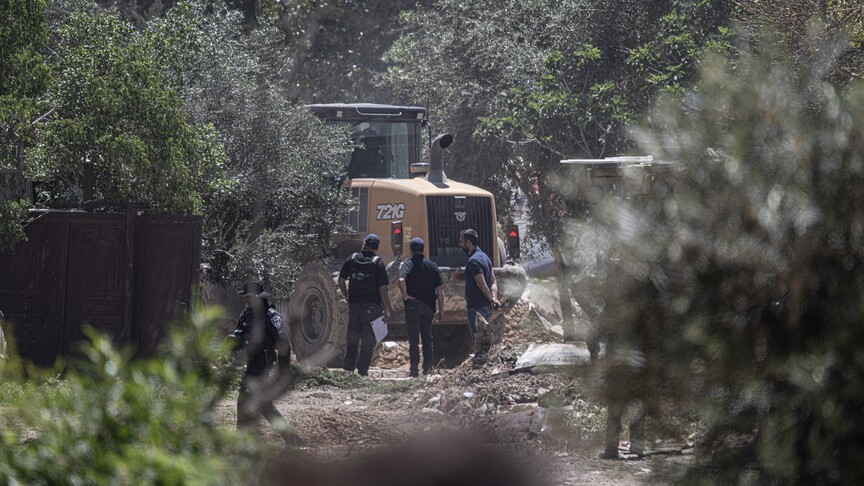
Israeli authorities have recently taken significant actions that have sparked controversy and condemnation concerning the demolition of homes in the Palestinian village of Al-Dhahiya. Approximately 80 homes were demolished in this unrecognized village, which lies in the Negev region of southern Israel, displacing around 400 residents. These events have raised concerns that National Security Minister Itamar Ben-Gvir is leveraging these demolitions for political gains leading up to the upcoming elections.
Demolition Operations in Al-Dhahiya
Reports from the Israeli public broadcaster KAN revealed that demolition teams, accompanied by police reinforcements under Ben-Gvir’s ministry, carried out the operation based on claims that the structures were built without permits. The demolitions proceeded despite a petition filed in the Beersheba District Court seeking a postponement, ultimately resulting in the forced displacement of numerous families.
In the weeks leading up to this incident, Ben-Gvir has made headlines by emphasizing his commitment to demolishing homes belonging to Palestinian citizens of Israel—often referred to as Israeli Arabs. This focus has led to a sharp increase in home demolitions across various Palestinian communities, raising eyebrows about the motivations behind such aggressive enforcement measures.
Political Backlash and Community Response
The Joint List, an alliance of three Arab political parties, has condemned these home demolitions, characterizing them as a severe violation of fundamental human and national rights. Public statements from party leaders highlight a pattern of systematic demolitions and displacement affecting Arab villages in the Negev, suggesting that these actions are more about reinforcing a political agenda than legal enforcement.
Hassan al-Nasasra, deputy mayor of Rahat, echoed these concerns, asserting that the actions reflect an underlying trend of using administrative measures for electoral propaganda rather than genuine legal compliance. The Israeli authorities have been similarly criticized for the ongoing trend of demolishing homes in unrecognized villages, where residents lack the agency to obtain building permits due to a lack of state infrastructural planning.
The Plight of Unrecognized Villages in the Negev
Many Palestinian villages in the Negev remain unrecognized by the Israeli government, resulting in residents being deprived of basic services such as water, electricity, and roads. This systemic neglect has exacerbated the ongoing humanitarian crisis in these communities. Last year, reports indicated a staggering 400% increase in demolition orders in the region, highlighting a targeted campaign against the Bedouin community—a group with deep historical roots in the area.
The upcoming general elections, scheduled for October 27, have further intensified concerns over the politicization of these demolitions. United Arab List leader Mansour Abbas expressed alarm at the apparent weaponization of home demolitions for political leverage. He has called for an immediate halt to demolition orders during the election period, arguing that it undermines the integrity of the electoral process.
As these challenges continue to unfold, the situation remains tense, exemplifying the complex interplay of local governance, community rights, and political maneuvering in the region. The plight of residents in unrecognized villages in the Negev exemplifies a larger narrative of struggle for land and recognition that persists amid an ongoing conflict.