
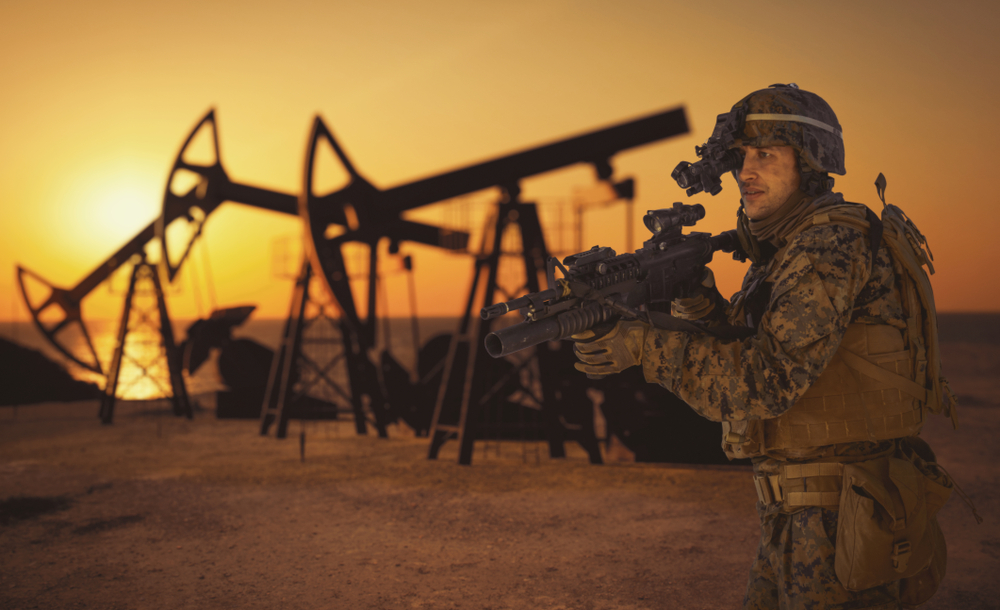
The Trump administration appears to be revamping its strategy in Iraq, focusing particularly on securing control over the nation’s oil resources. While President Trump has publicly stated intentions to withdraw U.S. forces, his administration is working behind the scenes to influence Iraq’s leadership, aiming to carve out favorable oil agreements for American companies.
Manipulating Iraq’s Leadership
Despite the recent withdrawal of U.S. military forces in accordance with a deal with the Iraqi government, the Trump administration has not stepped back entirely. Instead, it is exerting economic and political influence to manipulate the selection of Iraq’s leadership. Earlier this year, the administration intervened decisively by blocking former Prime Minister Nuri Kamal al-Maliki from reclaiming power, facilitating the rise of businessman Ali al-Zaidi as the new prime minister. This interference illustrates Trump’s willingness to leverage political pressure, including the suspension of funding for Iraqi security forces, to achieve strategic goals.
Trump’s interest in al-Zaidi aligns with his administration’s overarching plan to reshape Iraq’s oil sector. By offering a semblance of support to al-Zaidi—who has ties to various economic interests including a bank alleged to have links to Iran—Trump has set the stage for what he considers a forthcoming oil bonanza. Trump even remarked earlier this year about the prospect of significantly increasing oil flow from Iraq to the U.S., a sentiment echoed during al-Zaidi’s visit to the White House.
Challenges To U.S. Influence
Although the administration is optimistic about its ability to exploit Iraq’s resources, deep-seated skepticism exists among establishment figures. Many experts question the Trump administration’s strategy, pointing to the complicated geopolitical landscape in Iraq, where various militias still wield considerable power. Concerns over militias’ influence—some of which receive backing from Iran—may pose significant roadblocks to U.S. objectives. Former U.S. Ambassador to Iraq Alina Romanowski has highlighted the challenges facing U.S. corporations looking to invest in a country where armed groups significantly complicate the operational climate.
The lingering question is whether al-Zaidi can deliver on promises to disband these militias, a task he has already postponed. As long as these factions operate independently, the risks for American businesses aiming to enter the Iraqi market remain high. Establishment voices in and out of the government warn that without successfully mitigating these threats, U.S. efforts may ultimately prove futile.
Implications of Ongoing Strategies
The Trump administration’s ambitions not only face opposition from militias but also significant uncertainties regarding U.S. foreign policy and regional support. As dynamics in the Middle East shift, several Arab allies are pulling back on their support for aggressive U.S. actions, complicating military operations. Additionally, rising skepticism among the American public regarding military intervention in the region could make it increasingly difficult for the administration to sustain its current foreign policy agenda.
Despite these challenges, it seems that the Trump administration remains steadfast in its quest to secure Iraq’s oil for American enterprises. Rather than withdrawing from a troubled region after years of conflict, the administration is focusing on a model that aligns with Trump’s infamous guidance to “take the oil.” Assertions of imperial ambition in Iraq could lead to further destabilization, raising concerns for both the Iraqi populace and American investors.
In summation, the Trump administration’s efforts in Iraq exhibit a pronounced determination to prioritize U.S. energy interests, even amidst mounting challenges. This strategy, while promising immediate economic gains for U.S. companies, risks exacerbating long-term instability in the region, calling into question the efficacy of ongoing U.S. imperial dreams.