
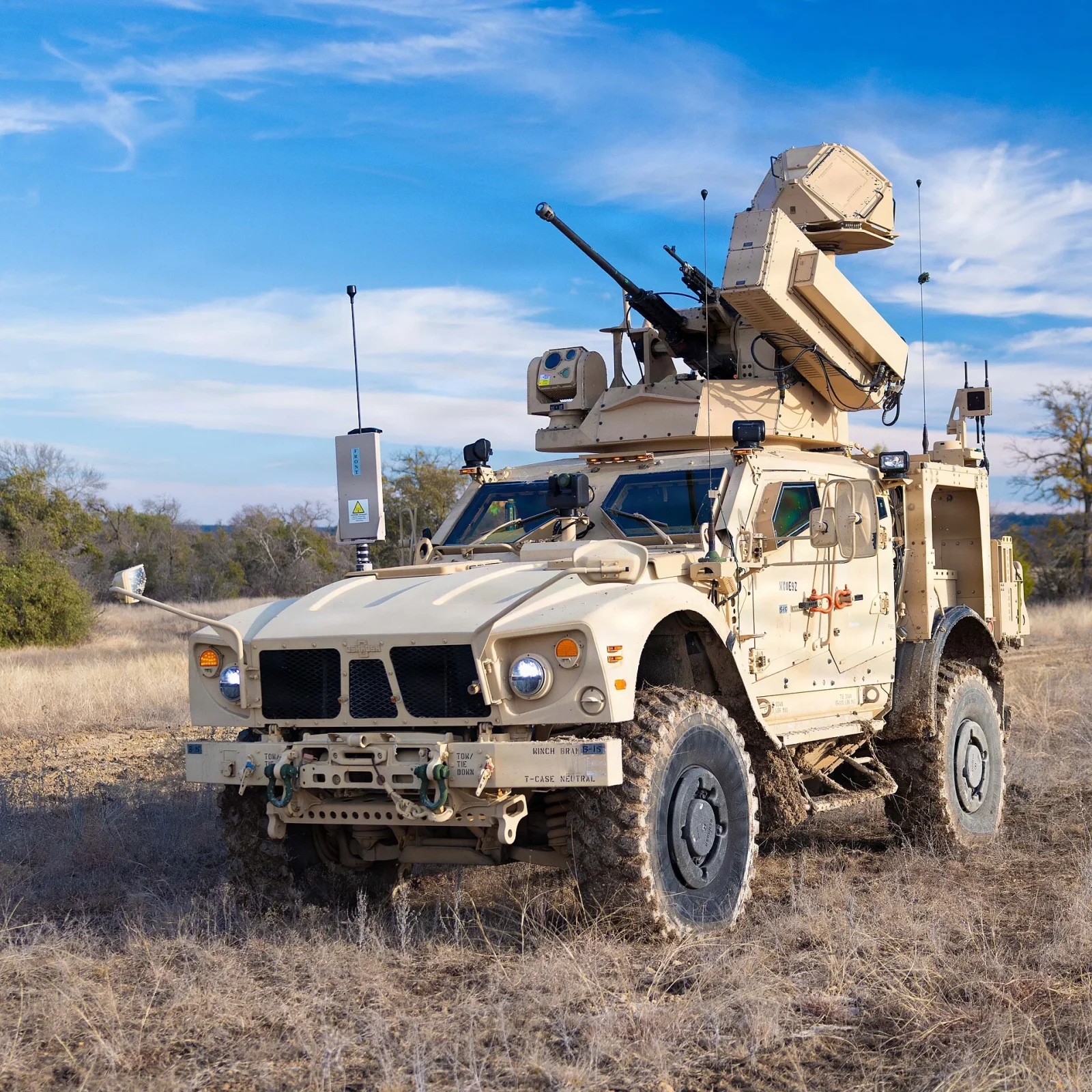
Raytheon has secured contracts worth $729 million to provide components of the U.S. Army’s Low, Slow, Small Unmanned Aircraft Integrated Defeat System (LIDS) to the Army and international customers including Qatar and Jordan. The announcement made on October 13, 2026, marks the first time Raytheon has sold its Ku-band Radio Frequency Sensor (KuRFS) and Coyote interceptor abroad.
Overview of the Contracts
According to the announcement from Raytheon’s Tucson, Arizona facility, the contracts encompass essential components of the LIDS, catering to both fixed and mobile configurations. This means the buyers are receiving protection for both stationary infrastructure and portable systems that can accompany ground forces during operations. Specific details pertaining to the allocation of the $729 million among the Army, Qatar, and Jordan, the number of systems involved, or delivery timelines were not disclosed. Nonetheless, it’s confirmed that Qatar and Jordan are pioneering international users of the KuRFS-Coyote system.
Tom Laliberty, the president of Raytheon’s Land and Air Defense Systems, emphasized the efficacy and cost-effectiveness of LIDS in providing necessary defense against hostile drones for allied forces. He noted that the company is ramping up Coyote production and investing in additional capabilities to address the increasing global demand for counter-drone technologies.
Components: The Sensor and Effector Duo
The KuRFS radar serves as the detection mechanism, utilizing an active electronically scanned array for comprehensive 360-degree coverage. Raytheon promotes this radar for both counter-unmanned aerial systems (UAS) and counter-rocket, artillery, and mortar missions. Its advanced features allow it to differentiate between various small objects, thereby minimizing misidentifications— a common difficulty for short-range air defense teams.
On the interception side, the Coyote drones, particularly the Block 2 variant, function as expendable interceptors equipped with kinetic warheads. In contrast, the Block 3NK variant is designed for prolonged engagements, featuring a non-kinetic payload that can be loitered and reused. Raytheon claims that Coyote drones have successfully completed hundreds of combat intercepts from multiple platforms, including land, sea, and air.
Moreover, the KuRFS system is versatile, allowing integration with various effectors such as land-based Phalanx systems and high-energy lasers. This flexibility enables operators to scale their systems over time without needing to replace the radar itself.
Advancements in Coyote Technology
Just one day prior, on October 12, Raytheon announced that it had successfully conducted three developmental tests of the Coyote Block 2C+RM variant. The accelerated upgrade transitioned from concept to testing phase in just 15 months. These trials confirmed the Coyote’s initial integration with existing counter-drone architectures and included the first launches of a model equipped with a tactical rocket motor.
The upgraded variant replaces previous turbine engines with a rocket motor that enhances engagement speeds and allows for quicker follow-up shots. Additionally, a new seeker and warhead have been incorporated, designed to counteract a wide array of both current and upcoming drone threats. This information was shared during the AUSA 2026 annual meeting.
The Significance of Qatar and Jordan
Both Qatar and Jordan maintain considerable U.S. military presence. Qatar’s Al Udeid Air Base serves as a pivotal forward operations hub for U.S. Central Command, while Jordan’s proximity to Syria and Iraq has exposed it to drone threats, highlighted by a January 2024 drone strike that claimed the lives of three U.S. soldiers. Adopting the same defense framework as the U.S. Army should facilitate joint training, logistics, and situational awareness.
The ability to use fixed installations at airbases, energy facilities, and government buildings, alongside mobile systems for border security, positions these countries to better address aerial threats. In a market already crowded with competitors for short-range air defense systems, Raytheon’s entry hints at a growing trend toward integrated defense architectures in the region that prioritize the ability to combine diverse sensor and interception technologies.
With increasing geopolitical tensions and evolving threats, the adoption of Raytheon’s cutting-edge technologies signifies a notable shift in defense strategies in the Middle East.