
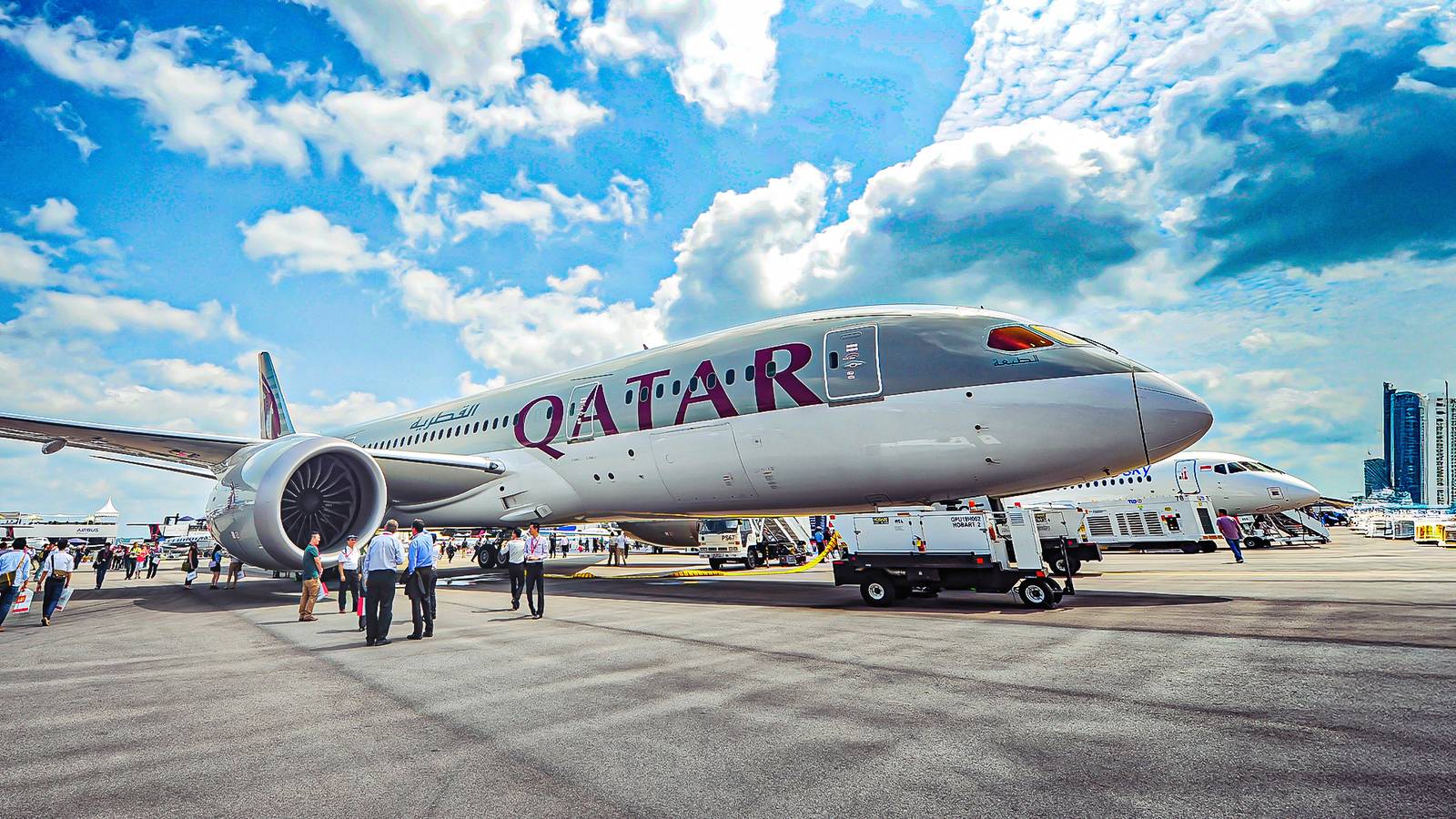
Qatar Airways has recently revealed its financial results for the fiscal year 2025/26, which spanned from April 1 to March 31. The airline, headquartered in Doha, reported an impressive profit of nearly $2 billion, reflecting its robust performance amid global economic uncertainty. However, the final month of the financial year brought challenges due to ongoing conflicts in the Middle East, which may adversely impact their financial standing in the coming year.
### Qatar Airways 2025/26 Financial Performance
The standout achievement of Qatar Airways during its latest financial year was a post-tax profit of QAR 7.08 billion (approximately $1.94 billion). This figure emerged from an impressive operating profit amounting to QAR 15.2 billion (about $4.1 billion), deemed the highest recorded in the airline’s history, according to Hamad Al-Khater, the Group’s Chief Executive Officer. Over the year, Qatar Airways carried 41.8 million passengers and transported more than 1.43 million tons of cargo, solidifying its status as the largest air freight carrier globally, boasting a 12% share of the market.
These remarkable numbers underscore the effectiveness of Qatar Airways’ growth strategies. Despite the challenging geopolitical landscape and ongoing economic unpredictability, the airline exhibited strong operational efficiency and revenue generation through passenger demand and cargo performance, which played crucial roles in their financial success. Mr. Al-Khater emphasized the airline’s resilience, stating, “The 2025/26 financial year challenged us to showcase the best of what we can achieve while also demonstrating our ability to withstand adversity.”
### Strategic Fleet Expansion
Qatar Airways operates a fleet of around 270 aircraft, connecting over 160 destinations worldwide. The airline primarily focuses on widebody aircraft, such as the Airbus A350 series, the Boeing 777 family, and the 787 Dreamliner. Notably, Qatar has plans to significantly expand its fleet, having announced an intention to acquire up to 210 new aircraft from Boeing. This includes a record order for 130 Dreamliners, alongside 30 Boeing 777-9s, representing the largest widebody order in Boeing’s history.
This strategic expansion will enhance Qatar Airways’ capacity and secure long-term delivery slots for new generation widebody jets, catering to soaring demand. Furthermore, this investment aligns with the airline’s commitment to maintaining a modern, fuel-efficient fleet. With an average fleet age of around 10 years, the addition of new aircraft will contribute to reducing operational costs while enhancing environmental performance—critical factors in a competitive market highlighted by rivals like Emirates and Etihad Airways.
### Effects of Regional Conflicts on Operations
While Qatar Airways achieved record profits, the airline continues to navigate the repercussions of rising tensions involving Iran. This has created several challenges for airline operations across the Gulf region, primarily affecting air traffic routes and fuel costs. Notably, fluctuations in Brent Crude Oil prices can significantly influence operational budgets, as fuel costs can comprise 15% to 20% of total expenses.
The conflict has also led to disruptions in normal air traffic patterns, with several regions closing their airspace, necessitating longer flight routes over Central Asia or the Mediterranean. For airlines like Qatar Airways, this translated to extended flight times and increased fuel expenditures, particularly impacting routes heavily traveled between Europe and Asia. Reports indicate that some flights experienced delays of 30 minutes to up to four hours due to this disruption, further straining operational logistics.
Despite these adversities, Qatar Airways remained financially robust, capitalizing on strong passenger and cargo demand to mitigate the impacts of rising operational costs. Continuously striving for excellence, the airline seeks to uphold its reputation as one of the world’s premier carriers as it enters the next financial year.