
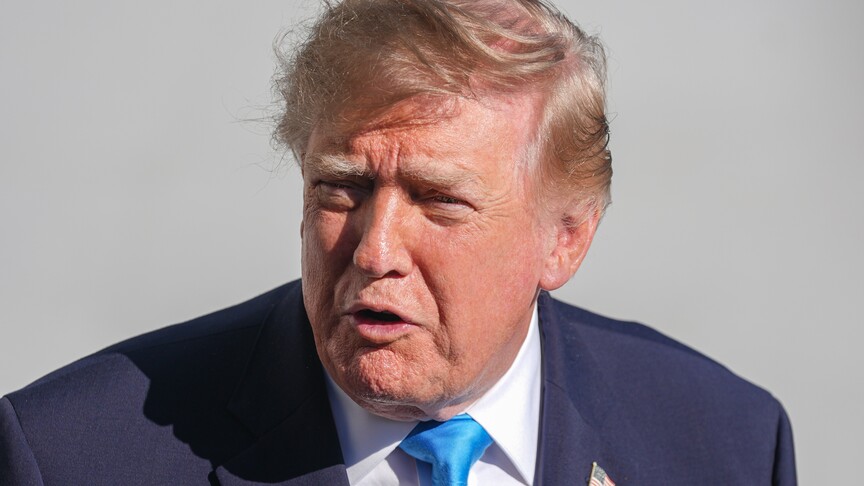
US President Donald Trump expressed strong sentiments on October 15, 2026, regarding individuals who leak sensitive information. During a rally in Arizona, he emphasized the severity of his stance, suggesting that those who disclose confidential details should face the ultimate punishment. This statement followed a recent incident involving a canceled military strike on Iran, reportedly timed due to leaks to the media.
Trump’s Controversial Statements
At the rally, Trump remarked, “Leakers should be shot. In the old days, we used to shoot leakers.” His comments drew attention not just for their content but for the historical context they evoked. Highlighting the gravity of government confidentiality, Trump conveyed frustration over what he perceived as betrayal by unnamed sources revealing operational details. He pointed to the launch of B-2 stealth bombers, intended to mitigate the threat of Iran acquiring nuclear capabilities, and noted that news of the planned operation had inadvertently reached the public.
Accusations Against the Media
The former President accused specific media outlets, including the New York Times and CNN, of publishing critical information about the military operation, undermining his administration’s efforts. “They leaked that we were leaving at 12:07 from Missouri, and it was in the New York Times, CNN. They leaked the time we were leaving, the time we were arriving,” Trump said. His dissatisfaction was evident, suggesting that the breach of security procedures could endanger lives and operations.
Trump’s comments illustrated a broader disdain for leakers, describing them as “the scum of the earth.” He called for severe consequences, stating they “should be dealt with very, very strongly.” This rhetoric reflects the ongoing tensions between governmental secrecy and journalistic integrity, highlighting the conflicts that often arise when national security is involved.
The Aftermath of the Leaks
Despite the leaked information leading to the cancellation of the initial attack on Iran, Trump disclosed that the military operation was executed two days later, albeit at the same time as originally planned. “That was the only time that they didn’t expect us,” he claimed. This statement reframed the narrative, suggesting that despite the setback caused by leaks, his administration was still able to achieve its objectives through strategic adjustments.
The debate surrounding Trump’s comments touches on significant themes in contemporary governance, such as the balance of power between government transparency and the protection of sensitive information. Critics of Trump’s viewpoint might argue that while leaks can be damaging, especially in matters of national security, the right to inform the public plays a crucial role in maintaining accountability within the government.
In summary, Trump’s inflammatory remarks about leakers and his criticism of the media raise important questions about ethics and responsibility in both government operations and journalistic practices. The incident reinforces the ongoing discussions about how best to balance the public’s right to know with the need for confidentiality in national security matters. As this landscape continues to evolve, the implications of such statements and actions will likely have lasting effects on both political discourse and media relations.