
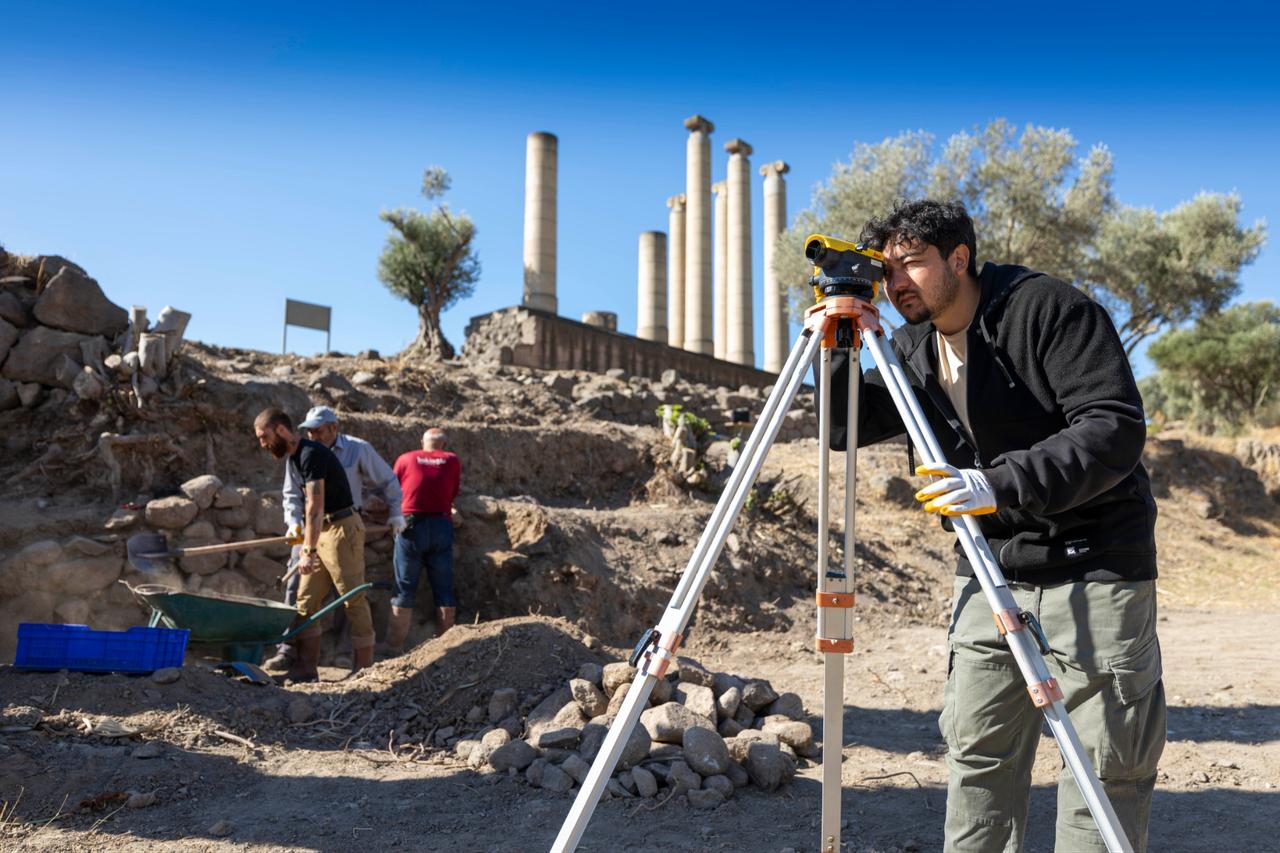
Archaeologists in Izmir, Türkiye, are making significant strides in unearthing layers of settlement that date back around 5,000 years at Smyrna Mound. This ongoing excavation effort is shedding light on the architectural evolution and defensive mechanisms of the ancient city, revealing a more complex history than previously understood.
Discoveries from the Early Bronze Age
The excavation work, a collaboration among Türkiye’s Ministry of Culture and Tourism, Ege University, and the Izmir Metropolitan Municipality, has led to the identification of six architectural phases from the Early Bronze Age. Previously, scholars believed the city’s early occupation consisted of just two phases. Radiocarbon dating has confirmed these layers date back to the third millennium B.C., indicating the settlement’s long-standing significance in the region.
Professor Aylin Umit Erdem, who oversees the excavation project, notes the importance of these findings in grasping how urban life developed in this area. The research teams are employing modern techniques to precisely define the settlement’s boundaries and the evolution of its fortifications over millennia.
Urban Infrastructure: Streets and Water Channels
Smyrna’s archaeological layers depict a sophisticated urban environment emerging from the seventh century B.C. The city was well-organized, featuring streets that intersected at right angles, and areas designated for residential, public, and production activities. A prominent discovery includes Athena Street, named after the Temple of Athena, known to have been in use continuously from the seventh through the fourth centuries B.C.
Moreover, excavators have uncovered intricate water channels that serviced residential areas, along with a major channel located under the city’s monumental entrance gate. These findings illustrate the advanced infrastructure that facilitated daily life in ancient Smyrna.
Erdem has also highlighted the discovery of three distinct phases of defensive walls, built without mortar, that date back to the ninth to seventh centuries B.C. The walls feature interlocking stone blocks, showcasing the construction techniques and defensive strategies employed in that era.
Ongoing Excavations and Future Discoveries
Current excavation efforts are concentrated on the Bronze Age area, where researchers are investigating a substantial public structure believed to date from the fourth century B.C. The aim is to uncover the northern defensive line of the ancient city, which has been less explored compared to other segments.
Erdem pointed out that while some portions of the city’s defenses, namely the eastern wall and monumental entrance gate, have been excavated, the northern, southern, and western fortifications are still largely unexamined. Continued investigations will seek to map out these boundaries and provide a clearer view of the city’s full extent.
As these excavations progress, they are not only enhancing our appreciation of ancient Smyrna but also linking the site to historical figures. Ancient texts associate Smyrna with the legendary poet Homer, further enriching the cultural significance of the discoveries here.
Through these efforts, archaeologists are painting a comprehensive picture of life in one of history’s most storied cities. The unearthing of various artifacts, including a significant collection of silver jewelry found in previous digs, adds layers to our understanding of the social and economic exchanges that took place in this thriving settlement over thousands of years.