
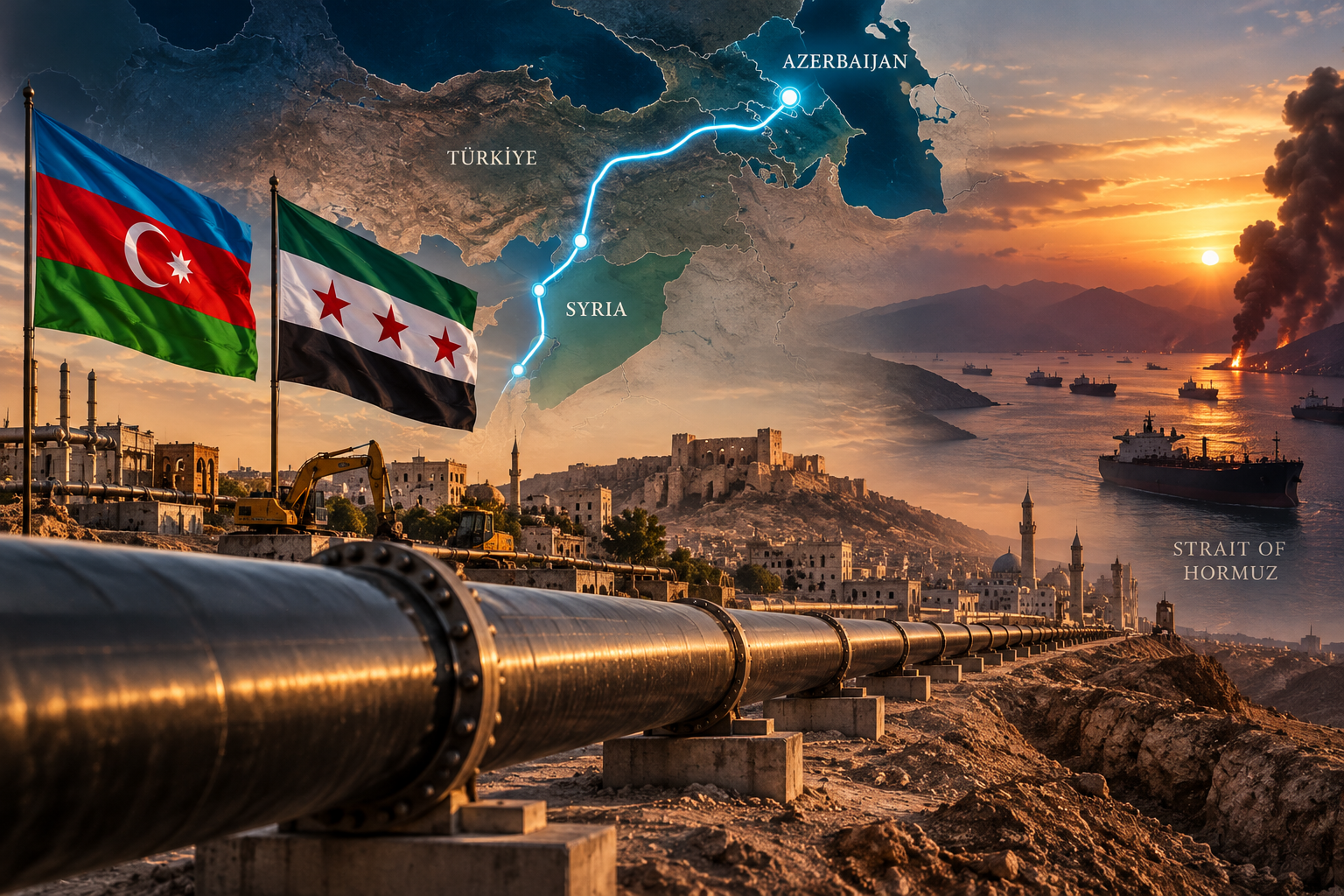
Energy security is increasingly defined by accessibility in an ever-changing geopolitical landscape. The recent military actions by the U.S. and Israel against Iran, particularly on February 28, have severely impacted the Strait of Hormuz—a vital passageway for over 20% of global oil shipments. The International Energy Agency has characterized this disruption as the most significant in the history of the oil market. Following this, the region has witnessed ongoing assaults on energy facilities, exemplified by the March 18 attack on Qatar’s Ras Laffan facility, leading to a notable 17% decrease in its LNG production capacity. Crude oil prices surged to $109 per barrel in early September due to renewed threats against maritime shipping.
The Significance of the Arab Gas Pipeline
Amidst these tensions, the Arab Gas Pipeline, spanning 186 kilometers through the Syrian countryside, deserves more attention. On September 29, the Syrian state petroleum firm, in partnership with Qatar’s UCC Holding, initiated the second section of Phase II of the pipeline, which connects Homs to Aleppo. This expansion extends a total of approximately 566 kilometers, linking the Jordanian and Turkish borders, while enabling bidirectional gas flow. Notably, the presence of Azerbaijani Caspian gas at the pipeline’s northern end represents a valuable resource previously unconsidered in the project’s planning stages.
The initial goal of constructing the Arab Gas Pipeline was to facilitate gas transportation from Egypt to its neighboring Levant countries. However, the pipeline’s northern segment, covering 64 kilometers from Kilis to Aleppo, initiated operations in 2011 but was abruptly halted due to the onset of the Syrian civil war. After undergoing rehabilitation in 2025, the pipeline resumed operations and was reconnected to Turkey’s electricity grid. On August 2, SOCAR announced plans to export 1.2 billion cubic meters of gas annually through this revived infrastructure.
Shifting Dynamics in Gulf Energy Supply
Egypt, a primary supplier for this pipeline, curtailed supplies to Syria and Lebanon on March 1 as local demand surged amidst the Hormuz crisis, highlighting the vulnerabilities facing traditional suppliers. In contrast, Jordan managed to negotiate terms for delivering 4 million cubic meters a day via the pipeline’s southern segment. The situation in Europe, reliant on 12% to 14% of its liquefied gas supply from Qatar via the Strait of Hormuz, reflects similar vulnerabilities, aggravated by rising global energy demands.
Following a hiatus in hostilities, the Houthis renewed attacks on July 22, targeting ships and seizing strategic ports. The regional dynamics remain precarious, as even alternative transport solutions like Saudi Arabia’s East-West pipeline face challenges. The urgency for pipelines that can circumvent the region’s established maritime bottlenecks has never been higher.
The Future of Energy Alliances
In a recent development, a consortium involving Qatar’s UCC Holding, Turkish companies Kalyon and Cengiz, and American firm Power International Holding secured a $7 billion contract with the Syrian Ministry of Energy to construct a mix of gas and solar power plants. This initiative aims to fulfill more than half of Syria’s electrical needs, which have deteriorated due to prolonged conflict. The interdependence of gas supply and power generation emphasizes the significance of a cohesive energy strategy in the region.
Azerbaijani natural gas, Turkish infrastructural support, Qatari investment, and American funding are converging in a collective venture within a nation previously ostracized on the global stage. This unexpected partnership signifies evolving energy dynamics, as the Syrian interim government grapples with limited resources, while its allies possess the capital needed but face logistical hurdles.
Azerbaijan’s role is not merely about distancing itself from Iran but rather about leveraging its position as a critical energy transit hub. Recent requests from Iran for additional electricity supplies from Azerbaijan reflect ongoing interdependencies. As Azerbaijan enhances its gas export capabilities to both Europe and the Levant, the transformative power of new pipelines can redirect energy flows more securely, reinforcing stability in a region beset by conflict and uncertainty.
Despite challenges, including economic limitations and enduring security threats, the ongoing developments highlight a vital shift towards alternative energy corridors. The urgent need to navigate geopolitical bottlenecks is driving innovative strategies in energy production and transport, suggesting a promising yet complex landscape for the future of energy security.