
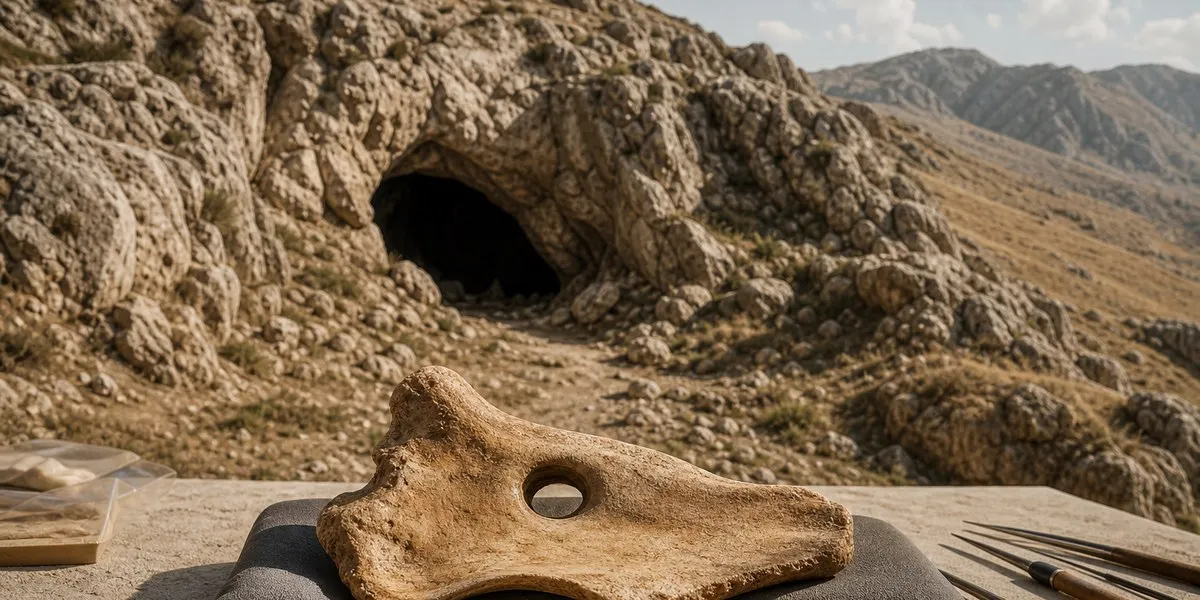
Recent archaeological findings in Shanidar Cave, located in the Zagros Mountains of northern Iraq, have unveiled fascinating details about a Neanderthal who lived approximately 75,000 years ago. The discovery not only sheds light on the physical aspects of this ancient human but also hints at the complexities of Neanderthal life, including both violence and care.
Evidence of a Fatal Injury
Researchers uncovered a partial skeleton designated as Shanidar A, contained beneath a substantial layer of rocks and sediment measuring about 7.5 meters. The remains suggest that the individual, whose sex remains undetermined, likely died in their mid-40s. A significant discovery was a circular puncture wound, about 15 millimeters in diameter, located in the left shoulder blade. The evidence points towards this wound being caused by a sharpened wooden spear rather than a stone-tipped weapon, with the angle indicating that it entered the body from above, likely leading to rapid death.
Graeme Barker, an archaeologist from Cambridge University, posits that this injury stems from interpersonal violence, whether from within the Neanderthal group or due to conflict with other groups. While the possibility of an attack by Homo sapiens or accidental injury was considered, it is deemed less probable. This insight provides an intriguing perspective on the social dynamics of Neanderthals, raising questions about their interactions and conflicts.
Signs of Compassion and Care
In addition to the shoulder blade, Shanidar A’s remains included ribs and a nearly complete right hand, along with seven teeth. Analysis of these teeth indicates that, at least a year before death, the Neanderthal experienced a severe facial injury. This traumatic event resulted in broken, lost, and even split front teeth, suggesting considerable difficulty in eating and drinking.
Lead researcher Emma Pomeroy, a biological anthropologist, emphasizes that recovering from such an injury would have been a complicated process. It is likely that Shanidar A required assistance from fellow group members during this challenging recovery phase, potentially depending on others to provide soft food and opportunities for rest. This finding highlights the potential for compassion among Neanderthals and implies that social bonds played a significant role in their survival.
Neanderthal Burial Practices
Shanidar A was not alone; the remains of four additional Neanderthals, including an infant, were discovered in the same burial site. These bodies were thoughtfully placed behind a rock column within the cave, indicating a possible ritualistic burial practice. Such meticulous placement hints at a level of care and respect for the deceased, which raises questions about the cultural practices of Neanderthals and their understanding of mortality.
The findings from Shanidar Cave have been published in the journal Scientific Reports and offer a glimpse into the lives of Neanderthals that extends beyond mere survival. They reveal a complex society capable of both violence and compassionate care, encapsulating the intricate dynamics of human relationships long before the advent of modern humans. The ongoing research in this area continues to deepen our understanding of the Neanderthal experience, urging us to reconsider what it means to be human.