
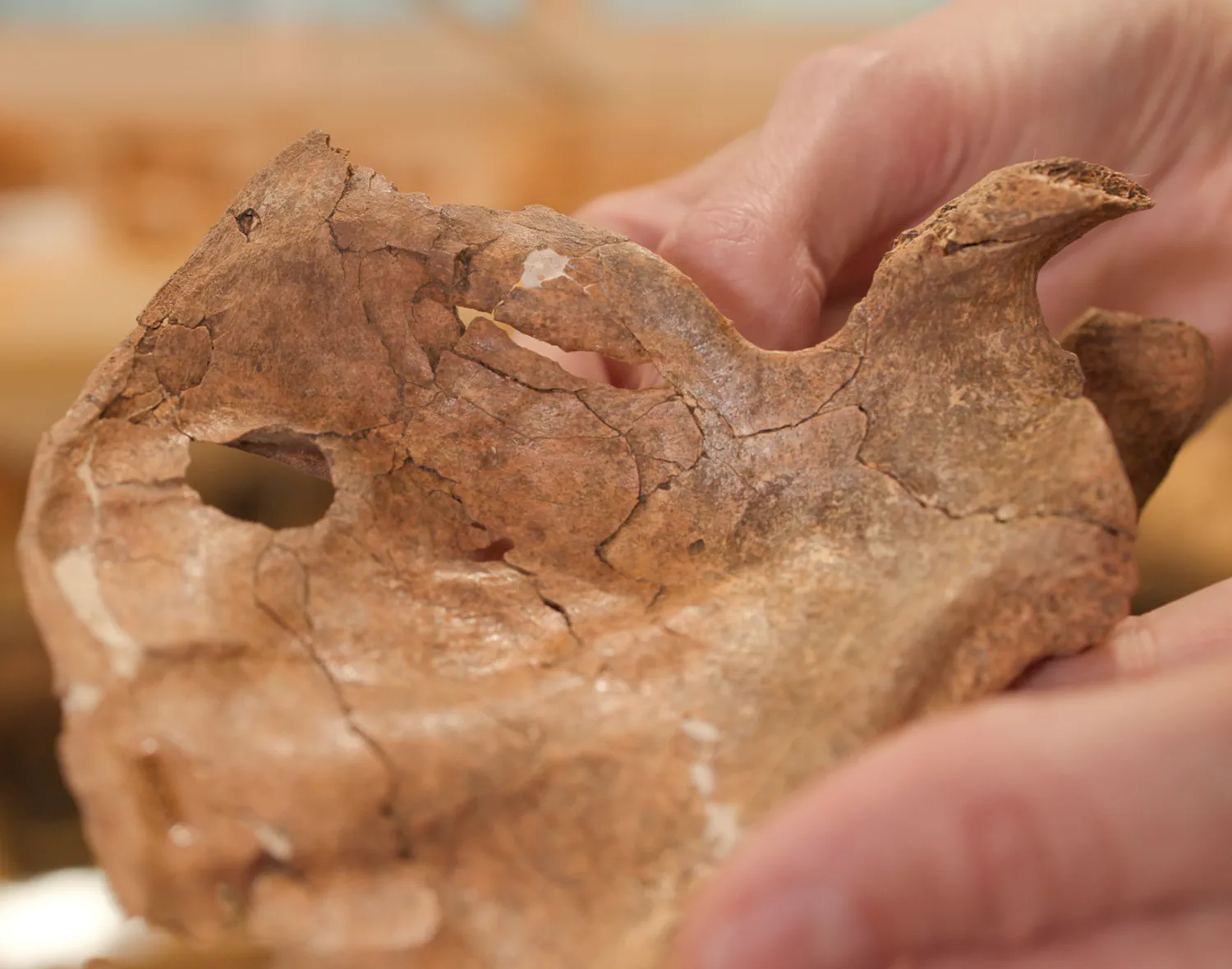
A significant archaeological discovery in Shanidar Cave, located in Iraqi Kurdistan, has led researchers to identify what may be the oldest evidence of a deadly encounter between a human ancestor and a wooden spear. The remains of a Neanderthal, dating back over 70,000 years, exhibit a unique injury that raises questions about the nature of early human conflict and hunting practices.
Discovery of the Neanderthal Remains
The skeletal remains, including at least five Neanderthals, were unearthed beneath an 8-meter-thick layer of sediment. These findings occurred in a sheltered area behind a large boulder near the cave entrance. The burial site suggests that these individuals were laid to rest over an extended period, with some bodies placed atop those that had not yet decomposed. Dr. Emma Pomeroy, a biological anthropologist from the University of Cambridge, noted that the repeated use of this burial site may indicate a purposeful act rather than a random occurrence, a behavior not commonly seen in Neanderthal archaeology.
Analysis of the Injury
Among the remains, researchers focused on the left shoulder blade of a 45-year-old Neanderthal. They found a distinctive round hole surrounded by three fractures and bone fragments, indicating a traumatic injury likely caused by a wooden spear. This type of injury, with the evidence suggesting it was inflicted from the front, implies a forceful blow intended to cause significant harm, possibly even death. Pomeroy emphasized that the spear had likely penetrated the Neanderthal’s chest, indicating a fatal wound aimed at vital organs.
While the circumstances surrounding this injury remain speculative, researchers cannot definitively conclude whether it resulted from an accident during hunting or a violent encounter. The precise nature of such ancient injuries presents challenges for archaeologists, but the evidence supports the notion of a violent interaction, whether intentional or accidental.
The Context of Neanderthal Life
Further examination of the Neanderthal’s teeth revealed signs of extensive wear and damage, suggesting prior trauma. One lower incisor had split vertically, indicating that this individual may have endured a powerful blow to the face, an event possibly leading to persistent pain that required assistance for everyday tasks. As Pomeroy noted, such injuries could not have occurred without significant force, hinting at the harsh realities faced by these ancient peoples.
The findings also resonate with earlier studies indicating that Neanderthals engaged in sophisticated hunting techniques, employing tools like wooden spears. In fact, evidence from past excavations shows similar hunting implements dating back to approximately 200,000 years. This suggests that Neanderthals were adept in using wood for both everyday survival and potentially lethal encounters.
Broader Implications for Understanding Neanderthals
While it’s clear that Neanderthals were capable of creating sophisticated tools and participated in complex social behaviors, instances of violence among early humans remain an area ripe for exploration. The ambiguity surrounding the circumstances of this particular injury will likely fuel ongoing research and debate. Chris Hunt, an emeritus professor at Liverpool John Moores University, pointed out that while this injury could relate to a hunting accident, the possibility of interpersonal violence cannot be overlooked.
In summary, these finds from Shanidar Cave offer invaluable insights into the lives of Neanderthals and their interactions with each other and their environment. As researchers continue to analyze these ancient remains, our understanding of early human behavior will undoubtedly evolve, shedding light on the complexities of survival, conflict, and community among our prehistoric ancestors.