
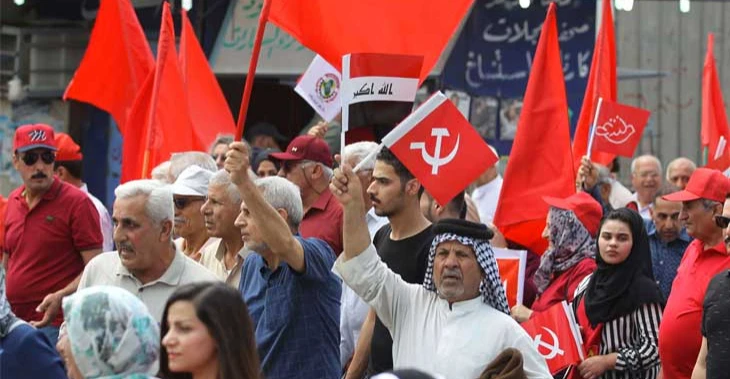
The Iraqi Communist Party has voiced strong opposition to the newly formed cabinet led by Prime Minister Ali Al-Zaidi, labeling it as a mere product of political power-sharing among major parties. This criticism highlights ongoing challenges within Iraq’s governance structure, particularly regarding the need for substantive reform to address pressing socio-economic issues.
Cabinet Formation Amidst Political Negotiations
The Iraqi Parliament recently approved three deputy prime ministers and eleven ministers, filling critical positions that had remained vacant since the government assumed office in May. This decision came after extensive negotiations lasting over five months, which focused more on distributing cabinet posts than on establishing a cohesive agenda aimed at solving key national problems such as unemployment, poverty, and widespread corruption. The Iraqi Communist Party’s political bureau criticized this approach, contending that it reflects a failure to prioritize urgent reforms.
Critique of the Quota-Share System
The party’s statement emphasized the shortcomings of Iraq’s “muhasasa” system, which involves the allocation of state positions along sectarian and political lines. The Iraqi Communist Party argued that no genuine reform can occur under such a quota-sharing arrangement. They pointed out that the political entities behind the cabinet formation bear responsibility for perpetuating this system, suggesting that their legislative majorities shouldn’t exempt them from public scrutiny and accountability.
Call for Popular Action and Unity
In response to the current political climate, the Iraqi Communist Party has called upon trade unions, protest movements, and democratic organizations to come together in a united, peaceful initiative aimed at challenging the monopoly of power and resources. By advocating for a popular movement, the party seeks to mobilize civil society to demand real change and hold leaders accountable for their actions.
This call to action highlights a growing sentiment among the populace, emphasizing that stakeholders beyond traditional political parties must engage actively in the fight for a more equitable and transparent governance structure.
Conclusion: The Need for Effective Governance
The Iraqi Communist Party’s rejection of Prime Minister Ali Al-Zaidi’s cabinet underscores an ongoing struggle against entrenched political practices that hinder genuine progress. The insistence on a shared governance system focused on patronage rather than effectiveness threatens the country’s future. By fostering collective action and demanding accountability, diverse groups within Iraqi society may catalyze necessary reforms, steering the nation toward a path of meaningful change and sustainable development. As Iraq continues to navigate its complex political landscape, the push for genuine reform remains critical to achieving stability and prosperity.