
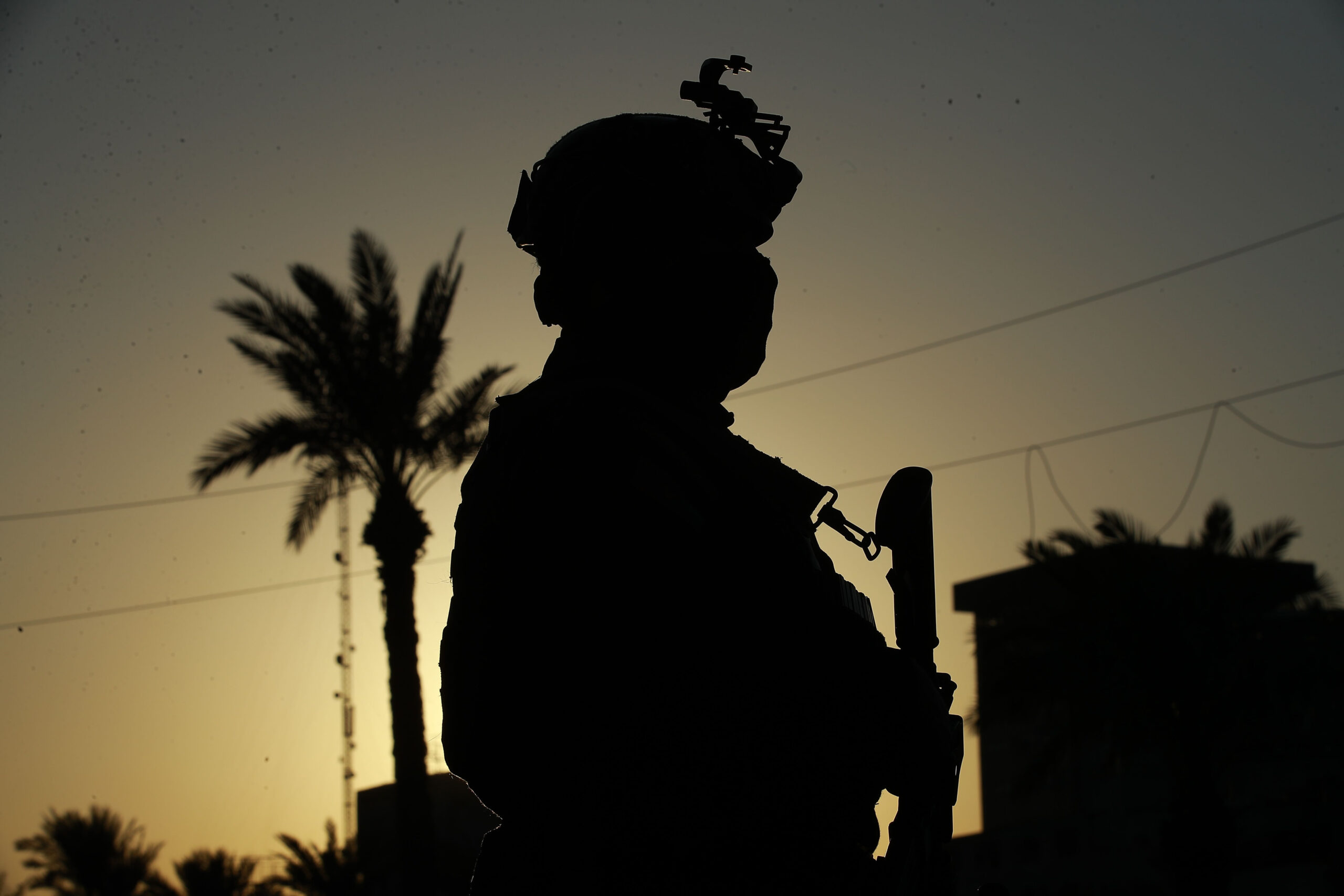
Iran-backed militias in Iraq are heralding their recent “victory” following the withdrawal of US forces, signaling a shift in their operational approach. As the U.S. concludes its presence, these groups are poised to redefine their strategies while maintaining their pursuit of greater influence in Iraq’s political landscape. Their current restraint seems aimed at solidifying their power without inviting further pressure from Washington, as they adjust to this new phase.
Adapting to a New Reality
Kataib Hezbollah, one of the prominent militia groups, is among those adapting its tactics. Their leader, Abu Hussein al-Hamidawi, has instructed fighters to pause military operations but remains open to responding to perceived threats, especially from hostile aircraft. This calculated approach allows them to regroup while still projecting military capability.
The absence of US forces reduces the immediate threat landscape, allowing the militias to halt operations without significant cost. The U.S. has previously signaled that sanctions might be imposed on Iraq’s oil revenues if it fails to stabilize militia influence. By publicly ceasing operations, these militias offer Iraqi leadership a rationale to resist stringent measures that could worsen the economy. Tehran also benefits from this arrangement, as maintaining Iraq’s economic stability allows the Islamic Revolutionary Guard Corps (IRGC) to navigate sanctions more effectively, facilitating cash flow through proxies in Iraq.
Legislative Moves and Tactical Restraint
Recent legislative developments further encourage restraint among these forces. A bill approved by the Iraqi cabinet aims to establish a more defined structure for the Popular Mobilization Forces (PMF). This initiative seeks to solidify the PMF’s legal standing, thus enhancing funding and operational independence. It also aligns with a broader strategy: by holding back attacks, militias can diminish US scrutiny and avoid hindrances to their consolidation as a semi-autonomous military body.
Al-Hamidawi has openly advocated for maintaining a military presence alongside state forces, arguing that multiple military entities are commonplace globally. While this assertion highlights a desire for coexistence, it raises concerns about these militias acting as proxies under Iranian control rather than accountable national forces. The PMF has already demonstrated this troubling trend, mobilizing resources to support Iranian military operations, especially during conflicts like the US-Israeli engagements.
Future Implications
This operational pause does not guarantee an end to aggressive actions from Iraq. Smaller factions may continue to conduct operations while established militias publicly abide by the ceasefire. Drawing from a historical model, these “special groups” have operated outside Iraq’s central authority and could emerge again, carrying out operations under a veil of deniability.
Recent calls for reactivation of these smaller units underscore this potential. Groups such as al-Akhyar min Ahl al-Iraq are pushing for a revival of these “special groups,” emphasizing unity among varied militant factions without direct competition. This suggests that militias are preparing for a multifaceted operational strategy where plausible deniability is crucial.
The Quds Force is reportedly expanding its influence, embedding smaller operational cells within established militia frameworks. These specialized units can engage in regional actions and maintain a degree of separation from established entities, complicating accountability while still executing broader tactical objectives set by Tehran.
The future offers a complex landscape for Iraq’s security dynamics, especially as the established militias continue to evolve. Al-Hamidawi’s statements hint at a long-term vision where militia power is entrenched as a permanent fixture within Iraq’s military landscape. This focus on consolidating influence while navigating the pressures of international politics will be pivotal in shaping Iraq’s security framework moving forward, as the balance between state oversight and militia autonomy remains a critical concern for the nation’s stability.