
On April 20, U.S. officials announced the suspension of security cooperation and funding for Iraq’s security services, as well as the blocking of a $500 million shipment of U.S. banknotes to the Iraqi central bank. This financial assistance, drawn from Iraqi oil revenues, serves as crucial operating capital for the Iraqi state. This decision comes at a troubling time for Iraq, as the post-election government formation remains gridlocked ahead of an impending April 28 deadline to nominate a prime minister. The Iran-aligned Coordination Framework bloc, which includes various Shiite factions associated with the Popular Mobilization Forces, is struggling to find a candidate acceptable to both Washington and Tehran.
### U.S. Pressure on Iraqi Militias
The U.S. has taken a series of escalating actions against Iranian-affiliated Iraqi militias. On April 9, Deputy Secretary of State Christopher Landau expressed U.S. discontent over a drone attack targeting U.S. personnel at Baghdad International Airport. Eight days later, the Treasury Department sanctioned seven high-ranking commanders associated with Iranian-backed groups like Kata’ib Hezbollah and Asa’ib Ahl al-Haq for their roles in assaults against U.S. forces. This aggressive stance prompted an immediate public response from Iran, with Esmail Ghaani, commander of the Quds Force, reiterating that Iraq’s next prime minister must be selected based solely on “Iraqi decisions.” He cautioned against foreign intervention, specifically calling out the U.S.
On May 15, the U.S. Department of Justice unveiled a six-count terrorism charge against Mohammad Baqer al-Saadi, a prominent Kata’ib Hezbollah leader. He faces accusations of orchestrating nearly 20 attacks across Europe and North America, including the targeting of Jewish institutions. This marked a significant escalation in U.S. efforts to confront Iranian influence in Iraq, linking the charged individual directly to Iranian operations.
### The Persistence of Armed Actors
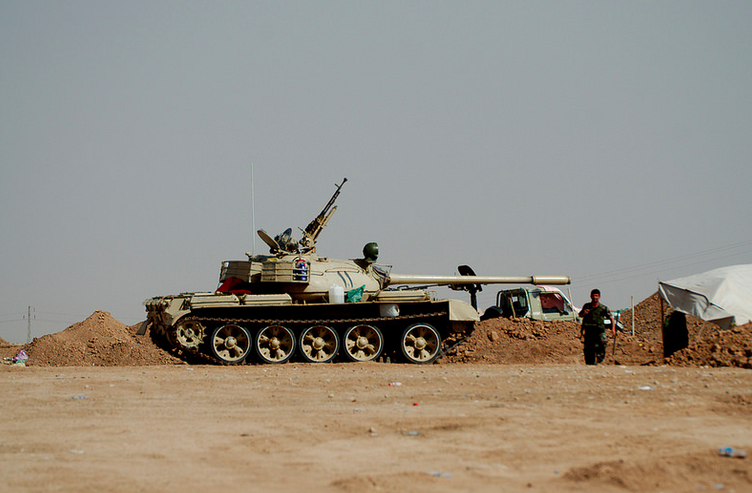
While Operation Epic Fury has decimated a large part of Iran’s military capabilities, it has not dismantled the paramilitary framework that Iran has established within Iraq. With the Iraqi government lack of cohesion, Iranian-aligned militias have proved resilient. These groups draw salaries from state resources and engage in parliamentary politics, serving as both a military force and a political player. Reports indicate that even during the war, these militias maintained an active operational capacity, launching numerous assaults on U.S. forces and allies.
The PMF (Popular Mobilization Forces), established as a response to the 2014 Islamic State crisis and formally integrated into Iraq’s security framework, remains intricately tied to Tehran’s strategy. Despite their nominal affiliation with the Iraqi state, many of these groups are ideologically and strategically aligned with Iran’s Islamic Revolutionary Guard Corps. The possibility of a legislative amendment to the PMF law could further solidify these factions’ positions within Iraq’s political structure, raising concerns regarding entrenched Iranian influence.
### Consequences of U.S. Diplomatic Maneuvering
The U.S. pressure strategy aims to reshape Iraq’s political landscape before the constitutional deadline. The suspension of dollar shipments serves as a crucial lever for American officials, indicating that financial support will depend on Iraq’s political decisions. However, dangers lurk in this approach. Critics argue that sustained U.S. actions could lead to economic instability, negatively affecting ordinary Iraqis. Yet, many analysts contend that a failure to maintain pressure risks ceding power to Iranian-affiliated factions that have already encroached upon Iraq’s governance.
Furthermore, the legal and institutional framework for Iraq’s militias poses questions regarding sovereignty and the future of armed groups. The Iraqi constitution explicitly prohibits non-state militias, but the reality on the ground contradicts these provisions. Critics emphasize that U.S. pressure is not an infringement on Iraq’s sovereignty; rather, it aligns with the constitutional principles aimed at centralizing military authority.
In summary, the forthcoming weeks will be pivotal for Iraq as it navigates internal political strife and external pressures. The current U.S. approach aims to foster a stable state machinery that prioritizes national interests over foreign influence. The path forward involves balancing diplomatic efforts with the imperative of ensuring a cohesive and empowered Iraq free from the shadow of armed factions.