
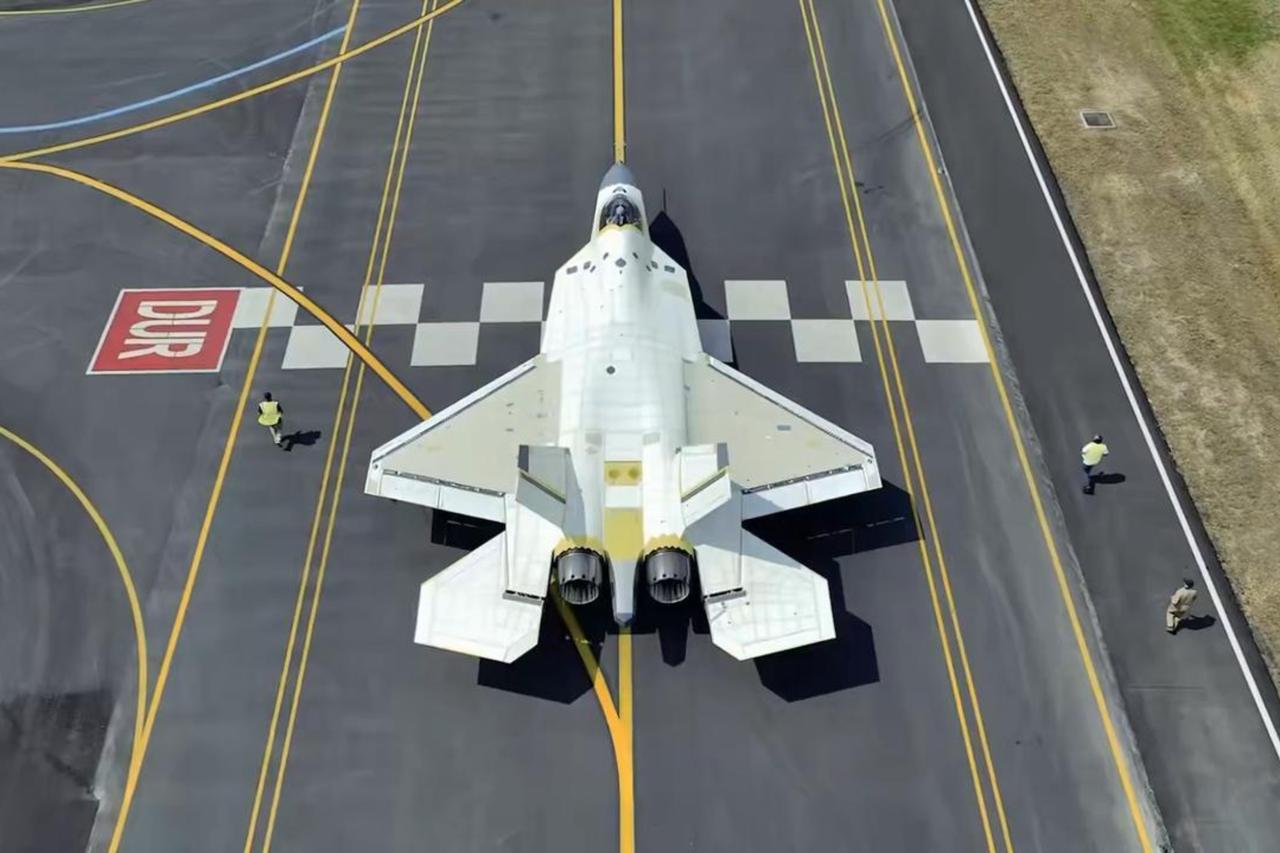
Turkish Aerospace Industries (TAI) has set ambitious goals for the future of aviation in Türkiye. General Manager Mehmet Demiroglu announced that the company plans to produce over 1,500 aircraft, helicopters, and large drones, along with more than 10,000 tactical drones by 2035. This announcement aligns with the upcoming flight of the KAAN fighter prototype, expected to take place very soon.
Ambitious Production Plans by 2035
TAI’s targets include producing more than 150 KAAN fifth-generation fighters, 200 Hurjet jet trainers, and 150 Hurkus turboprop aircraft. This shift from prototype development to mass production for Türkiye’s aerospace sector reflects an increasing reliance on subcontractors. The strategy also highlights a growing demand for exports, driven by deals such as Spain’s recent purchase agreement for Hurjet.
In addition to the aforementioned aircraft, TAI has set lofty goals for helicopters and drones. The production objectives for helicopters are over 200 Gokbey utility helicopters, 150 T925 heavy utility helicopters, and 100 T129 ATAK attack helicopters. In the drone sector, TAI aims to manufacture more than 250 Anka-3 unmanned combat aircraft and 150 Aksungur drones, in addition to its substantial target of over 10,000 tactical drones. TAI is also focusing on satellite technology, targeting over 20 satellites and more than 30 new products or configurations, marking a significant expansion of its portfolio.
Strategic Shift to Subcontracting
To achieve these ambitious targets, TAI plans to retain final assembly in-house but will outsource approximately 70% of the manufacturing process to subcontractors. Currently, about 60% of detailed parts manufacturing is outsourced, with future goals of increasing that number to between 70% and 80%. Similarly, around 40% of component-level work is already outsourced, with aspirations to ramp that up as well.
Kayseri-based TOMTAS will play a crucial role in this process by manufacturing around 7,000 detailed parts and assembling five major components for the Hurjet. Initial deliveries from TOMTAS to TAI are slated for December 2026, underscoring the collaborative efforts underpinning TAI’s production strategy.
KAAN Fighter: A Native Project on the Rise
Mehmet Demiroglu emphasized the significance of the KAAN fighter project during a recent visit to Kastamonu University. He described it as one of the most indigenous initiatives in Türkiye’s aviation history, indicating that it involves millions of lines of software developed in-house and in collaboration with TUBITAK for its flight control systems. While Demiroglu refrained from specifying an exact timeline for its first flight, he expressed optimism that it could occur by the end of this month. The delivery date remains set for 2028.
Demiroglu also addressed the strategic motivations behind developing the KAAN fighter, noting that while the intention may not be to deploy it actively, it serves as a safeguard for Türkiye amid regional instability. The country’s geographical position requires a robust defense mechanism, reinforcing TAI’s commitment to advancing its aerospace capabilities.
Expanding Production Worldwide
TAI’s expansion is not restricted to domestic needs. The company has already signed a significant contract with Spain for 30 units of the Hurjet aircraft, valued at approximately €2.6 billion ($2.9 billion). This partnership highlights TAI’s growing international footprint and commitment to foreign markets. Additionally, the start of deliveries for the Hurkus aircraft indicates a broader strategy aimed at further international sales, including planned export deliveries to Azerbaijan.
As TAI continues to grow, the impact of its endeavors on the global defense industry reflects a burgeoning admiration for Türkiye, augmented by the company’s workforce of 16,500 employees who contribute to this ambitious vision.