
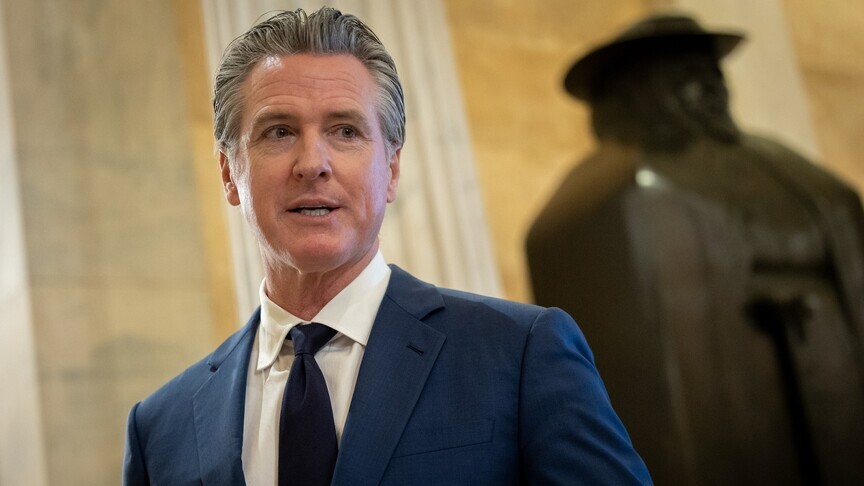
California Governor Gavin Newsom has articulated a pivotal stance regarding U.S. military aid to Israel, suggesting that it should be contingent upon certain conditions. This view appears to be resonating with a larger segment of the Democratic Party as he campaigns in New Hampshire, potentially paving his way for a presidential run in 2028.
Conditions on Aid
During an interview with the Washington Examiner, Newsom emphasized the need for U.S. military assistance to be conditional, highlighting concerns over human rights violations and ongoing violence in the occupied West Bank. He criticized the policies of Israeli Prime Minister Benjamin Netanyahu for undermining the prospects of a two-state solution, stating that Netanyahu has increasingly alienated Israel from the international community, including the United States. Newsom noted, “Bibi Netanyahu has done a remarkable job of really isolating himself,” suggesting that the extent of the damage caused by his administration is severe and perhaps irreversible.
Moreover, Newsom characterized the ongoing conflict in Gaza as a “moral catastrophe.” However, he refrained from specifying the exact types of military support that should be conditional, pointing out the differences between defensive systems like Iron Dome and offensive weaponry. He advocated for U.S. aid to align more closely with human rights standards, invoking the Leahy Law. This federal regulation prevents the government from funding foreign military entities with credible allegations of human rights abuses.
Growing Democratic Opposition
Newsom’s statements come at a time when opposition among Democrats regarding military support for Israel is intensifying. This spring, a majority of Senate Democrats voted to block a significant arms sale to Israel, and over 100 House Democrats voiced their opposition to a related initiative in July. This growing dissent reflects a broader shift within the party’s base, with increasing attention being directed towards human rights concerns associated with military operations.
With Israeli elections scheduled for October 27, Newsom acknowledged that these political dynamics could further influence the conversation around military aid. His past criticisms of Netanyahu, while still expressing support for Israel, indicate a nuanced approach to foreign policy that aligns with emerging discussions within the Democratic Party.
Future Implications
Newsom’s remarks suggest an evolving landscape in U.S.-Israel relations, particularly as political leaders engage in discussions about the ethical implications of military aid. Critics argue that unconditional support may enable actions that violate human rights, while supporters of Israel assert that military assistance is crucial for its defense against threats. As these debates continue, they are likely to shape the platform of the Democratic Party in upcoming elections.
Through his comments, Governor Newsom appears to be positioning himself as a leader who is willing to challenge established norms while advocating for change that emphasizes human rights. Whether this perspective will gain traction among Democratic constituents remains to be seen, but it undeniably reflects a significant moment in the dialogue surrounding U.S. involvement in foreign conflicts.