
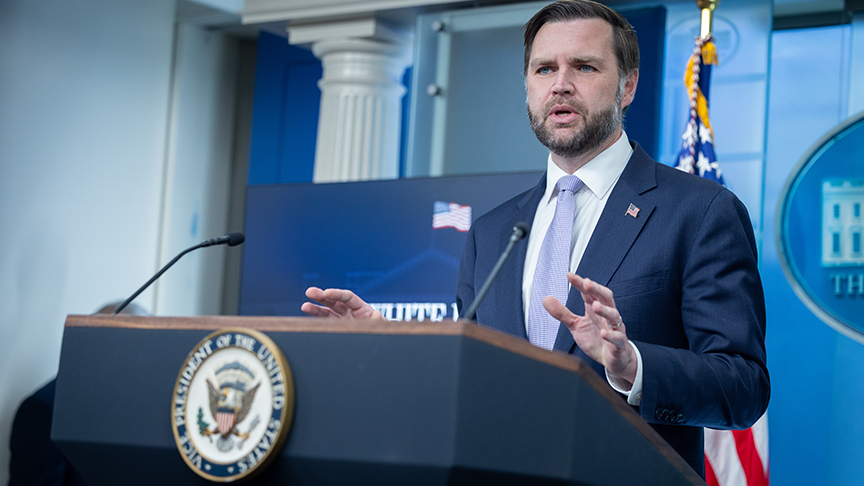
US Vice President JD Vance recently addressed criticisms regarding the United States’ handling of the ongoing war with Iran during a CBS News town hall. He openly acknowledged significant missteps and failures in the military and political strategies employed, particularly as the conflict has escalated, resulting in rising human and economic costs.
Human Cost of the Conflict
The town hall included poignant testimonies from individuals affected by the war, such as Joey Amor, whose wife, Master Sgt. Nicole Amor, lost her life when an Iranian strike targeted a military facility in Kuwait shortly after the conflict began in late February. With at least 21 U.S. service members confirmed dead and hundreds more injured, Amor’s call for accountability highlighted concerns about the adequacy of security measures at the military site. He expressed frustration over reports suggesting that the location had not been properly safeguarded.
“We understand that the Iranian drone was responsible for my wife’s death,” Amor stated, emphasizing that broader systemic failures contributed to the tragedy. Vance responded to these concerns by acknowledging the shortcomings in intelligence and communication, pledging to take these failures seriously and implement necessary changes.
Military Positioning and Strategic Adjustments
Vance also discussed the U.S. military’s strategies, admitting that certain troop placements exposed vulnerabilities that needed addressing. He noted that the initial positioning of forces was flawed, acknowledging, “We realized that was a huge mistake and that we could do better on.” In response to the growing threat of inexpensive drones, he assured that the military had revised its operational tactics in order to enhance troop safety and mitigate further losses.
The bold acknowledgment of these problems is a significant step, particularly given the scale of the conflict and its toll on military personnel. By addressing these issues openly, the administration aims to regain trust and demonstrate a commitment to improving the conditions under which soldiers serve.
The Ongoing Challenge: Strategic Successes and Accountability
When questioned about why a decisive victory has yet to materialize, despite previous predictions from President Donald Trump, Vance argued that the U.S. had achieved significant tactical successes. However, he also recognized that the situation remains fluid and heavily dependent on Iran’s responses. “The enemy gets a vote here,” he remarked, encapsulating the unpredictable nature of wartime dynamics.
Vance defended the administration’s approach, emphasizing the goal of securing a “final firm commitment” from Iran to halt any efforts to rebuild its nuclear program. This assertion underscores the complexity of international relations and the intricate balance between military action and diplomatic negotiations.
As the situation evolves, it remains crucial for U.S. leadership to confront the fundamental challenges posed by this conflict and to implement more effective strategies that prioritize both military effectiveness and the safety of service members. The call for accountability and improved practices reflects the pressing need for a more robust and responsive military framework in a rapidly changing geopolitical landscape.