
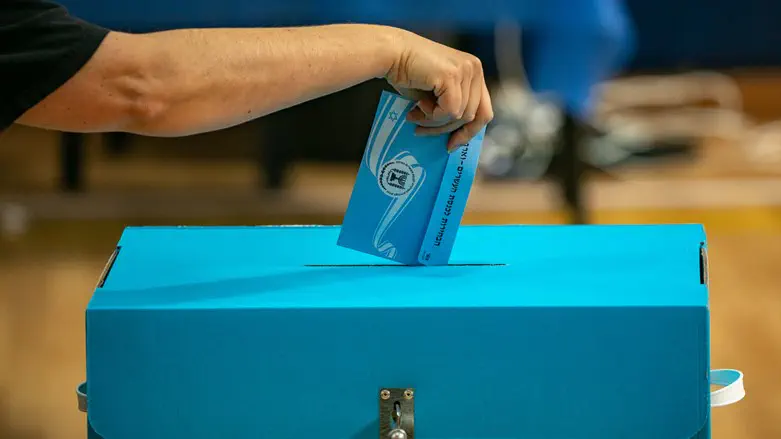
In the countdown to the Knesset elections, three recent polls reveal varying projections for Israel’s political dynamics, particularly concerning the competition between Prime Minister Benjamin Netanyahu’s Likud party and Gadi Eisenkot’s Yashar! party. As the election date approaches, understanding these shifts becomes crucial for both political analysts and the electorate.
Polling Insights from Channel 14
According to the Channel 14 survey, Likud leads the race, garnering 29 seats, while Yashar! follows with 22 seats. This suggests a continuing strength for Netanyahu’s party, despite challenges from opposition groups. Additionally, Naftali Bennett’s Together party and Shas are projected to secure 10 seats each. The polling data indicates that the Democrats and United Torah Judaism are expected to win eight seats apiece, reflecting a competitive scenario across various political factions. Meanwhile, smaller parties such as the Religious Zionist party, Zehut, Otzma Yehudit, and the Joint List each appear set to earn around seven seats, illustrating a fragmented political environment.
Shifting Dynamics in Kan 11 Poll
While the Channel 14 poll shows a strong preference for Likud, the Kan 11 poll presents a contrasting picture. In this analysis, Yashar! emerges victoriously with 23 seats, slightly ahead of Likud, which is predicted to secure 21 seats. The Together party is estimated to capture 12 seats, while the Democrats are projected to receive nine. Other parties like Otzma Yehudit, Yisrael Beytenu, Shas, and the united lists of Hadash-Ta’al and Balad each garner eight seats. This inconsistency between the two polls suggests a fluctuating voter sentiment, making it essential for parties to fine-tune their strategies in the final days of campaigning.
Overview from i24NEWS Poll
The i24NEWS poll also adds to the complexity of the political landscape, showing Likud in a solid leading position with 25 seats, trailed by Yashar! with 21 seats. The Together party is expected to perform notably with 13 seats. In this poll, Otzma Yehudit, the Democrats, and other key parties, such as United Torah Judaism and Shas, are projected to secure eight seats each, hinting at a competition that continues to evenly distribute support across various factions. However, some parties may struggle to reach the electoral threshold, notably Amcha Yisrael, which falls below with only 2.9% of the votes, alongside the Reservists Party and Economic Party, each at 2.4%.
Conclusion: Navigating Uncertainty Ahead of Elections
As various polls illuminate the shifting sands of Israel’s political arena, the final days leading up to the elections could drastically alter these projections. With Likud and Yashar! in close competition, the electorate’s preferences remain pivotal. As political parties refine their messages and rally their bases, the electorate’s inclination could swing in unexpected directions, making the upcoming elections not only a contest for power but a reflection of the public’s evolving sentiments. The final outcome will not only shape the future governance of Israel but also carry implications for regional stability and international relations.