
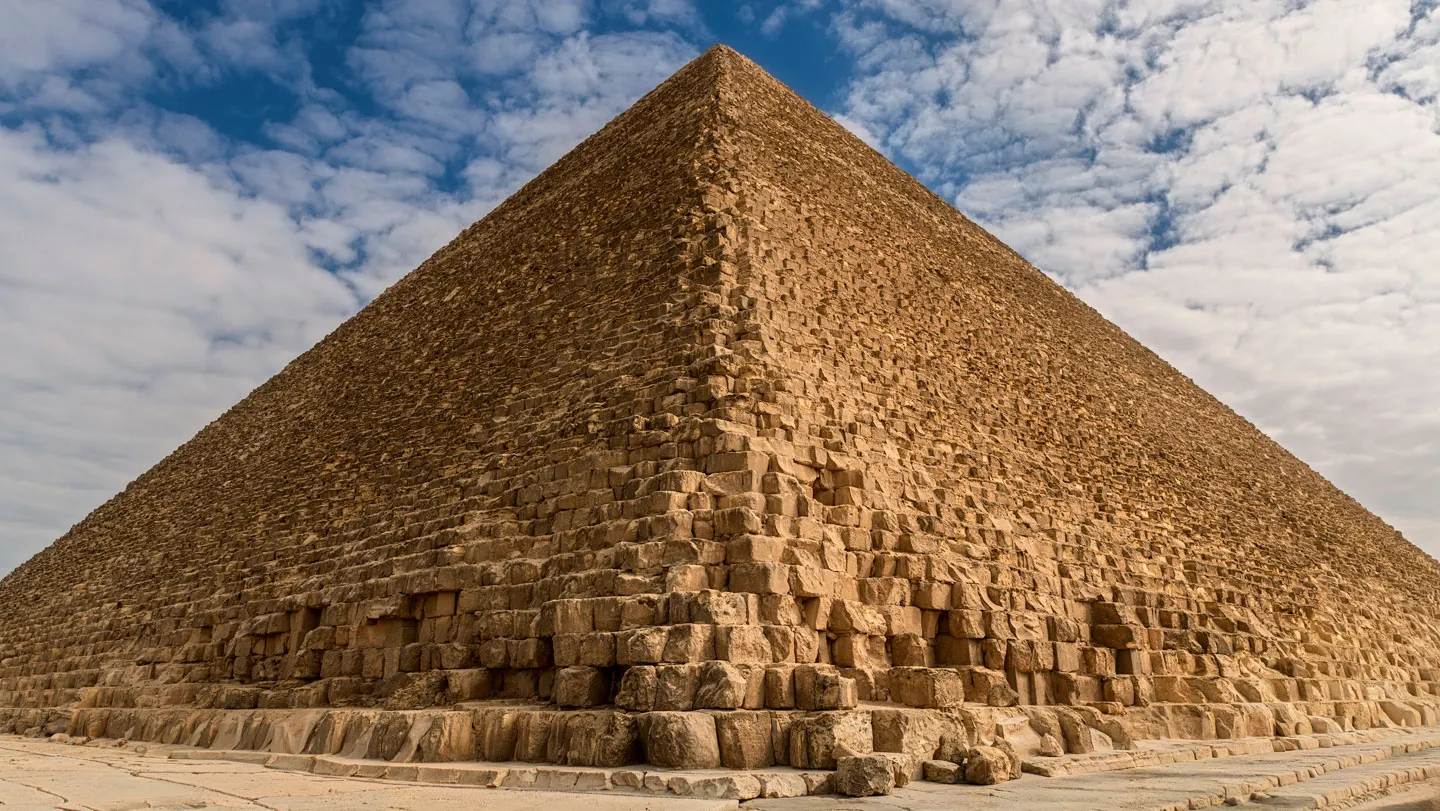
The Great Pyramid of Giza, a remarkable architectural feat, has withstood earthquakes for nearly 5,000 years. Recent research sheds light on the unique characteristics that contribute to its enduring stability.
## Insights into the Pyramid’s Resilience
Constructed around 2600 B.C. as the tomb for Pharaoh Khufu, the Great Pyramid is built from approximately 2.3 million stone blocks and took over 20 years to complete. Despite Egypt’s generally low seismic activity, strong earthquakes have occurred, such as the magnitude 6.8 quake in 1847 and a magnitude 5.8 in 1992. Remarkably, the pyramid suffered minimal damage during these events, prompting scientists to explore the reasons behind its impressive durability.
Geophysicist Mohamed ElGabry and his team focused on monitoring vibrations at various points within and around the pyramid. Instead of artificially shaking the structure, which could have detrimental effects, they observed vibrations caused by distant ocean waves and urban activity. Their study revealed that approximately 75% of their measurement sites inside the pyramid experienced natural vibrations at frequencies ranging from 2 to 2.6 cycles per second. This narrow frequency range suggests an even distribution of stress throughout the pyramid.
## The Role of Soil and Frequency Differences
In contrast, the surrounding soil vibrated at a significantly lower frequency, oscillating slightly above once every two seconds. This critical difference in natural frequencies reduces the likelihood of resonance occurring, a phenomenon where a structure absorbs energy from the ground’s vibrations. If resonance were to happen, it could amplify the vibrations’ strength, increasing the risk of structural damage.
The internal design of the pyramid also aids in mitigating vibrations. Ancient Egyptian builders constructed pressure-relieving chambers above the king’s chamber to help distribute the pyramid’s weight. These chambers not only protected the burial chamber but also decreased vibrational strength at the pyramid’s apex. The chambers’ design effectively acted like shock absorbers, reducing the amplification of vibrations.
## Comparative Analysis and Engineering Wisdom
Most structures behave like inverted pendulums, with their bases anchored while the tops experience greater movement. In the case of the Great Pyramid, vibrations were amplified by four times within the king’s chamber, located towards the center and above the bedrock. However, in the pressure-relieving chambers, this amplification was reduced to three times. Understanding these dynamics could provide crucial insights for modern engineering designs and practices.
ElGabry notes that the engineering principles used in the pyramid’s design are astonishing, especially considering the limited tools and resources available 4,600 years ago. While the research highlights the impressive capabilities of ancient Egyptians, it can’t definitively establish whether they consciously designed the pyramid with earthquake resilience in mind.
## Modern Applications of Ancient Techniques
ElGabry suggests that these ancient construction strategies could inspire modern builders seeking to design long-lasting structures. Today, architects typically plan for buildings to endure for 100 to 500 years. By examining the techniques that allowed the Great Pyramid to withstand time and natural disasters, contemporary engineers can integrate similar principles into their designs. Understanding how the pyramid has survived for millennia may inform better construction practices, ensuring that future structures can achieve enduring stability.
The Great Pyramid of Giza remains not just a symbol of ancient civilization but also a testament to engineering ingenuity that has endured through thousands of years. With ongoing research, we can glean valuable lessons from this monumental structure, enhancing our approach to modern architecture and construction.