
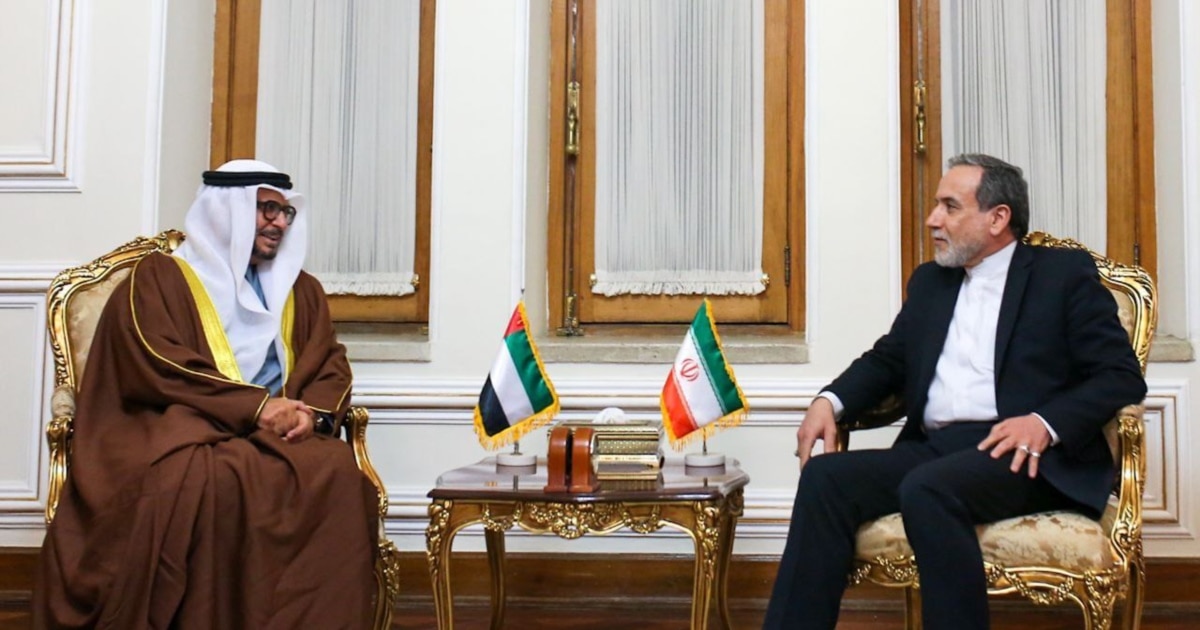
Anwar Gargash, a high-ranking official in the United Arab Emirates (UAE), recently expressed grave concerns regarding the ongoing conflict involving Iran. He warned that any resurgence of hostilities could have disastrous implications for the Middle East, particularly amidst the backdrop of the US-Israeli military actions against Iran. His insights reveal the complexities of regional dynamics and underscore the need for political dialogue over military escalation.
Urgent Call for Political Resolution
In an interview on May 22, during the Globsec security conference in Prague, Gargash emphasized that the conflict—now in its 11th week—has already disrupted international oil and gas supplies, significantly impacting the global economy. He firmly stated that military options will only exacerbate existing problems and that a political solution is paramount. The UAE, which has historically had a complicated relationship with Iran, wishes to navigate these turbulent waters with an approach focused on diplomacy rather than warfare.
The situation escalated dramatically after Iran launched drone and missile attacks on its neighboring Gulf states, including the UAE, as retaliation for the US-Israeli bombing campaign that began on February 28. This has led to heightened tensions, positioning the UAE as one of the more aggressive actors in the region against Iran. Reports have even surfaced suggesting that the UAE has executed covert operations against Iranian targets during this conflict.
The Role of Negotiations
Amid ongoing mediations led by Pakistan aimed at reaching a peaceful settlement, Gargash underscored the necessity of negotiations. He surmised that neither the US nor Iran wishes to revert to hostilities. The stakes are high, as a military escalation not only threatens regional stability but could also amplify Iran’s already precarious standing in the Middle East. Gargash pointed out past failures of Iranian negotiators who often overestimated their leverage. Consequently, he believes reaching a comprehensive deal—focused particularly on concerns surrounding Iran’s nuclear program and potential threats to the Strait of Hormuz—remains crucial.
He added that while a ceasefire is essential, it should be accompanied by a broader security framework. This would ideally foster a long-term climate of trust among regional actors. Gargash noted that the history shared by Iran, Iraq, and the Gulf states, coupled with their geographical proximity, makes a regional pact a logical approach to ensuring lasting stability.
Long-term Strategic Consequences
Looking ahead, Gargash expressed that the current conflict could fundamentally diminish Iran’s regional influence. He speculated that Gulf nations would increasingly view Iran as a core threat, driving up defense expenditures geared toward countering Iranian actions. Furthermore, he noted that the relationship between Gulf countries and the US could strengthen as a direct consequence of Iranian aggression.
An important facet of this ongoing conflict is its impact on Israel-UAE relations. Gargash affirmed that the UAE’s formal and open relationship with Israel has been beneficial, especially as Israel has played a supportive role in bolstering UAE defenses against Iranian attacks. He articulated that the Iranian strategy has inadvertently created more opportunities for collaboration between the UAE and Israel, even in less visible domains such as defense procurement.
In conclusion, Gargash reiterated the UAE’s commitment to a political resolution while firmly stating the nation’s right to self-defense. Emphasizing the importance of constructive dialogue, he hopes that negotiations will pave the way for a more stable and peaceful future for the region—avoiding further escalation and fostering a collaborative environment among its nations.