
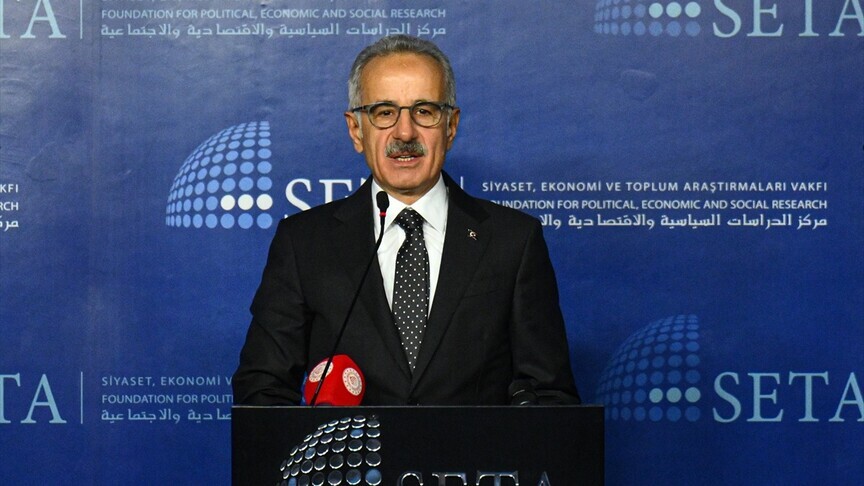
The Development Road Project is poised to significantly bolster Türkiye’s economy, with an anticipated contribution of approximately $55 billion over the next decade. This statement was made by Transport and Infrastructure Minister Abdulkadir Uraloglu during a recent conference in Ankara.
Economic Impact and Job Creation
Uraloglu emphasized that the project is set to create around 70,000 job opportunities each year. Beyond job creation, it aims to enhance Türkiye’s role in global trade while aiding in the economic recovery of Iraq. The initiative will establish a direct corridor connecting Iraq’s Grand Faw Port in the Gulf to Europe via Türkiye. This corridor will integrate not just roadways and railways, but also energy lines, fiber-optic infrastructure, as well as oil and natural gas pipelines.
The Minister elaborated that, given the current geopolitical climate—including tensions in the Strait of Hormuz and the ongoing Russia-Ukraine conflict—there has been an increased quest for more secure and shorter transport routes. The Development Road Project stands as a strategic alternative to mitigate reliance on the Strait of Hormuz, particularly for cargo transit from Gulf nations to Europe. By utilizing this new route, journey durations could be reduced to around 25 days, compared to the 45 days required via the Cape of Good Hope and the 35 days through the Southern Corridor.
Integration with Existing Trade Networks
The Development Road is seen as a complement to current trade networks, particularly the Middle Corridor that connects China and Central Asia to Europe via the Caspian Sea and Türkiye. According to Uraloglu, Türkiye’s geographical position enhances its strategic importance in this context. He stated, “There can be no corridor without Türkiye,” underscoring the nation’s central role in facilitating international trade routes.
Currently, Türkiye boasts 2,156 kilometers (1,340 miles) of ongoing and planned railway connections to the Middle Corridor. Total investments in these projects amount to approximately $47.1 billion. Through the Development Road Project, Iraq is expected to diversify its economy, moving away from oil dependency and generating revenue from transit trade, thus bolstering its status as a regional hub for commerce.
Recently, Türkiye and Iraq have taken formal steps towards realizing this project. Agreements signed on July 28 include a memorandum concerning rail and road transport through the Fishkhabur-Ovakoy border crossing, as well as a framework to enhance transport infrastructure in Iraq in exchange for natural resources.
Future Collaborations and Regional Connectivity
Moreover, Uraloglu highlighted a newly established railway cooperation agreement with Saudi Arabia, aimed at revitalizing the historic Hejaz Railway. This initiative could add further connections from the Gulf through Türkiye to Europe, elevating regional trade.*
The Development Road Project has the potential to reshape the Middle East’s fragmented economic landscape, positioning Iraq as a significant trade crossroads and bolstering Türkiye’s connectivity on a global scale. By laying the groundwork for integrated and efficient transport networks, this project can enhance trade, promote economic stability, and open new opportunities for collaboration among countries in the region.