
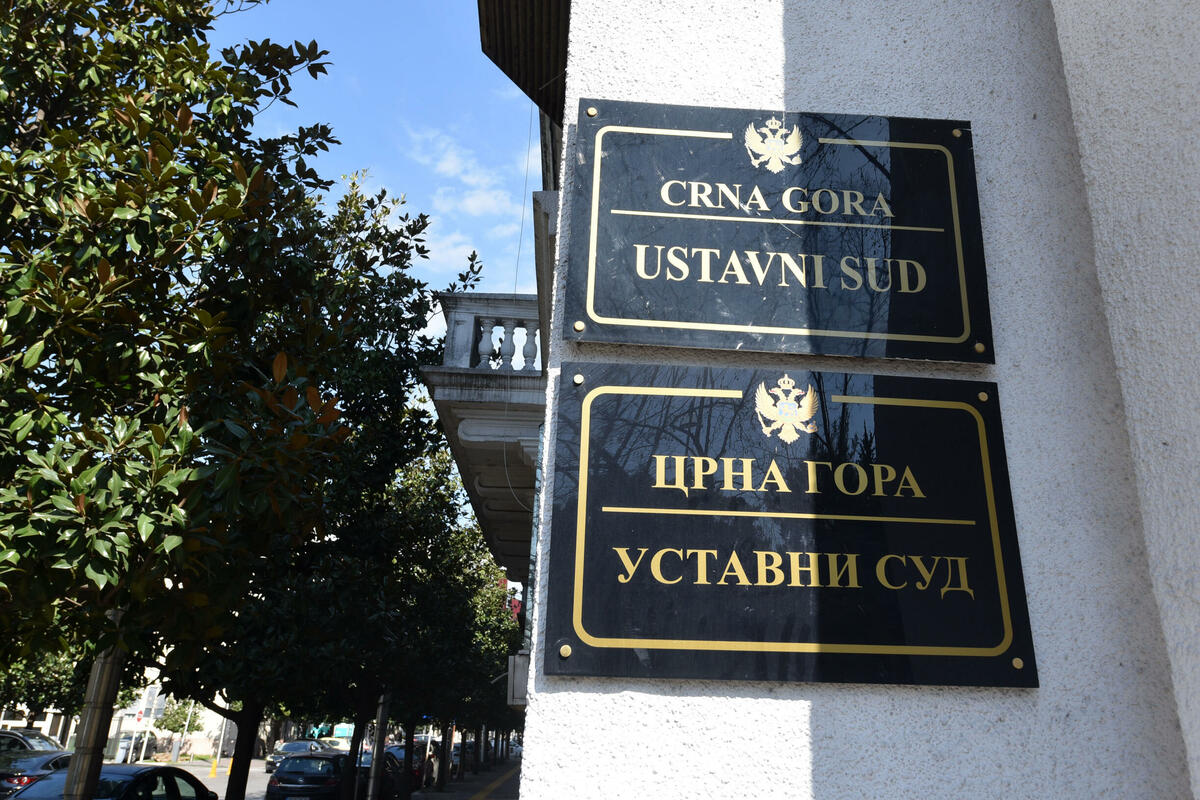
The Constitutional Court of Montenegro is currently reviewing the legality of the Law on Ratification of the Agreement with the United Arab Emirates. This inquiry arises from concerns whether the law should have been ratified with a two-thirds majority vote, given its impact on international treaties governing foreigners’ property rights.
Background of the Legal Review
Danilo Ajković, the Public Relations Officer for the Constitutional Court, announced that the court has taken steps to evaluate the constitutionality of the ratification law via a recent session. The majority ruling, comprising four votes in favor and three against, indicates a divided opinion on the matter. At stake is the interpretation of constitutional requirements when recognizing international agreements that could influence property rights in Montenegro.
The Court identified that since the agreement has not yet become effective, its implications under international law remain uncertain. The legal reasoning surrounding this decision is crucial as it might set a precedent for how Montenegro handles international agreements in the future.
Controversial Nature of the Agreement
One of the ongoing arguments relates to whether the agreement with the UAE provides adequate reciprocity, a fundamental condition for treaties of public international law. The judges advocating against the constitutional review expressed concerns that a two-thirds majority is unnecessary for such ratifications, arguing that the primary role of a ratification law is to integrate international treaties into national legislation, rather than directly regulating property rights.
Despite the initiation of procedural assessments, the Constitutional Court clarified that this action does not infer the existing law’s unconstitutionality. Instead, it signals an ongoing examination of its compliance with Montenegro’s Constitution.
Public Debate and Expert Opinions
A public hearing on this matter took place on December 15, 2025, attracting various legal experts, including constitutional law scholars and former judges from international courts. Their input offers a diverse range of perspectives that are vital to understanding the complexities involved in the case. The discussion was broadly accessible, being streamed online and broadcast across national television channels, highlighting the public interest in this significant legal challenge.
The ratification law originally passed on June 3, 2025, through a repeated parliamentary vote, suggesting a contentious legislative history. The review initiatives were brought forth by local political figure Đorđe Zenović and the Center for the Protection and Study of Birds to ensure that constitutional standards are upheld.
As the case unfolds, many in Montenegro will be observing closely the implications of the Court’s ruling. This situation not only addresses legal compliance but also raises questions of transparency and governance in the ratification of international agreements. The outcome may shape future interactions between Montenegro and foreign entities, influencing how property rights for non-nationals are handled moving forward.
In summary, the Constitutional Court’s review of the law’s adherence to constitutional mandates underscores the significance of legal frameworks in international treaties. Setting a rigorous process for evaluating such agreements could reinforce Montenegro’s commitment to upholding constitutional standards and promote a more transparent governmental approach in international allocations of property rights.