
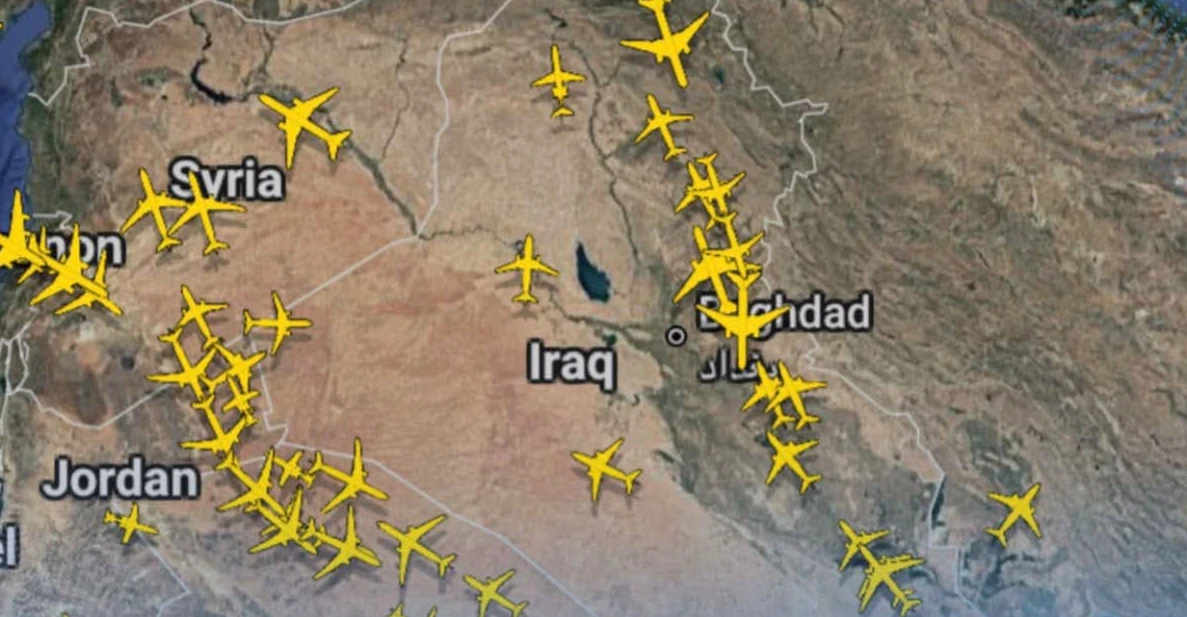
More than 300 aircraft are now traversing Iraqi airspace daily, marking a significant development after the recent reopening of flight routes with Kuwait, as reported by Iraq’s General Company for Airports and Air Navigation Management. This update comes after a series of closures that disrupted international flights due to escalating tensions in the region, particularly stemming from the conflict between the U.S. and Israel against Iran.
A Brief History of Airspace Closures
Iraqi airspace has been periodically closed since the outbreak of hostilities related to the U.S.-Israeli war on Iran. The intermittent closures were largely driven by security concerns, particularly during heightened attacks and military exchanges between Israel and Iranian forces, which raised alarms over the safety of international aviation. The situation had left many travelers and airlines uncertain about the integrity of flight operations in the region.
Recent Developments in Air Travel
On Thursday, Iraq’s Transport Ministry confirmed the reopening of the air routes with Kuwait, a move that was facilitated by coordination efforts among regional stakeholders, including Gulf countries and oversight by the International Civil Aviation Organization (ICAO). This development aims to ensure that air travel can resume safely and efficiently, benefiting both countries while also restoring vital links for import and export activities. Airports across Iraq are actively facilitating operations and maintaining open channels for international and domestic flights.
Current Status of Iraqi Airspace
Authorities at Baghdad International Airport, alongside the Transport Ministry, have affirmed that Iraqi airspace remains accessible for both passengers and air traffic. This assurance indicates that there is currently no blanket closure affecting the airports. However, some flights to and from Iran have recently experienced suspension at various Iraqi hubs such as Najaf, Erbil, and Al-Sulaymaniyah. The suspensions were implemented due to regulatory decisions and complications arising from U.S. sanctions impacting Iranian aviation operations.
Impact on the Aviation Industry
The ongoing modifications in air traffic have substantial economic implications. It has been reported that the closure of Iraqi airspace incurred losses amounting to approximately $43 million during the recent U.S.-Israel conflict involving Iran. The reinstatement of routes is hoped to mitigate ongoing financial losses and restore passenger confidence in the regional air travel landscape.
As international aviation gradually stabilizes, travelers and airline operators are hopeful that clear communication and coordination will continue. Keeping air travel safe and reliable is paramount, particularly in a region where geopolitical tensions can lead to sudden changes in flight availability and security protocols. The reopening of air routes is a promising step toward maintaining connections and fostering economic growth through enhanced air travel services.