
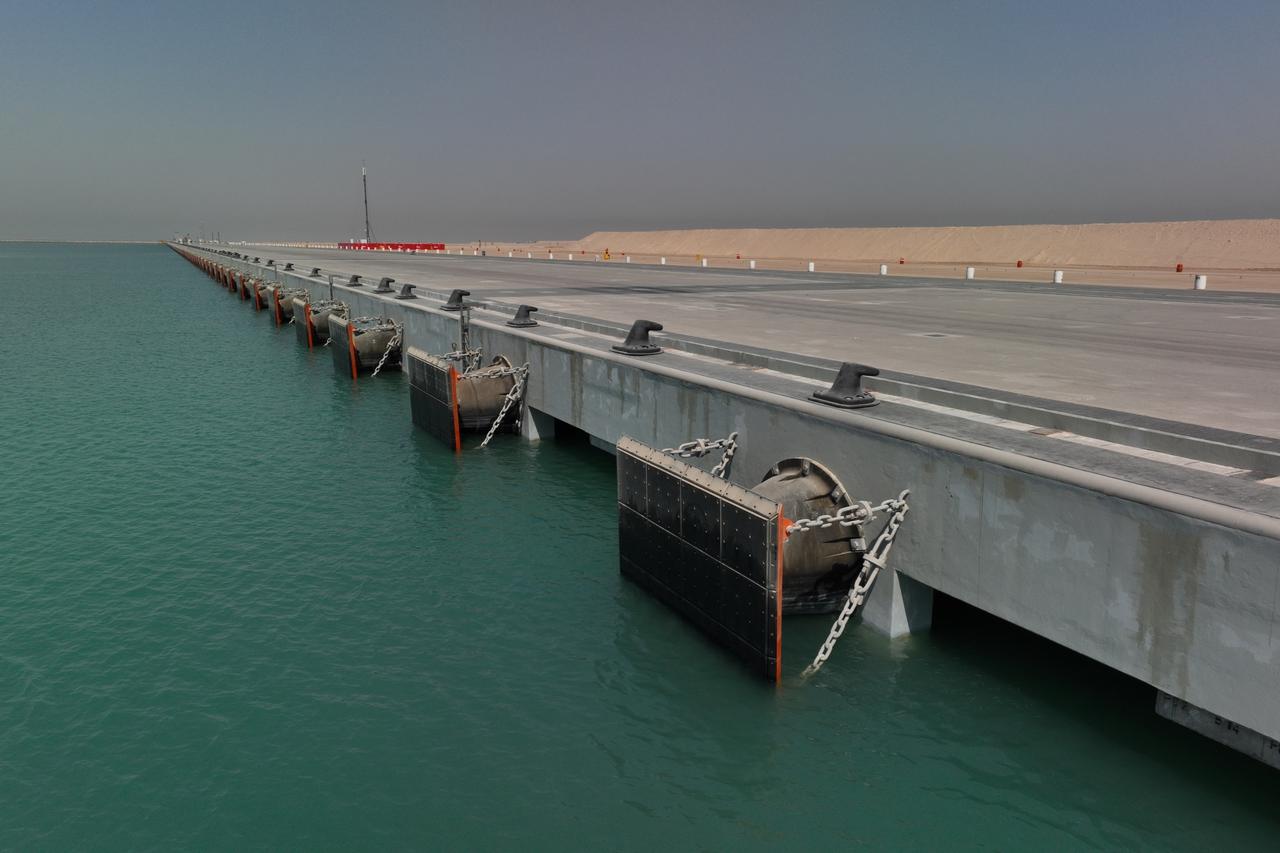
Türkiye is making significant strides in enhancing its connectivity between the Gulf and Europe with the budding Development Road project. This ambitious initiative aims to establish a new trade corridor through Iraq, presenting a viable alternative to the geopolitically sensitive routes around the Strait of Hormuz. According to Türkiye’s Minister of Transport and Infrastructure, Abdulkadir Uraloglu, the success of this project could shift global attention away from the Strait of Hormuz, which has been a focal point of geopolitical tensions.
Strategic Overview of the Development Road
The Development Road aims to create a seamless logistics route linking Iraq’s Grand Faw Port directly to Türkiye and, ultimately, to European markets. This project anticipates reducing transit times significantly: cargo journeys along this new corridor would take roughly 25 days, as opposed to 45 days via the Cape of Good Hope route and 35 days using the Southern Corridor. This not only promises quicker deliveries but also positions the Development Road as a strategic alternative for transporting goods from Gulf nations to Europe.
Uraloglu emphasized the project’s dual benefits; while it seeks to boost Türkiye’s position in global trade, it also supports Iraq’s economic reconstruction efforts. By tapping into transit trade, the new corridor could help Iraq bolster its revenues and diminish its heavy reliance on oil income. With geopolitical disturbances around the Strait of Hormuz and ongoing global conflicts, countries are increasingly inclined to pursue safer and more predictable trade routes.
Economic Potential and Job Creation
The Development Road is projected to contribute around $55 billion to Türkiye’s economy over a decade, creating approximately 70,000 jobs each year. This economic influx is expected to strengthen Türkiye’s global trade stature. Uraloglu pointed out that recent geopolitical events have spurred nations to explore new and sustainable routes for cargo transport. The Development Road stands out as a beacon of opportunity amid such uncertainties.
Recent agreements signed by Türkiye with Iraq on July 28 lay the groundwork for advancing this strategic initiative. Both Ankara and Baghdad are keen on securing parliamentary approval for these agreements to commence construction, further emphasizing the project’s importance in regional trade dynamics.
A Broader Vision: Connecting Continents
The Development Road is not an isolated project; it fits into Türkiye’s broader vision of enhancing global trade links via the Middle Corridor that extends into Central Asia and China. With existing, ongoing, and planned railway connections spanning over 2,156 kilometers, Türkiye is making significant investments totaling $47.1 billion to elevate the corridor’s production capacity to $114 billion over ten years. This expansion is projected to impact job creation positively, generating about 144,000 jobs annually.
Uraloglu noted the significance of the Kars-Igdir-Aralik-Dilucu railway as a crucial component to strengthen Türkiye’s engagement with the Middle Corridor and bolster freight transport between east and west. Notably, the Development Road will also integrate energy transmission lines, fiber-optic networks, and pipelines for oil and natural gas, showcasing its multifaceted approach to trade and energy.
Furthermore, Türkiye is collaborating with Saudi Arabia to modernize the historic Hejaz Railway, aiming to create new Gulf-Europe connections. This planned network will cover an impressive 2,511 kilometers across Türkiye, Syria, Jordan, and Saudi Arabia, with 1,681 kilometers of this route located within Türkiye itself.
In conclusion, Türkiye’s Development Road project signifies a transformative step towards redefining international trade routes. By providing a less vulnerable alternative to existing pathways, this initiative not only aims to enhance economic returns for Türkiye and Iraq but also to create a reliable and efficient corridor for global goods transportation.