
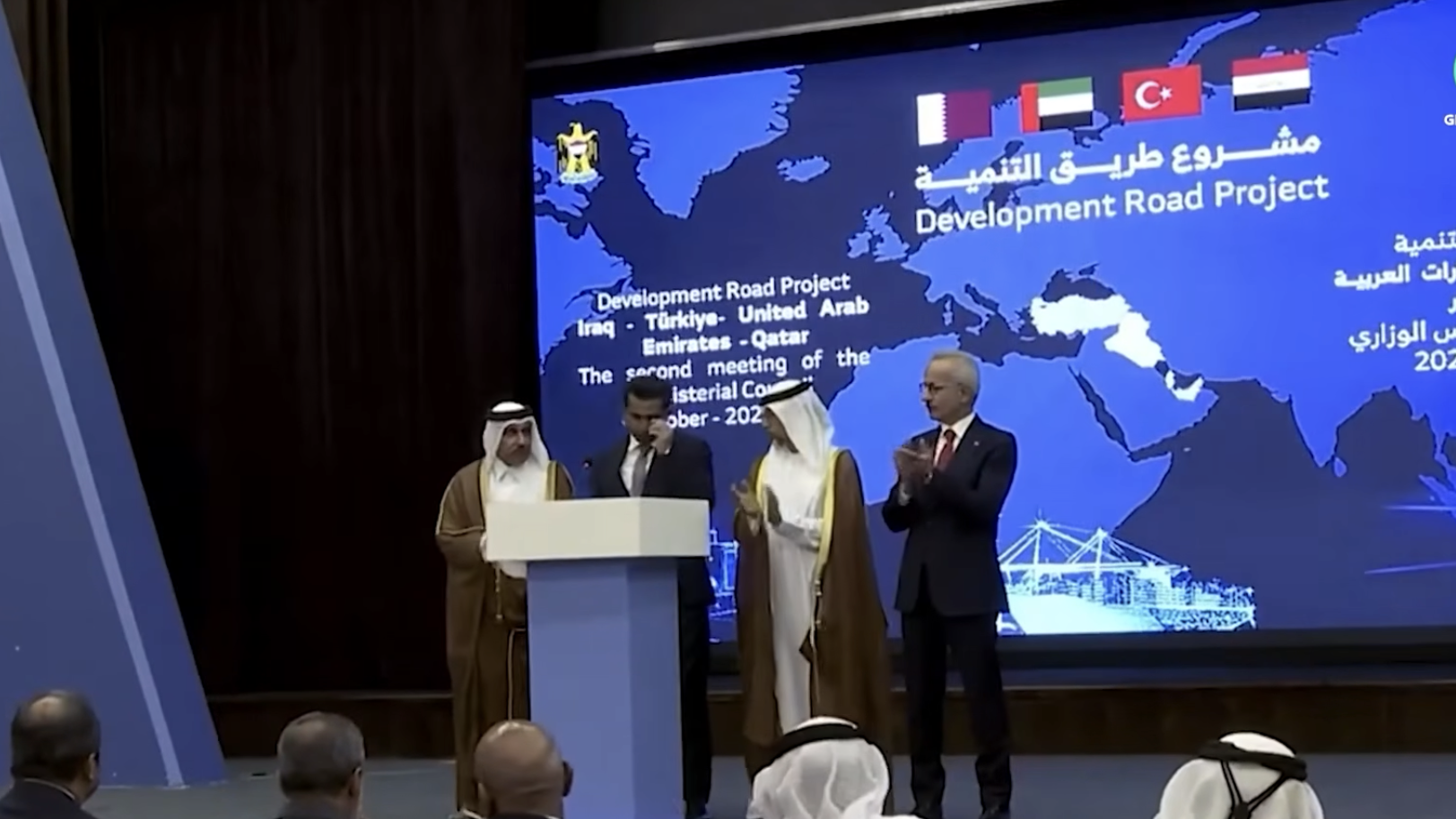
Turkish Transport and Infrastructure Minister Abdulkadir Uraloglu recently announced that the Development Road Project, aimed at linking Iraq, Turkey, and Europe, is poised to boost the Turkish economy by approximately $55 billion over the next ten years. This ambitious initiative, highlighted at a conference in Ankara, seeks to enhance the efficiency of international transportation networks significantly.
Project Overview and Economic Impact
The Development Road Project includes a 1,200-kilometer (about 745 miles) corridor stretching from the Grand Faw Port in Basra, Iraq, crossing through the country to the Ovaköy border point with Turkey. This new trade route will serve as a vital link to European transportation networks, thereby diversifying existing routes. Uraloglu emphasized that the project not only promises substantial financial returns for Turkey but also aims to establish Iraq as a regional trade center, enhancing Turkey’s position in the global logistics framework.
With an investment expected to range between $17 billion and $20 billion, the initiative will incorporate essential infrastructure like railways, highways, telecommunications, and energy systems, including oil and natural gas pipelines. Major Iraqi cities, such as Baghdad and Mosul, will be pivotal points along the route, facilitating trade and commerce.
Strategic Benefits and Regional Stability
The proposed corridor is designed to minimize reliance on the Strait of Hormuz, providing a crucial alternative transport route between the Gulf states and Europe. Uraloglu expressed hopes that the project will contribute to regional economic integration and stabilize fragmented transport networks in the Middle East. The new infrastructure aims not only to modernize transportation but also to mitigate inherent risks associated with geopolitical conflicts affecting existing seaborne trade routes.
The first phase of the project will prioritize the development of the railway system, with highway construction planned for later stages. This decision aligns with the current regional climate, where interruptions to maritime traffic—especially in areas like the Red Sea—have disrupted conventional trade pathways.
Job Creation and Future Developments
The project is projected to create approximately 70,000 jobs annually during its execution. This influx of employment opportunities will further stimulate the Turkish economy, which is expected to harness an annual economic value that could reach $80 billion if the route evolves into a fully operational energy corridor for oil and gas. This aspect establishes the project not just as a transportation venture but as a strategic energy route that could change regional dynamics.
Discussions between Baghdad and Ankara are already at an advanced stage, with drafts of implementation agreements for the project being finalized. Both governments are exploring innovative financing avenues, including an oil-for-financing framework and the establishment of sovereign investment vehicles, to ensure the development proceeds smoothly and sustainably.
In summary, the Development Road Project symbolizes a bold initiative aimed at not only enhancing trade and investment between Iraq, Turkey, and Europe but also fostering regional stability and economic interdependence. By promoting an alternative transportation network, it is set to reshape the logistics landscape, benefiting all involved while simultaneously reinforcing Turkey’s emerging role in global trade routes.