
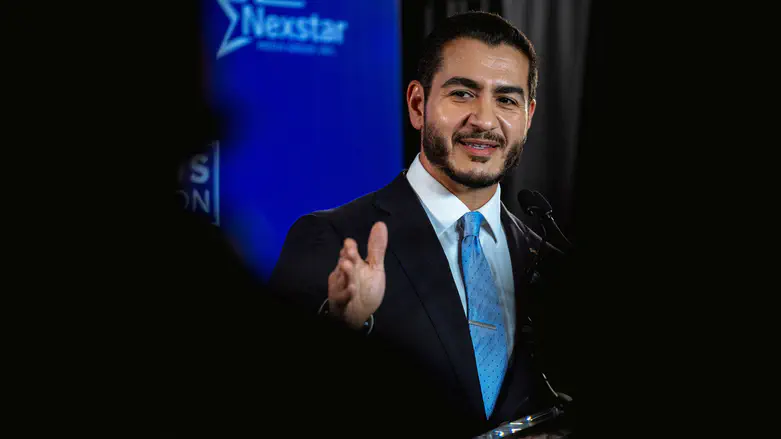
Abdul El-Sayed, a Democratic candidate for the Senate from Michigan, has stirred controversy with his remarks on U.S.-Israel relations. By openly questioning Israel’s role as an ally, El-Sayed has sparked a significant dialogue about the implications of American support for Israel and its military interventions. This discourse is not merely about political alliances but also delves into deeper ethical concerns regarding military aid and international diplomacy.
El-Sayed’s Critique of U.S.-Israel Relations
In a recent interview with ABC News, El-Sayed articulated his belief that Israel does not genuinely act in the interests of the United States. He stated that a true ally would not accept U.S. financial aid while simultaneously drawing the U.S. into unnecessary conflicts. “An ally that takes your money to push you into wars you shouldn’t be fighting is not an ally,” he asserted, framing the financial and military relationship as exploitative rather than collaborative. This perspective raises questions about the effectiveness and morality of the longstanding partnership.
Comparisons to Toxic Friendships
To elucidate his point, El-Sayed likened the relationship between the U.S. and Israel to a friendship where one party consistently takes advantage of the other. He posed a poignant analogy, asking, “If your child has a friend who repeatedly borrows money and talks behind their back, you’d likely advise them to reconsider that friendship.” This metaphor serves to underline the complexities and perceived imbalances in the bilateral relationship, suggesting that blind allegiance may not be in America’s best interest.
Criticism of Israeli Military Actions
El-Sayed’s condemnation of Israeli military strategies has received heightened attention as well. During interviews, he referred to Israeli actions as “bloodthirsty” and accused the Israeli leadership of genocide, asserting a strong stance for accountability. While he acknowledged war crimes committed by Hamas, his focus remains heavily critiquing the actions of the Israeli government. His calls for scrutiny reflect a growing trend among some Democrats seeking to reassess U.S. foreign aid and military support.
Political Implications and Responses
El-Sayed’s positions have not gone unnoticed within the political arena. Having recently secured the Democratic nomination for Michigan’s Senate race by narrowly defeating a pro-Israel rival, his views against unconditional American support for Israel have ignited both interest and backlash. His reluctance to explicitly affirm Israel’s right to exist further complicates his candidacy as he navigates a delicate balance between a growing progressive base and traditional Democratic supporters of Israel.
The turbulence surrounding El-Sayed’s views culminated in prior incidents, such as his response to an attack on a local synagogue, where he denounced antisemitism while also implying that cycles of violence should be addressed. After facing criticism for this nuanced stance, he later apologized to the Michigan Democratic Jewish Caucus, illustrating the complexities of discussing such sensitive topics.
El-Sayed’s remarks signify a broader conversation about the future of U.S.-Israel relations and how they align with American values. As he continues his campaign, the discourse surrounding his comments could prove pivotal in shaping not just his own candidacy, but also the Democratic Party’s stance on a critical foreign policy issue.