
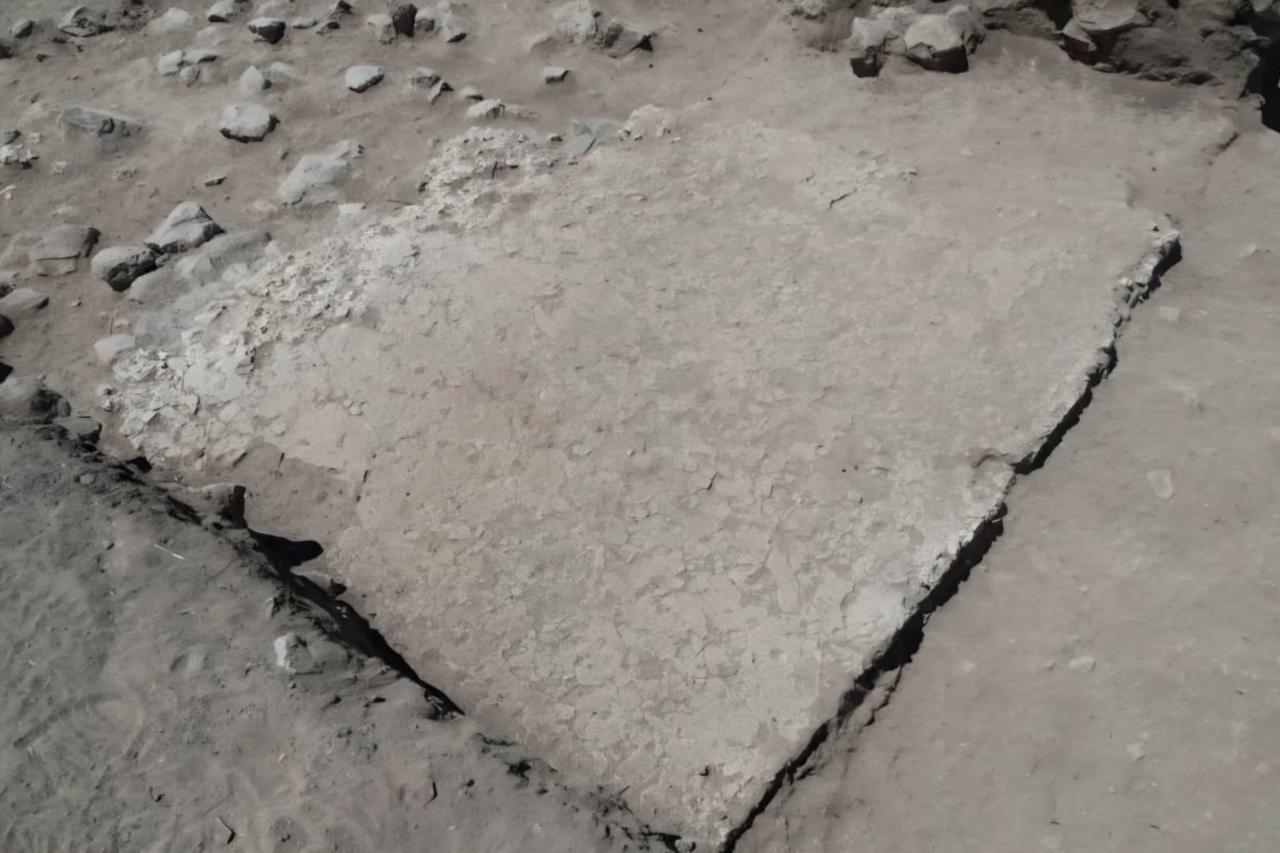
Archaeologists have recently made a remarkable discovery in Türkiye, unearthing a Hellenistic-period mosaic floor estimated to be over 2,000 years old at Kultepe-Kanesh in Kayseri. This find is particularly significant as it marks the first instance of such a discovery since excavations began at this ancient site in 1948. The mosaic adds a new dimension to the history of Kultepe and highlights the importance of ongoing archaeological research in revealing long-hidden chapters of human civilization.
Significance of the Discovery
The newly uncovered mosaic, located near the ancient Warsama Palace, measures approximately 1.6 meters (5.2 feet) on each side. Archaeologists believe that this fragment is part of a much larger original design that once adorned the floor. In conjunction with the mosaic, the excavation team has also brought to light four distinct cultural layers from the Hellenistic period (323–30 B.C.). This unique stratigraphy provides invaluable insights into the development and changes in the settlement over time, particularly during a period that historically has not received ample archaeological attention.
The project is a collaborative effort involving Türkiye’s Ministry of Culture and Tourism, Ankara University, and South Korea’s National Research Institute of Cultural Heritage. Led by Professor Fikri Kulakoglu, the team has been able to employ a variety of modern archaeological techniques to analyze the mosaic and the layers surrounding it. The findings reflect a layered history that showcases not just the artistry of the period but also the intricate building techniques utilized in ancient construction.
Insights into Kultepe’s Historical Context
The excavation not only reveals the artistic prowess of ancient cultures but also identifies the methods employed in the construction of the mosaic floor. Archaeologists have discovered that workers prepared the ground by leveling it and laying a solid base of crushed stone and fine soil before installing layers of small river pebbles. The mosaic itself includes ceramic fragments and lime, highlighting the complexity of construction techniques used at the time.
This rich tapestry of findings allows researchers to develop a more comprehensive chronology of Kultepe’s architectural evolution during the Hellenistic period. By comparing artifacts and structural remains from all four cultural layers, scientists aim to paint a clearer picture of how this ancient settlement functioned and changed over centuries.
International Collaboration and Future Research
Culture and Tourism Minister Mehmet Nuri Ersoy announced the discovery, emphasizing its importance as a first in Kultepe’s long excavation history. He noted that the findings will greatly enhance understanding of a lesser-known period in Anatolia’s extensive history. Ersoy highlighted the successful collaboration between Turkish and South Korean researchers, asserting that such international partnerships are critical for advancing the study of cultural heritage.
Kultepe-Kanesh itself has a storied past, having served as a significant political and economic center in ancient Anatolia. It was home to a wealth of written records, notably around 23,500 cuneiform tablets that document the activities of early merchants. These records have been recognized by UNESCO as part of the Memory of the World Register, underscoring their historical significance. The site was also added to UNESCO’s World Heritage Tentative List in 2014, although only five percent of its total area has been excavated thus far.
As the research team progresses with their excavation, they plan to delve deeper into the archaeological deposits that date back to the Kingdom of Kanesh and beyond into the Hittite period. Their ongoing efforts promise to further illuminate the rich tapestry of Kultepe’s layered history while strengthening the ties between Türkiye and South Korea in the realm of archaeological scholarship.