
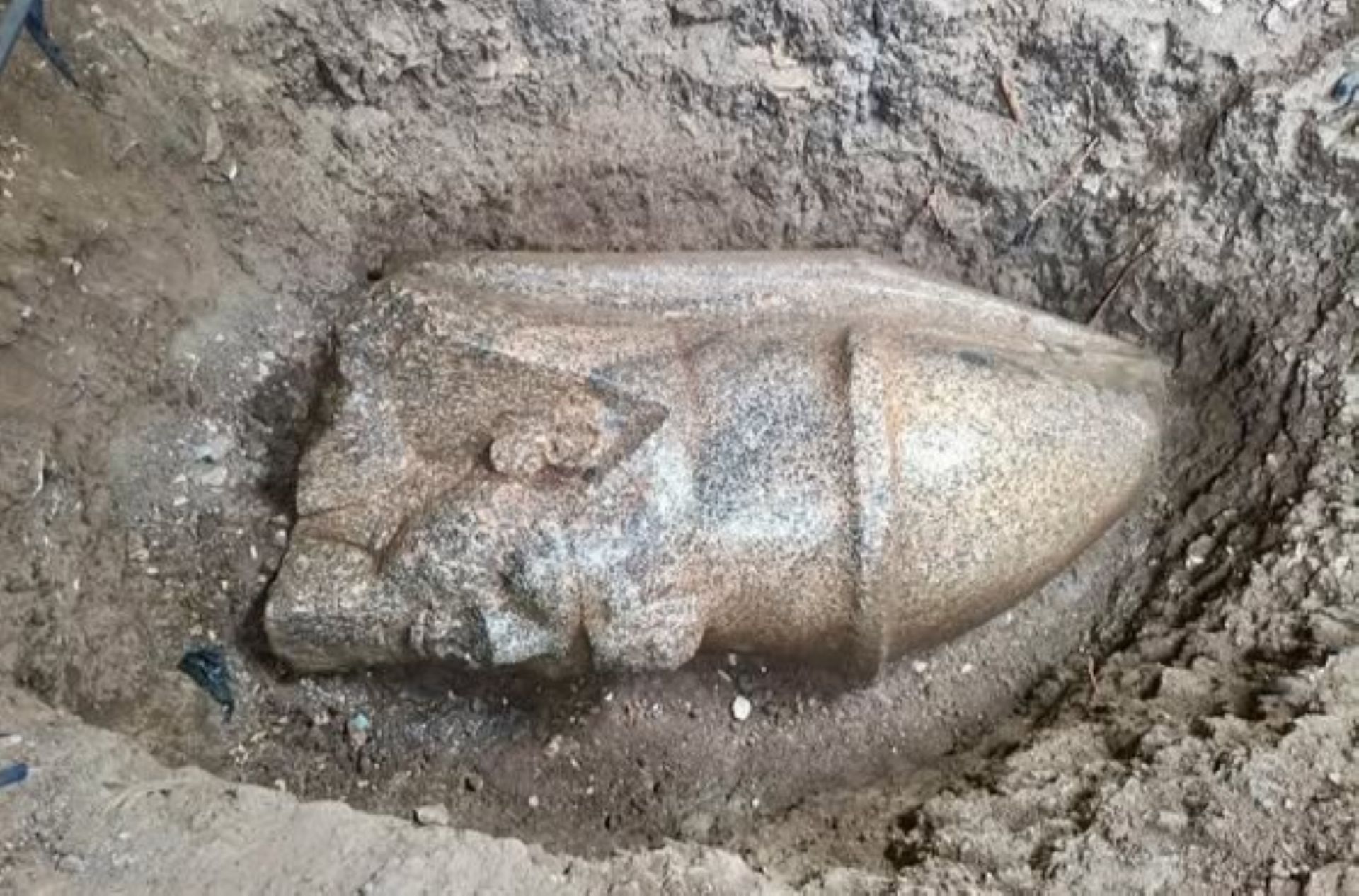
In a significant archaeological discovery, a homeowner in Egypt uncovered an inscribed stone on his property, leading to a remarkable excavation that unveiled the remnants of two enormous royal statues. This exciting find occurs against the backdrop of Egypt’s rich historical tapestry, shedding light on the past and highlighting the importance of local involvement in heritage preservation.
Discovery of the Inscribed Stone
The incident began in the village of Behebat al-Hijara, located in Gharbia Governorate. Upon discovering a stone inscribed with ancient writings, the homeowner took the admirable step of contacting local archaeological authorities. In response to this report, an inspection team from Egypt’s Ministry of Tourism and Antiquities determined that the stone was, indeed, a significant artifact. This prompted the Supreme Council of Antiquities to initiate an extensive excavation in the area.
During the excavation, archaeologists uncovered two massive royal statues alongside a pink granite block adorned with hieroglyphics. Reports indicate that one of the statues likely represents King Ramses II, who ruled over 3,000 years ago. The second statue may also depict the same pharaoh, although further research is required for confirmation.
Significance of the Excavated Statues
Among the intriguing finds was a stone head measuring approximately 5 feet, 3 inches, illustrating Ramses II adorned with the double crown. This head symbolizes the unity of Upper and Lower Egypt, a significant theme in ancient Egyptian history. Archaeologists also recovered a segment of the statue’s back pillar featuring one of the king’s royal names. Notably, the size of the head indicates that the complete statue could have stood around 28 feet tall, including its base.
The second statue, while lacking legs and a base, measured about 7 feet, 10 inches long and was also depicted in royal regalia. Archaeologists managed to locate its head, revealing well-preserved facial features that bear a striking resemblance to those of the first statue. This further supports the hypothesis that both statues may depict Ramses II, providing valuable insights into the pharaoh’s representation in art and culture during his reign.
Continuing Excavations and Future Research
Excavation efforts are ongoing as researchers aim to uncover how these statues and the granite block relate to the broader ancient context of the area. Understanding where these artifacts originally stood and their functions will enhance knowledge about the historical significance of Behebat al-Hijara.
Sherif Fathy, Egypt’s Minister of Tourism and Antiquities, remarked on the importance of this discovery. He emphasized that local residents play a crucial role in protecting cultural heritage by reporting unusual findings rather than disturbing them. The homeowner’s prompt action allowed experts to preserve the context of the artifact, which is invaluable for future archaeological studies.
Fathy’s commendation serves as a reminder of the shared responsibility in safeguarding history. By encouraging residents to contact authorities about unusual discoveries, Egypt can continue to reveal treasures from its storied past, allowing scholars and enthusiasts alike to piece together the ancient world.
This remarkable find not only adds to Egypt’s wealth of archaeological discoveries but also opens avenues for further research and understanding of the ancient Nile Delta’s significance. As archaeological efforts proceed, the ongoing investigation promises to unveil more stories hidden in the sands of time.