
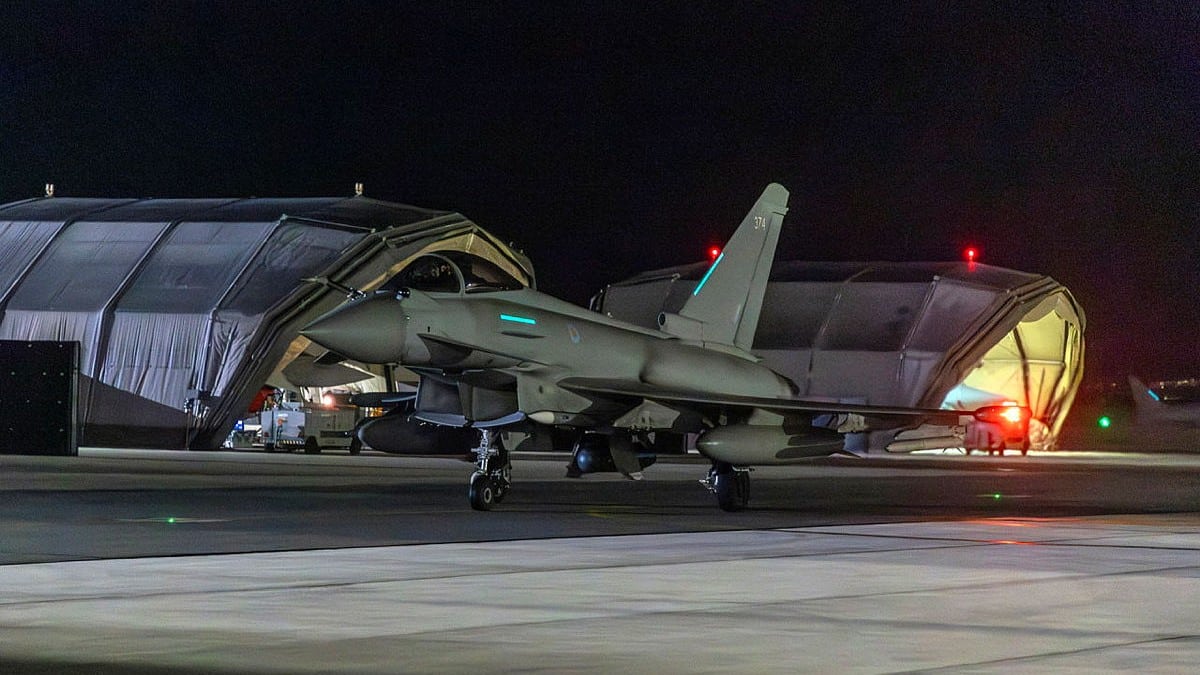
The United Kingdom has decided to deploy an undisclosed number of Typhoon FGR4 fighter jets to Saudi Arabia. This move aims to bolster Saudi air defenses against Houthi missile attacks and drone strikes targeting vital national infrastructure and densely populated areas. The Royal Air Force (RAF) emphasizes that these fighters will strictly undertake defensive operations, similar to their earlier missions over Qatar, Jordan, and Kuwait amid U.S.-Iran tensions.
Defensive Role of Typhoon FGR4 Fighter Jets
The primary function of the deployed Typhoons will be to conduct defensive counter air missions. They will not initiate offensive operations against the Houthi militia. Additionally, the RAF has dispatched an A400M Atlas aircraft to aid in the logistical support of military supplies across Saudi Arabia. This deployment adds to previous assistance, which included a Voyager tanker that was sent for increased refueling capabilities for Saudi Typhoons, responding to ongoing Houthi threats.
As Houthi attacks on critical infrastructure intensify, the international community is closely monitoring the situation. Notable strikes have occurred recently, including assaults on civilian airports in Riyadh, the most devastating of which resulted in 12 fatalities at King Khalid International Airport. This escalation has prompted calls for greater military engagement to protect Saudi Arabia.
The Current Crisis and UK Responses
The RAF has taken significant steps to enhance Saudi air defenses amidst the deteriorating security situation. Earlier this year, the UK provided the Sky Sabre medium-range air defense system. The addition of Typhoon fighters is intended to offer a broader range of defensive capabilities against drones and cruise missiles. With advanced APKWS laser-guided rockets, the RAF can neutralize aerial threats more affordably than relying solely on Sky Sabre’s Land Ceptor missiles.
Media scrutiny has increased over the UK’s ongoing military support for Saudi Arabia, particularly in light of the opposition party’s proposed £10 million air defense program. The Defence Secretary has condemned the Houthi’s recent aggression, indicating the UK’s commitment to protect its ally. The precise details regarding the number of aircraft and their deployment locations remain undisclosed.
The Long-standing UK-Saudi Defence Relationship
The partnership between the UK and Saudi Arabia in matters of defense dates back to the early 20th century. This alliance has endured despite Saudi Arabia’s authoritarian governance, with significant military collaborations since the First Gulf War. For instance, the UK was among the first nations to respond to Iraq’s aggression toward Kuwait in 1990, contributing military assets to safeguard Saudi territory.
The current deployment of Typhoon fighters represents a new chapter in this enduring alliance, further solidified by a 2017 agreement aimed at enhancing military cooperation. Yet, the relationship has encountered challenges, including allegations of war crimes associated with Saudi military actions in Yemen. These events sparked legal action against the UK government, temporarily halting arms sales before further evaluations deemed the incidents as isolated occurrences, thus allowing sales to resume.
Future Implications and Regional Stability
With Saudi Arabia actively seeking to strengthen its air defenses, including interest in joining the Global Combat Air Programme alongside the UK, Italy, and Japan, the region’s defense dynamics are shifting. The deployment of UK military resources, particularly advanced aircraft like the Typhoon, underscores the complexities of international defense relations in a volatile environment. As the situation unfolds, further developments in British military support can be expected, reflecting both strategic interests and the need for regional stability.