
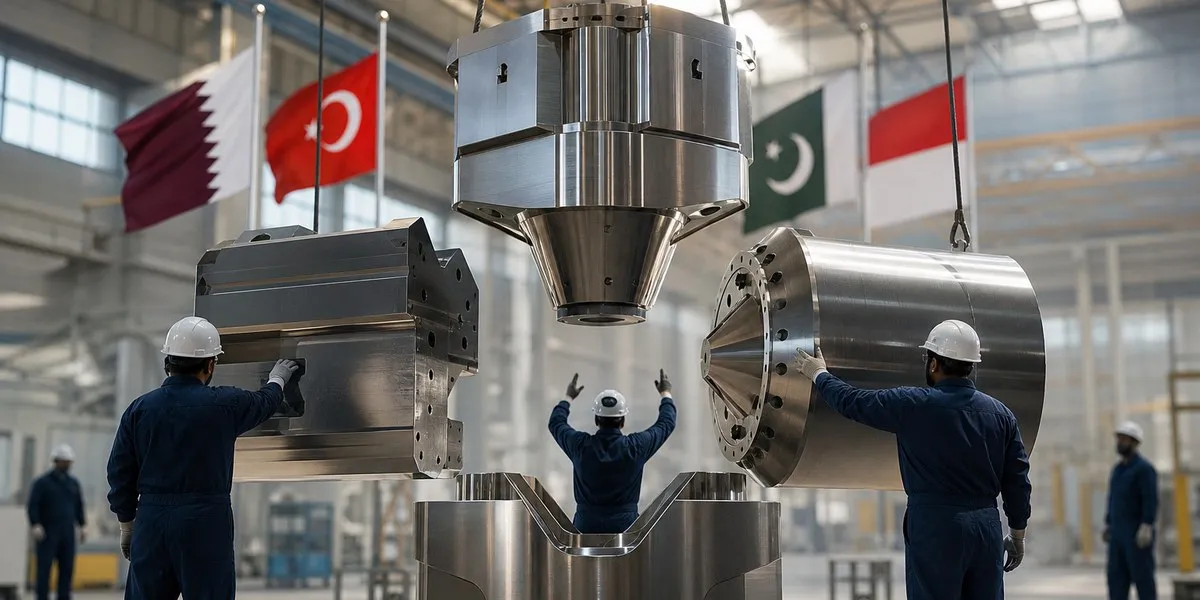
On a notable day in Qatar, a significant multilateral agreement concerning defense production was inked by four nations: Qatar, Türkiye, Pakistan, and Indonesia. This cooperation pact, known as the Badr memorandum, aims to bolster their defense capabilities and strengthen their collaborative efforts in military production, as highlighted by Türkiye’s Ministry of National Defense.
Strengthening Defense Collaboration
Defense ministers from all participating countries gathered for the signing ceremony, where Pakistan’s Defense Minister Khawaja Asif represented his nation. He was joined by Türkiye’s Minister of National Defense Yaşar Güler, Qatar’s Deputy Prime Minister and Defense Affairs Minister Sheikh Saud bin Abdulrahman, and Indonesia’s Deputy Defense Minister Yusuf Jauhari. This meeting stands as a testament to their commitment to enhancing military cooperation and ensuring security among the signatory states.
The essence of the Badr memorandum lies in its ambitious intent to foster collaboration in various areas, including military production and technological training. The Turkish defense ministry emphasized the agreement’s economic significance, aiming to merge the production capabilities of the four nations while advancing their respective defense industries. This not only reinforces military strength but also lays the groundwork for economic collaboration among the four parties.
Path to Self-Sufficiency and Technological Advancement
According to Khawaja Asif, Pakistan is looking forward to achieving self-sufficiency in defense through industrial cooperation and technology transfer, all while adhering to international and national laws. He indicated that the participating nations are eager to engage in joint research and development efforts, facilitate personnel training exchanges, and enhance their industrial capabilities. This emphasis on self-sufficiency is crucial for strengthening national security and reducing dependency on foreign military supplies.
The memorandum is designed to transform the complementary strengths of these nations into tangible projects that will benefit all involved. Haluk Görgün, head of Türkiye’s Defense Industry Secretariat, pointed out that this agreement serves as a foundation for strategic cooperation aimed at establishing joint technologies, which can further enhance their collective defense output.
Future Prospects and Expansion Opportunities
The Badr memorandum, named after the Arabic term for “full moon,” symbolizes the collaborative spirit of the four countries and their intention to work harmoniously. Notably, it is anticipated that other nations seeking to strengthen their defense capabilities may join this cooperative framework, contingent upon terms to be agreed upon by the founding members. This opens the door for a broader alliance, one that could potentially reshape the regional security landscape.
Overall, the signing of the Badr memorandum marks a pivotal moment in defense collaboration among Qatar, Türkiye, Pakistan, and Indonesia, emphasizing joint capabilities, technological exchange, and the growth of defense industries within the member states. As global security dynamics evolve, such agreements provide a strategic approach for nations to enhance their military resilience and foster collaborative efforts that could lead to a more stable future.