
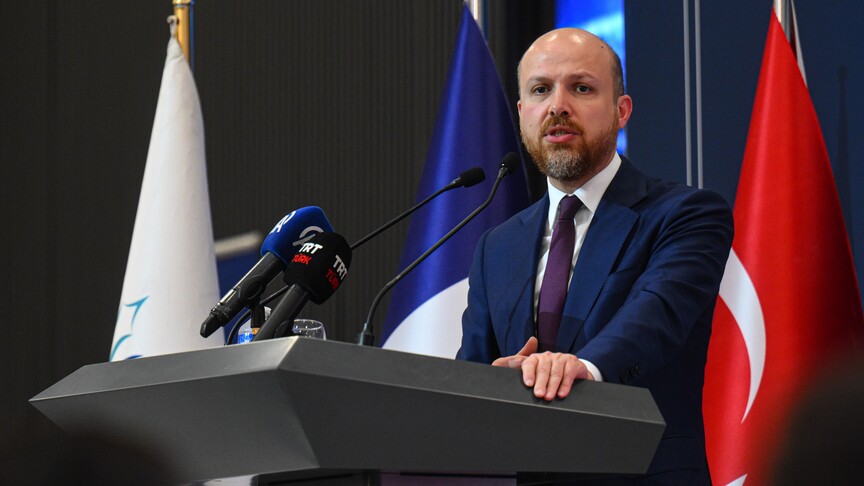
Turkey has demonstrated significant economic resilience over the last two decades, achieving an average annual GDP growth of 5.5% during President Recep Tayyip Erdogan’s administration. Despite the geopolitical challenges in the region, experts like Necmeddin Bilal Erdogan, chair of the Dissemination of Knowledge Society, emphasize Turkey’s pivotal role in shaping a more balanced global order.
Turkey’s Economic Growth Amidst Global Challenges
At the recent 19th Verona Eurasian Economic Forum held in Istanbul, this notion was underscored. Bilal Erdogan pointed out that Turkey is evolving into a vital participant in the global landscape, advocating for a fairer international system. “Turkey has discovered a trajectory that holds promise not only for itself but for the world as we transition towards a multipolar paradigm,” he explained. He acknowledged the ongoing adjustments Turkey is making as it copes with the shifting realities of world dynamics.
Erdogan also highlighted Turkey’s ambition under its “Century of Turkey” vision to influence the emerging global order. This vision entails enhancing Turkey’s abilities to manage conflicts, adapt to new challenges, and maintain resilience in the face of adversity. The nation’s track record in humanitarian initiatives sets a precedent, ranking first in global per capita humanitarian aid, a reflection of a deeply ingrained culture of solidarity that values shared prosperity.
Istanbul as a Hub for Global Diplomacy
Istanbul’s growing status as a diplomatic center was another focal point of the discussion. The city has become increasingly suitable for international conferences that allow diverse nations to convene. Erdogan remarked, “Today’s gathering signifies that Turkey has much to offer in constructing a more promising world in the 21st century.” This evolving role not only enhances Turkey’s diplomatic standing but also reflects its commitment to a more peaceful global community.
Moreover, Erdogan stated that Europe should not solely depend on the United States for matters of sovereignty, hinting at Turkey’s readiness to take on more significant responsibilities in regional affairs. He noted, “Under our counterterrorism initiatives, Turkey is addressing both its domestic challenges and the broader regional interests,” emphasizing a commitment to collaborative security solutions.
Commitment to Conflict Resolution and Cooperation
Turkey’s proactive approach in mediating geopolitical issues in its immediate vicinity is evident. Erdogan pointed out that the pursuit of common ground is essential for fostering peaceful relations. The recent Mecca Joint Defense Agreement among Turkey, Pakistan, and Saudi Arabia is indicative of medium-sized powers stepping up to secure regional stability, marking a shift in collaborative security dynamics.
However, economic disparities between the Global North and South continue to widen, complicating international dialogue, according to Erdogan. He criticized the double standards often encountered in global governance, citing the contrasting sanctions regimes imposed on nations like Israel and Russia. “Despite ongoing atrocities, the international reaction to Israel remains tepid compared to the stringent measures imposed on Russia,” he noted. Such disparities undermine trust among nations and highlight the challenges that lie ahead in establishing a more equitable global community.
Turkey’s journey reflects its ambitions to redefine its role on the world stage while bridging gaps in international relations. As it navigates toward a multipolar world, its efforts in diplomacy, humanitarian assistance, and conflict resolution illustrate a commitment not just to national interests but to the global community at large.