
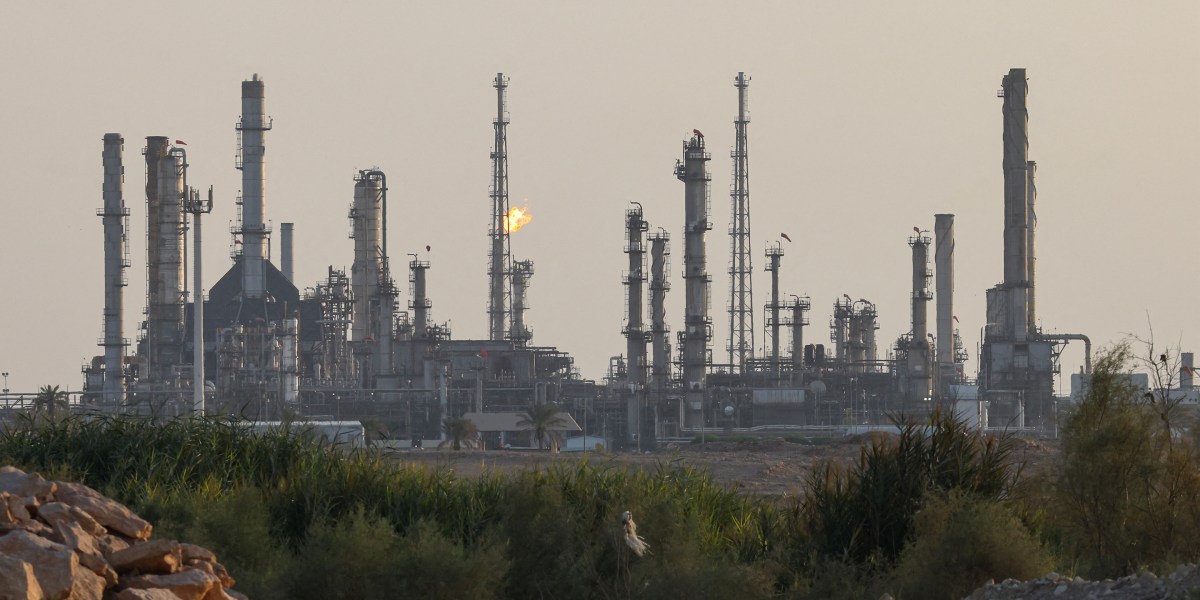
Saudi Arabia’s national oil company, Aramco, is on a mission to enhance its bypass route around the strategic Strait of Hormuz. This ambitious initiative aims to increase the capacity of the East-West Crude Oil Pipeline, known as the Petroline, from approximately 7 million barrels per day (bpd) to 10 million bpd. CEO Amin Nasser revealed this plan in a recent interview, emphasizing the company’s focus on exploring additional export routes amid escalating regional tensions.
Expanding the Petroline Capacity
The Petroline stretches about 750 miles from Abqaiq, a major processing hub, to the Red Sea port of Yanbu. Prior to the onset of conflict in the region, this crucial pipeline transported around 2 million bpd. Following the escalation of tensions, Aramco quickly ramped operations up to 7 million bpd by the end of March, with a significant portion serving domestic refineries instead of international markets. Nasser’s recent statements to Al Arabiya Business highlighted the urgency of this expansion initiative, which is expected to take two to three years to complete.
The primary objective of this expansion is to lessen the kingdom’s dependency on the Strait of Hormuz, a vital shipping channel that has faced severe disruptions due to geopolitical events, including a recent military confrontation involving the U.S. and Israel. Since the conflict’s initiation, Saudi crude production dropped to below 7 million bpd for several months and has only recently rebounded to about 8 million bpd, according to the International Energy Agency.
Challenges Ahead
While the planned increase in capacity could provide a significant boost, experts caution that it may not drastically impact global oil prices. Gilbert Metcalf, a visiting professor at MIT Sloan School of Management, pointed out that even if the pipeline successfully increases its flow to 10 million bpd, this would only contribute about 2% more oil to the global market. The pipeline and other components of Saudi Arabia’s petroleum infrastructure remain susceptible to drone and missile attacks, which pose ongoing risks.
The vulnerability of the Petroline is not merely speculative; it has suffered attacks in recent years. In May 2019, it was targeted by Houthi drones, and the situation has worsened with multiple incidents occurring this year. A notable attack on a pumping station curtailed throughput by 700,000 bpd, though operations were quickly restored. Continued attacks, including one in September, underscore the persistent threats facing Saudi oil exports.
Dependence on Hormuz Persists
Even with the planned upgrades, many analysts believe that the Petroline expansion may not substantially relieve the global dependence on the Strait of Hormuz. Metcalf highlighted that oil flows through Hormuz have not returned to pre-conflict levels, which adds to the caution surrounding the expansion project. Despite optimistic assessments from U.S. officials, tanking data suggests that oil exports through this chokepoint remain significantly below what they were before the escalation of tensions.
Gulf nations are exploring alternative pathways to bolster their oil exports, with the UAE also fast-tracking its own pipeline projects. However, the predominant focus remains on the Petroline as Saudi Arabia seeks to fortify its oil supply infrastructure amid evolving regional dynamics.
The Future of Regional Oil Power
Aramco, 81.5% owned by the Saudi government, remains the world’s largest oil entity and is also increasing its natural gas production significantly. Nonetheless, even a successful expansion of the Petroline may not alter the geopolitical balance in the Middle East. As Metcalf succinctly pointed out, the ongoing tensions have shifted the regional power dynamics, notably favoring Iran over Saudi Arabia in a surprising turn of events. This reconfiguration of power and trade in oil showcases the complexities facing Middle Eastern nations amid the ongoing conflict and evolving energy landscape.