
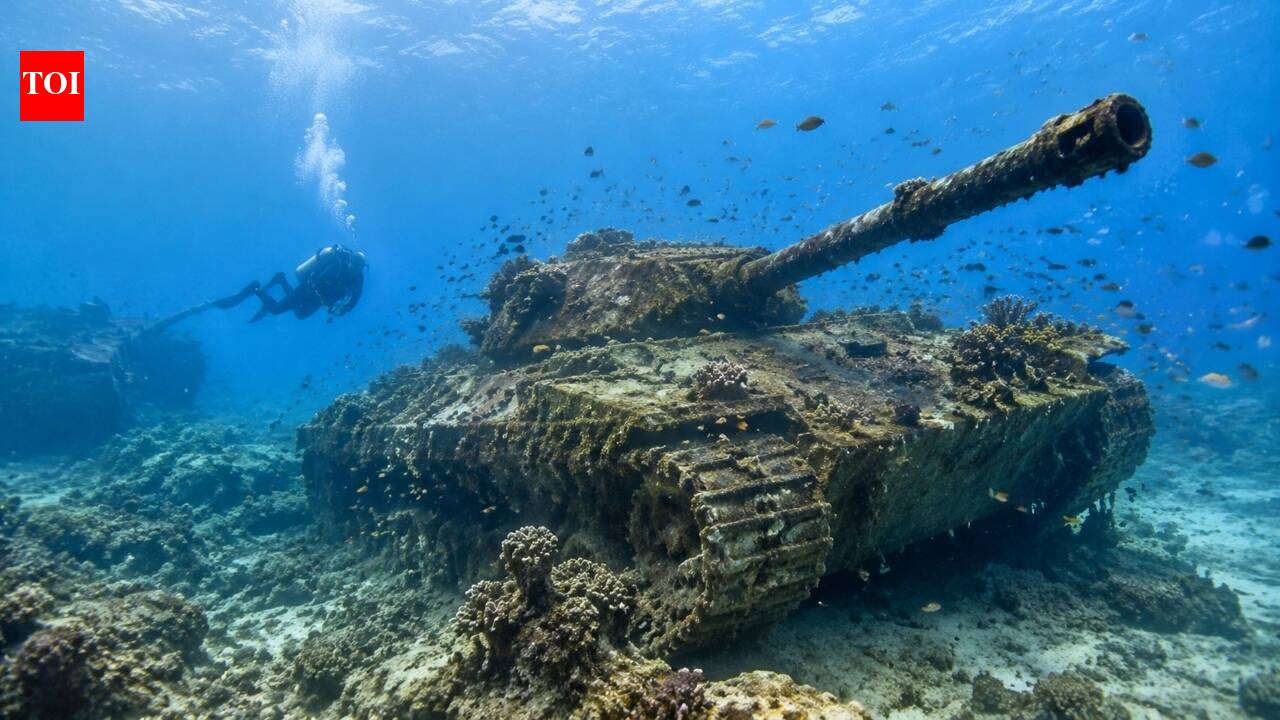
In August 2023, Egypt made headlines by submerging 15 decommissioned military vehicles, including tanks and aircraft, off the coast of Hurghada in the Red Sea. This innovative initiative aims to address the growing concerns over coral reef conservation while providing an alternative attraction for divers.
Creating Alternative Diving Sites
The Hurghada Environment Protection and Conservation Association (HEPCA) collaborated with the Egyptian government to design and implement this project. The need for this alternative diving attraction arose due to the unsustainable number of dives at natural coral sites, some of which were reportedly experiencing over 200,000 dives each year. These high visitor numbers can cause significant harm to fragile ecosystems. By establishing new diving locations featuring submerged military equipment, authorities aim to redistribute tourism traffic, making it more manageable and less destructive to natural reefs.
The military equipment was strategically placed at depths ranging from 11 to 15 meters in three different areas. This process wasn’t just about creating a unique underwater site; it was also a deliberate attempt to transform these sunken structures into artificial reefs that could support marine life. The planning phase involved extensive research and community collaboration to ensure that the initiative would yield both ecological and economic benefits.
The Role of Artificial Reefs in Marine Ecology
As time passed, the submerged military vehicles began to attract marine life. According to marine biologist Mahmoud Hanafy from HEPCA, soft corals started to take up residence on the structures, and various fish species were spotted around them. These sunken machines are now functioning as essential habitats, offering surfaces for organisms to attach and creating safe spaces for fish to reside.
However, it’s crucial to differentiate between these artificial reefs and mature natural reefs. While the sunken equipment is fostering marine life, it has not yet replicated the complex ecosystem characteristic of natural coral reefs. The establishment of hard corals will take much longer and will define the long-term ecological value of these artificial structures. Nonetheless, their initial condition serves as a valuable substrate for marine organisms, contributing positively to biodiversity in the region.
Assessing the Impact on Natural Reefs
The introduction of these artificial dive sites has attracted approximately 300,000 dives annually, offering a significant alternative to traditional coral reefs and helping to alleviate some pressure from these natural sites. However, the environmental impacts are still under assessment. Although the new sites have seen a surge in divers, comprehensive data is needed to ascertain whether there has been a corresponding decrease in dive traffic at natural reefs.
In response to the successes achieved so far, HEPCA has already announced plans to develop four additional alternative diving sites, demonstrating a commitment to managing tourism while protecting vulnerable marine ecosystems. This phased approach seeks to continually distribute visitor numbers more evenly, ensuring that sensitive natural reefs can recover while maintaining opportunities for exploration.
As this initiative continues to unfold, its true effectiveness in preserving the natural marine environment will depend on ongoing monitoring and adaptive management strategies. Through this innovative combination of conservation and tourism, Egypt is taking essential steps to safeguard its underwater treasures for future generations.