
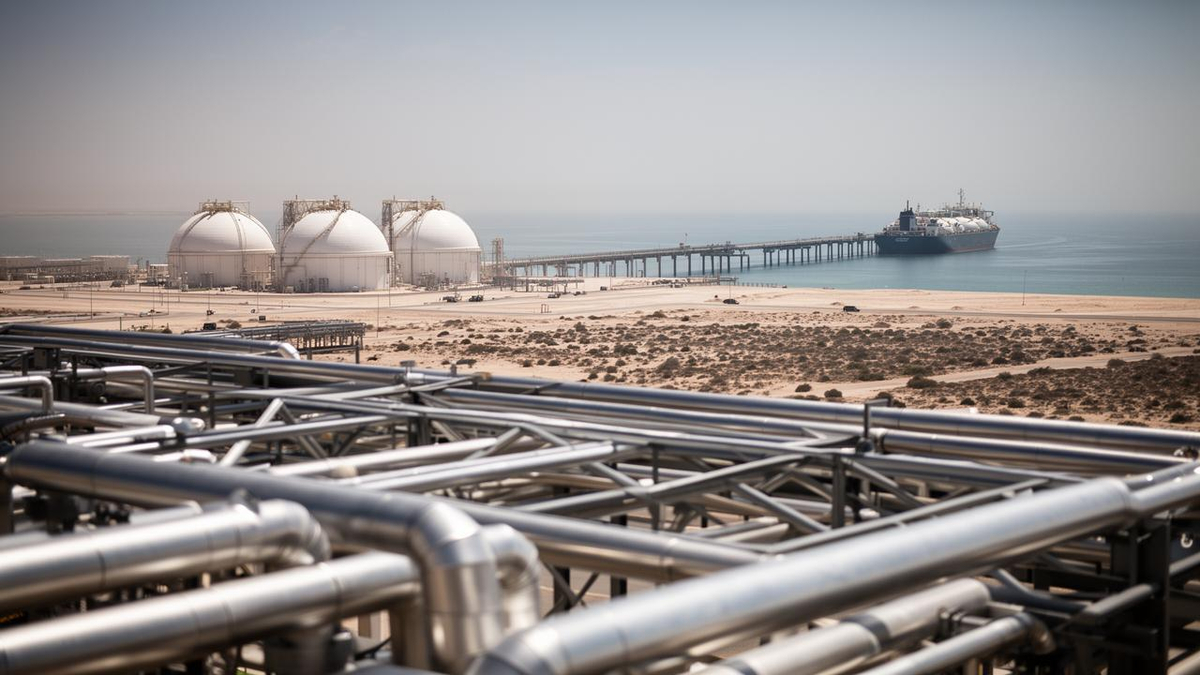
The ongoing conflict in Iran has dramatically reshaped the global liquefied natural gas (LNG) market, particularly impacting key players such as Qatar and the United States. Once the second-largest LNG exporter in the world, Qatar has found itself in a precarious position, now sourcing gas from the U.S., which is tightening its hold on LNG exports and market dominance across the board.
Qatar’s Strategic Partnership with U.S. LNG
Recently, QatarEnergy, the state-owned energy firm of Qatar, announced a long-term agreement with American LNG exporter Cheniere Energy. This contract secures the supply of 4 million tons of LNG annually through 2054, with pricing pegged to the U.S. Henry Hub gas prices plus a fixed fee. Deliveries are expected to commence in the 2030s. Cheniere’s CEO Jack Fusco expressed enthusiasm about supporting QatarEnergy from both their Sabine Pass and Corpus Christi facilities for decades.
Divided into two long-term sale and purchase agreements (SPAs) from Cheniere’s subsidiaries, the deal will see the flow of 2 million tons of LNG from each facility on a free-on-board (FOB) basis. It’s important to note that one million tons from the Sabine Pass facility is conditional on a final investment decision regarding the facility’s expansion. Although the deal represents only a small fraction of the global LNG market, experts indicate its significance within the context of U.S. contracts.
Impact of Conflict on Qatar’s LNG Capabilities
The roots of Qatar’s current LNG situation can be traced back to March 2026, when a military attack on the Ras Laffan production complex severely impaired its operations, taking out two production trains. This disruption is estimated to have knocked out about 17% of Qatar’s LNG capacity, requiring an estimated restoration timeline of three to five years. Since the attack, QatarEnergy has declared force majeure monthly, indicating its inability to meet contracts.
These challenges have led to staggering financial losses, estimated at around $20 billion annually. The losses extend beyond LNG, as exports of other byproducts such as condensate, LPG, helium, naphtha, and sulfur have also been significantly affected. Notably, this helium shortfall poses dangers to the semiconductor industry, as Qatar supplies about a third of the world’s helium, a critical gas for semiconductor manufacturing processes.
Long-Term Consequences on Global LNG Trade
The blockade of the Strait of Hormuz complicates matters, with Qatar’s Energy Minister Saad Sherida Al-Kaabi highlighting that only a minimal number of vessels are navigating through this crucial passage. Consequently, LNG exports from Qatar are currently low, contributing to a complex and uncertain market landscape. Experts like Alex Munton recognize this instability as a pivotal factor driving Qatar’s decision to enter into a lengthy contract with Cheniere.
As Qatar seeks to balance production challenges while maintaining its international obligations, it is exploring other avenues, including securing a loan from Chinese banks to source more U.S. LNG. The U.S. energy market’s growing influence is evident, as shares of Cheniere Energy and other firms have surged since the conflict began. Nearly 90% of equity analysts currently recommend buying stocks in Cheniere, showcasing strong market confidence in the future of U.S. LNG.
Through this evolving landscape, buyers in Asia, particularly countries like Japan and Taiwan, will have to adapt to the shifting dynamics of their LNG supply chains. Japan’s largest electricity producer, JERA, has recently locked in a long-term contract with QatarEnergy, while Taiwan relies heavily on Qatari imports to meet its energy needs. Overall, as the geopolitical climate continues to shift, the globally interconnected LNG market reflects a decisive pivot toward U.S. dominance.