
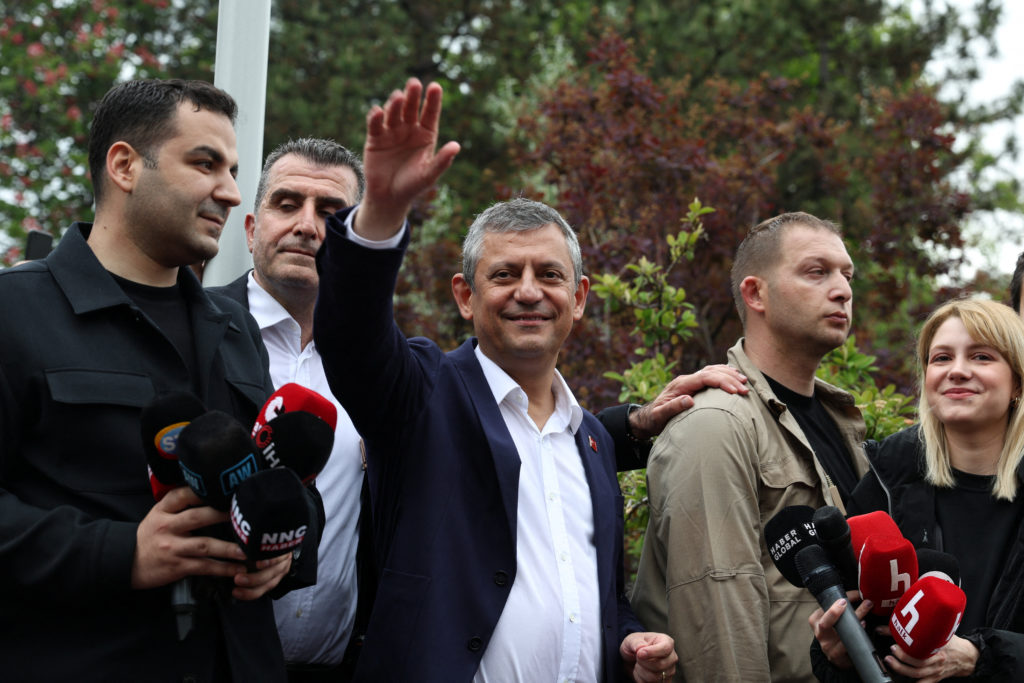
On a tumultuous Sunday in Ankara, a dramatic confrontation unfolded as police forcefully entered the offices of Turkey’s leading opposition party, the Republican Peoples’ Party (CHP). The incident marked a significant escalation in the ongoing conflict between the CHP and President Recep Tayyip Erdogan’s government, culminating in clashes that raised alarms about political stability in the country.
Tension Escalates at CHP Headquarters
A three-day standoff between CHP supporters and a leadership team imposed by an appeals court ended violently when riot police employed tear gas and rubber bullets to disperse the crowd. Supporters had fortified the party’s headquarters, using buses and furniture to barricade themselves inside. As police advanced, clouds of tear gas engulfed the premises, and the media present were swiftly expelled from the scene. Eyewitness videos captured the chaos, with visuals of broken windows and damaged furniture accompanying the sound of resistance, as some supporters attempted to fend off police using fire extinguishers.
The court’s decision to dismiss the CHP’s newly elected chairperson, Ozgur Ozel, has raised questions about the legal processes in Turkey. Ozel, who had been at the forefront of the party since November 2023, was reportedly served with a court order during the raid, which he defiantly tore up. Emerging from the building to cheers from supporters, Ozel stated, “We are leaving now only to reclaim it in such a way that no one will be able to meddle again.”
Ozel Calls for Rebuilding the Party
After the tumult at headquarters, Ozel led a march toward Parliament, approximately 8 kilometers away, joined by hundreds of enthusiastic supporters despite inclement weather. Stopping at the National Sovereignty Park, he urged his constituents to commit to rebuilding the CHP for a third time, referencing its historical importance since its establishment in 1923 by Mustafa Kemal Ataturk. The party was disbanded during the 1980 military coup and reestablished in 1992, highlighting its resilience in turbulent political environments.
Upon reaching the Parliament, Ozel delivered a stirring address to hundreds, affirming that while the CHP was “de facto shuttered,” it would be revived. His tenure as party chairperson may have been abruptly curtailed, but Ozel remains an elected lawmaker and the party’s spokesperson, reinforcing his enduring influence.
The Government’s Legal Crackdown
The backdrop of this unrest includes ongoing legal challenges facing the CHP, often perceived as a strategy to undermine the party’s influence ahead of the upcoming elections. The appeals court ruling that nullified Ozel’s election positions Kemal Kilicdaroglu, the party’s former leader, to step back into a role he previously held for 13 years without significant electoral success. Observers have noted that the government’s legal maneuvers, particularly allegations of corruption aimed at party officials, are seen as politically motivated efforts to weaken the opposition.
As the political tension mounts, the looming question remains whether Erdogan, who has led the country since 2003, will call for early elections. In anticipation of future electoral challenges, particularly against popular figures like Istanbul Mayor Ekrem Imamoglu, whom Erdogan has imprisoned on separate charges, many speculate that the government seeks to neutralize any opposition that could disrupt their political dominance.
In summary, the events at the CHP’s headquarters stand as a testament to the fragile state of Turkish democracy. With the opposition party rallying behind Ozel despite legal setbacks, the resilience and determination of the CHP remain pivotal in navigating this complex political landscape. The potential for renewed conflict or cooperation lies ahead, as both sides gear up for the election cycle, making the coming months crucial for Turkey’s democratic future.