
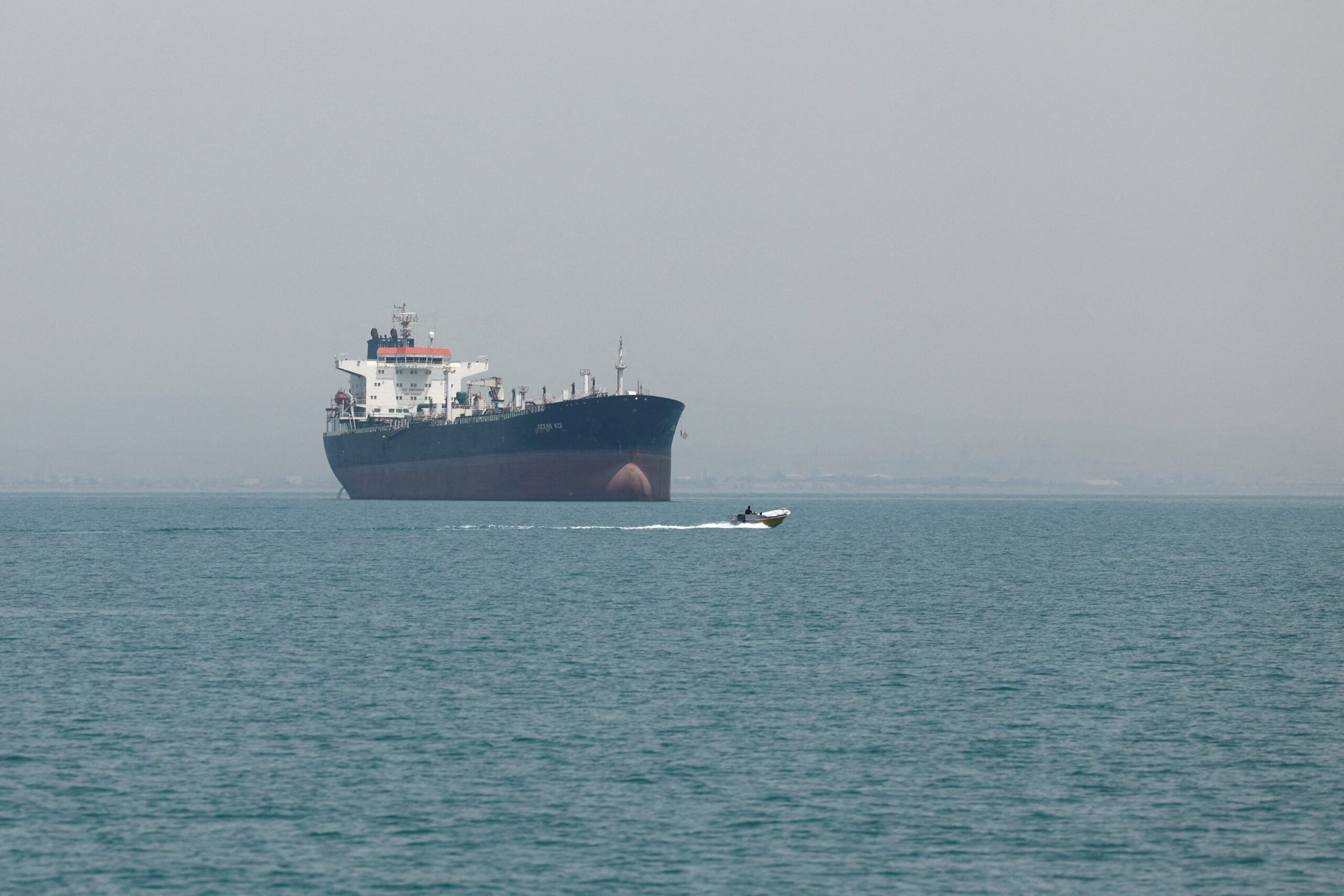
A significant development in the crude oil market has emerged as an Iraqi supertanker has departed the Persian Gulf and successfully crossed a US blockade into the Arabian Sea. This movement comes amid ongoing negotiations aimed at resolving the ongoing conflict between the US and Iran, with hopes of reopening the vital Strait of Hormuz.
Vessel Tracking Details
The supertanker, known as the Eagle Verona, has made its way into the Arabian Sea after leaving the Gulf of Oman. Data compiled by Bloomberg reveals that this Very Large Crude Carrier (VLCC) is transporting approximately 2 million barrels of Iraqi crude oil to China. The vessel loaded its cargo at the Basra Oil Terminal on February 28 and is now en route to the port of Ningbo, with an expected arrival date of June 12.
As oil prices fluctuate, the movement of tankers in and out of the Persian Gulf is under close scrutiny. The ongoing tensions in the region have largely stopped vessels from navigating through the Strait of Hormuz, especially since the waterway was effectively blocked following military confrontations involving the US and Israel late in February. During this time, both commercial traffic and the flow of oil have been severely affected.
Diplomatic Efforts to End the Conflict
Amidst this situation, discussions between the US and Iran are reportedly inching closer to a settlement. Senior US officials have indicated that both sides are nearing an agreement that could pave the way for reopening the Strait of Hormuz. In contrast, while President Donald Trump claims a peace deal has been “largely negotiated,” Iranian state media has dismissed these assertions as unrealistic, without specifying the reasons.
The departure of the Eagle Verona is notable not only for its size but also for its timing, as it follows the journey of another vessel, the Al Hamra. This liquefied natural gas carrier marked a significant milestone by being the first LNG shipment from the Persian Gulf to India since hostilities began, illustrating a potential thaw in regional maritime tensions.
US Naval Actions and Regional Implications
In response to the ongoing crisis, the US Navy has imposed a blockade on Iranian ports starting in mid-April. Reports claim that during this period, the US has redirected approximately 100 commercial vessels as part of its military strategy to curb Iranian activities in the region. Recent information from the semi-official Iranian Students’ News Agency suggested that 33 vessels, including oil tankers and container ships, were authorized to navigate through the Strait of Hormuz after receiving clearance from the Iranian Revolutionary Guard Corps Navy.
The ownership of the Eagle Verona falls under AET Inc PTE Ltd, a Malaysian company based in Singapore. Although attempts to contact AET for more details went unanswered, their affiliation with the MISC Group, which is linked to PETRONAS, highlights the intricate network of companies involved in the global oil trade.
In summary, the movement of the Eagle Verona marks a crucial point in the evolving oil market landscape as the dynamics of the US-Iran conflict continue to unfold. As negotiations progress, the reopening of the Strait of Hormuz could signal a shift in maritime navigation and global oil supply, which remains a focal point for both economic and geopolitical stability in the region.