
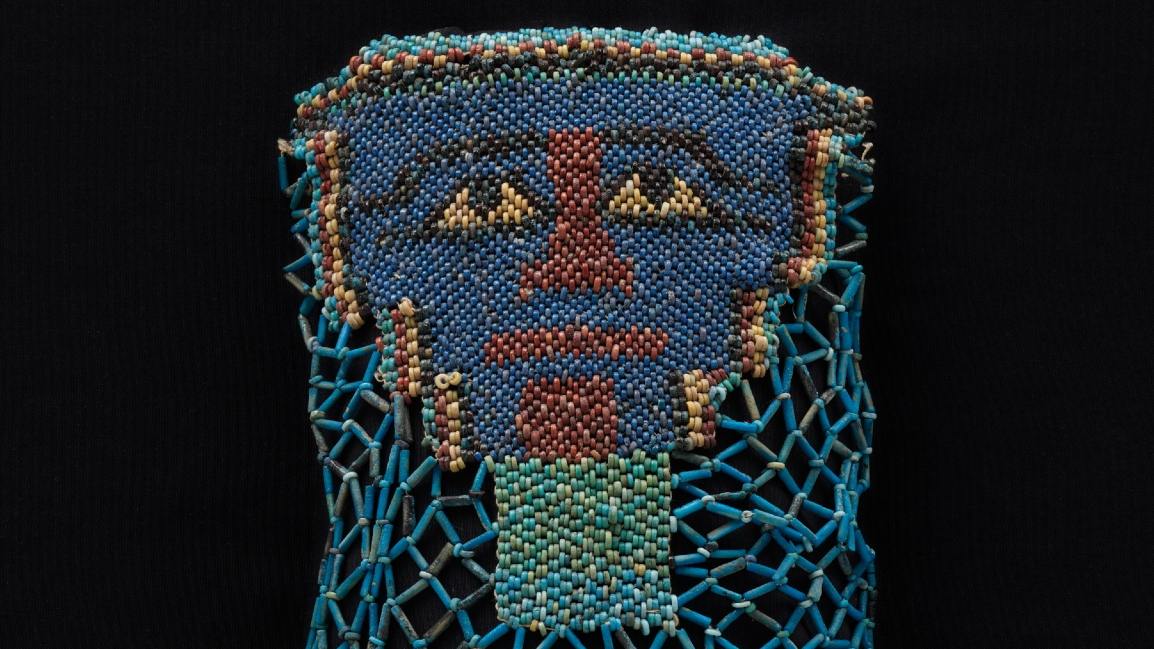
The intricate artistry of ancient Egypt never ceases to amaze, especially when it comes to their funerary practices. One remarkable artifact that embodies this complexity is the bead-net funerary shroud, a beautiful textile woven from thousands of vibrant beads. Made from around 664 to 525 B.C., this shroud serves as a significant cultural symbol within the context of Egyptian beliefs about the afterlife.
Historical Context of the Bead-Net Shroud
The bead-net shroud was more than just a decorative element; it played a crucial role in the ceremonial practices surrounding death. Ancient Egyptians believed in the afterlife, where transformation and resurrection were paramount themes. The shroud, adorned atop linen-wrapped mummies, symbolized the deceased’s metamorphosis into Osiris, the revered god of fertility and the ruler of the dead. By donning such elaborate coverings, they conveyed the significance of this transformation.
This particular shroud currently resides in the Art Institute of Chicago, purchased from Rev. Chauncey Murch, an American art collector and director of the American Presbyterian Mission at Luxor. Measuring 18 inches long and 15.8 inches wide, it was carefully designed to envelop the head and upper chest of the deceased, emphasizing both artistry and spiritual significance.
Artistic Components and Symbolism
The design of the shroud features three main components: a human face, a winged scarab, and a wide collar. Each element holds symbolic meaning. The face is primarily crafted from dark-blue beads, with facial features and eye makeup artistically represented using black, red, and yellow beads. This creativity echoes the famed mask of Tutankhamun, even utilizing teal beads to depict a false beard.
The winged scarab, made from various beads, likely invokes Khepri, a sun god associated with creation. In ancient Egypt, beetles were often linked to the concept of rebirth, making this addition particularly meaningful. While scarabs were commonly seen as amulets placed with mummies, their depiction on this beaded shroud turns them into an integral part of the art itself, crystallizing the belief in rebirth and renewal within the context of funerary practices.
Functionality and Cultural Significance
Bead-net shrouds were typically positioned over the base of red linen that covered the mummies, held fast with ties around the back. This layering served a dual purpose; visually, it resembled the wrappings of Osiris and offered a protective embrace to the deceased. Thus, the bead net not only served an aesthetic function but also symbolized divine care, echoing the way the goddess Nut is often depicted surrounding the deceased with her protective arms.
Together, the shroud and the underlying materials create a vivid representation of cultural beliefs surrounding death and the afterlife. The art of ancient Egypt continues to inspire admiration and fascination, revealing the complexity of their cultural practices and beliefs regarding immortality.
The bead-net funerary shroud is a masterpiece that encapsulates the essence of ancient Egyptian artistry, combining function, aesthetic beauty, and profound symbolism. It invites us to explore a world where every bead tells a story of life, death, and rebirth. If you’re intrigued by this compelling artifact, consider delving deeper into the rich tapestry of ancient Egyptian culture.