
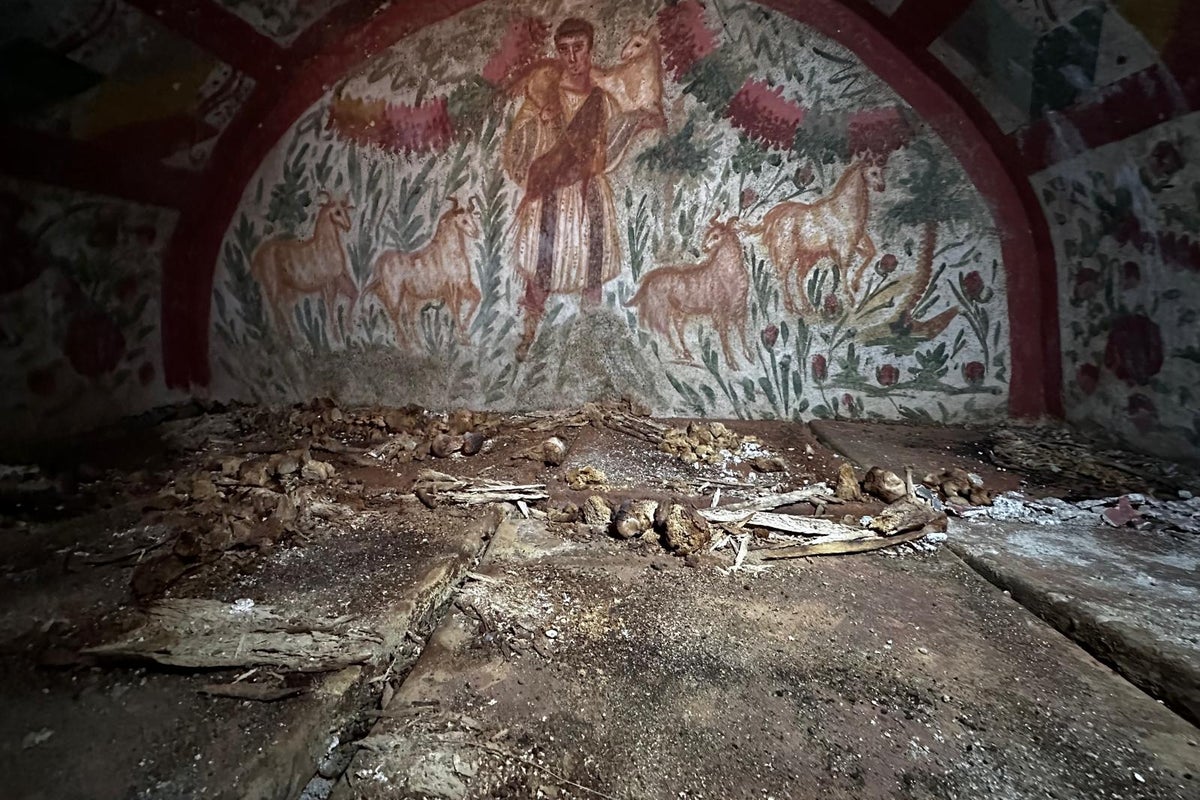
Recent archaeological findings in Turkey are shedding new light on the early development of Christianity, revealing significant artifacts and structures that deepen our understanding of this pivotal period. Among these discoveries is the well-preserved early image of Christ, along with ancient Christian cemeteries and texts that together highlight Turkey’s crucial role in the early expansion of this faith.
Unveiling Ancient Churches and Artifacts
Over the past two years, archaeologists in modern-day Turkey, specifically in Anatolia, have identified at least twelve previously undocumented churches dating back to the 4th and 5th centuries CE. These sites offer valuable perspectives on how Christianity began to flourish shortly after Jesus’ crucifixion. Notably, excavations in Pergamon have revealed one of the earliest known representations of Saint George, further linking Turkey to significant aspects of Christian iconography.
The best-preserved image of Christ, discovered last year in Iznik, portrays Him as the Good Shepherd and dates back to the early 3rd century CE. Found within a sealed tomb rich in oxygen-depleted air, the fresco maintains its vibrant colors and details almost perfectly, allowing historians to explore early Christian depictions of Jesus. This image stands as one of only a handful of early representations of Christ, providing a clearer picture of how early believers conceptualized His appearance.
Insights from Recent Research
In addition to archaeological findings, new scholarly research is enhancing our comprehension of why Christianity transitioned from a small, persecuted sect to the official religion of the Roman Empire over a span of three centuries. Investigations reveal that persecution and martyrdom, contrary to expectations, may have significantly contributed to the faith’s expansion. Interestingly, researchers have also identified that lower illness-related mortality rates in Christian communities may have played a role in attracting converts.
Furthermore, the data suggest that early Christian social initiatives likely increased conversion rates, and the political and economic turmoil faced by the Roman Empire also facilitated the growth of Christianity. These insights demonstrate how the early church could adapt to and thrive even in a hostile environment.
The Cultural Context of Early Christianity
The rise of the imperial cult in Turkey provided both challenges and opportunities for early Christians. As archaeologists continue to unearth remnants of emperor worship, they illustrate how this practice influenced the evolution of Christianity. Recent discoveries include statues of Roman emperors, such as Marcus Aurelius, found at ancient sites like Syedra and Bubon. These artifacts indicate how early Christianity positioned itself not just as a religious movement but as a counter-narrative to the prevailing cultural norms, attracting diverse followers who opposed imperial rule.
The importance of these archaeological findings is further underscored by their relationship to the New Testament, particularly the Book of Revelation. This text, believed to have been written by John of Patmos, directly addresses the political and spiritual context of its time, noting the Roman Empire as an adversarial force. Recent excavations in cities highlighted in Revelation have yielded significant evidence of early Christian life, such as a house church from the 4th century in Laodicea, illustrating how early Christians constructed their communities.
In summary, the recent archaeological discoveries in Turkey reveal invaluable insights into the early Christian experience. This thriving region served not only as a foundation for early Christianity but also as an arena for its struggle against imperial powers. As research continues to evolve, the significance of Anatolia in the nascent stages of Christianity becomes increasingly clear, affirming its essential role in shaping this enduring faith.