
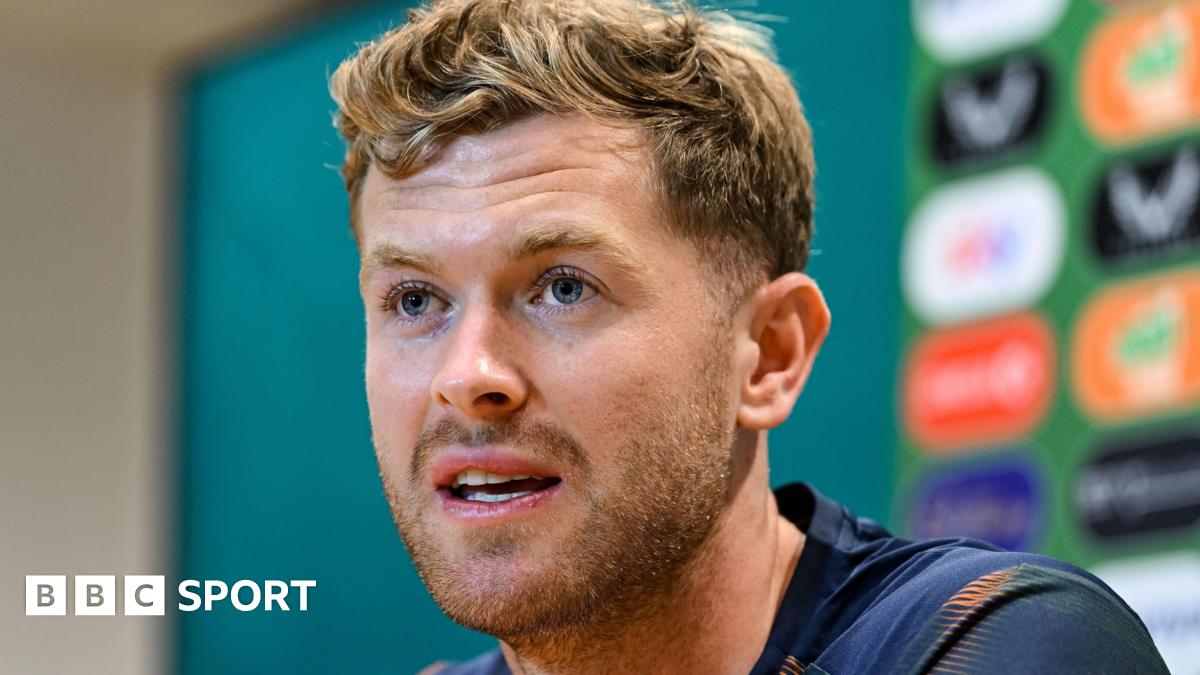
Nathan Collins, the captain of the Republic of Ireland football team, has stated that players who wish to “take a stand” regarding the upcoming Nations League matches against Israel will not face any opposition from their teammates. This stance comes as the Football Association of Ireland (FAI) has confirmed their intention to proceed with the scheduled fixtures, amid concerns that refusing to play could result in disciplinary actions, including the risk of being disqualified from the tournament.
Protests Against the FAI’s Decision
Recently, a protest took place outside the Dáil, the Irish parliament, opposing the FAI’s decision to go ahead with the games on September 27 and October 4. Such protests highlight the growing unease within the community regarding the political implications of engaging in matches where the conditions are seen as controversial. Collins acknowledged the necessity for unity among the players but emphasized that individual players’ rights to express their opinions must be respected.
He stated, “What we’d speak about is hard to say, because you need the whole group together. But if individuals wanted to take a stand, we are not going to stand against them; we are not going to hold them back.” This encapsulates a commitment to honoring personal beliefs while navigating the complexities of representing the national team.
Trust in the FAI and Government
While acknowledging the situation’s difficulty, Collins indicated a level of trust in the FAI and the government. “For players, we just have to trust the FAI. We have to trust the government that they know what they’re doing. We’re picked to play football. You know, we’re picked to represent our country.” His remarks illustrate the tightrope that players must walk between their roles as athletes and as citizens with individual beliefs.
However, the growing calls from advocacy groups, including Irish Sport For Palestine, amplify the tensions surrounding the fixtures. This group has called for a boycott, arguing that participating in games involving Israeli teams entails complicity in what they perceive as serious violations of international statutes. They have accused the Irish government of tacit acceptance of policies that infringe on human rights.
The Broader Context of the Conflict
Israel has consistently denied allegations of genocide and war crimes, asserting that its military actions in Gaza are responses to threats against its security. In the wake of the recent conflict, which saw a significant escalation following Hamas’s attacks on October 7, 2023, both sides have faced devastating losses. Reports indicate that over 1,200 Israeli civilians were killed and hundreds taken hostage, prompting a military response that has reportedly resulted in over 72,500 fatalities in Gaza, according to local health authorities.
This ongoing situation casts a shadow over the sporting world, as players and organizations grapple with their positions in relation to global and humanitarian issues. The Republic of Ireland squad’s challenge reflects not only their love for the game but also the moral quandaries that sport can entail, underscoring the intersection of athletics and activism in today’s society. The discourse surrounding these matches continues to evolve, leaving players to navigate their identities as both sportsmen and advocates.