
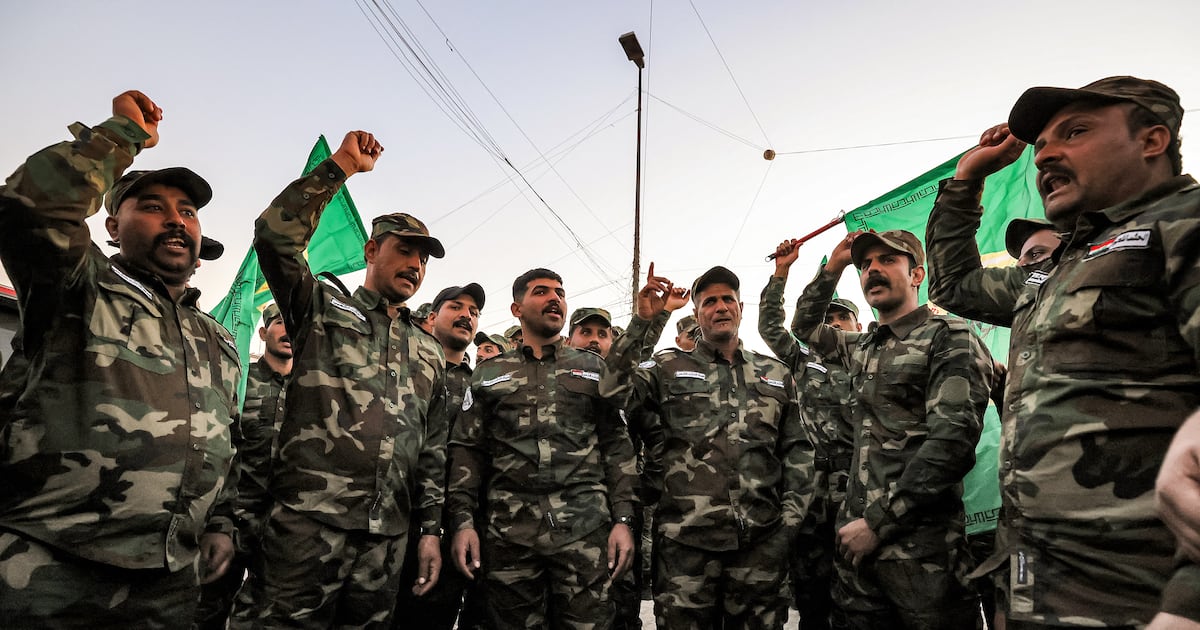
Iraq is currently debating the establishment of a security ministry aimed at consolidating the Popular Mobilisation Forces (PMF) and other units under a unified command. This proposal comes in the wake of increasing American pressure to rein in Iran-aligned armed factions within the country. The discussions unfold against a complex backdrop of U.S. demands, Iranian influence, regional hostilities, and domestic calls to uphold the PMF’s role in Iraqi security, a force created in 2014 to combat ISIS.
Historical Context and the Rise of the PMF
The PMF was formed after ISIS captured significant territories in northern and western Iraq in 2014, taking advantage of the collapse of Iraqi security forces trained by the U.S. This prompted Shiite cleric Ayatollah Ali Al Sistani to call for jihad against ISIS, which led to the mobilization of thousands of Iraqis, including numerous powerful Shiite militias, some of which had previously fought alongside Iran in the Syrian Civil War to support Bashar Al Assad.
Following Iraq’s declared victory over ISIS in late 2017, these Iran-backed factions expanded their influence and capabilities, making them significant players in Iraqi economics and politics. Their growing power has, on several occasions, positioned them as challengers to governmental authority, creating a tense environment in the country.
Proposed Changes and Political Dynamics
The Iraqi government is now grappling with a proposal to merge the PMF with the Interior Ministry’s Federal Police and other security sectors into a single entity under a newly created Federal Security Affairs Ministry. This new structure would report directly to the Prime Minister, who is also the commander-in-chief of armed forces. Politicians within the Co-ordination Framework, a coalition of largely Shiite, Iran-aligned groups and parties, have discussed this initiative as a possible solution for incorporating the PMF and other militias into a cohesive security apparatus.
Challenges remain, particularly regarding the U.S. stance against the participation of certain Shiite factions in government. Groups like Kataib Hezbollah and others have been designated as terrorist organizations by Washington, complicating their potential role in a restructured security force. Some faction leaders have expressed conditional support for the integration plan, provided that they receive guarantees concerning their safety and immunity from potential repercussions.
Ongoing Opposition and the Path Forward
Despite some factions indicating a willingness to consider the proposal, opposition persists among key groups, such as Harakat Al Nujaba. Their leaders assert that disarming would render society vulnerable. Critiques suggest that the integration plan risks being viewed as an avenue for U.S. interests, inciting further resistance from these factions.
Experts have noted that while the establishment of the new ministry could be a step toward resolving Iraq’s security dilemmas, it may not fully address the issue of militia control over arms. Additionally, the interconnected nature of Iraqi, Iranian, and regional dynamics implies that negotiations between Tehran and Washington will heavily influence this process.
Looking ahead, Iraq faces a long and challenging road. The political will among the Shiite factions, many of which are tied to Iran, will play a crucial role in how this situation unfolds. Observers argue that this initiative could be a timely exit strategy, especially in light of shifting geopolitical tensions, but achieving consensus may prove complicated without adequate assurances for militia leaders.