
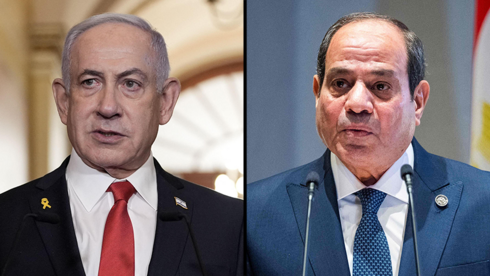
The recent announcement by the UAE Ministry of Defense regarding Egyptian President Abdel Fattah el-Sissi’s inspection of a fighter squadron in the UAE has stirred considerable speculation. The Egyptian government chose to remain silent on the matter, resulting in further intrigue.
Egypt’s Military Presence in the Gulf
Subsequent reports from a senior Egyptian political source revealed that Egyptian military forces are not only stationed in the UAE but also in four other Gulf nations, deployed without a formal request. The Egyptian administration attributed its silence to the need to maintain “regional balances,” positioning itself as a mediator in the ongoing geopolitical dynamics. Such deployments reflect a proactive approach to security, aimed at reinforcing Egypt’s role as a pivotal defense provider in the Gulf, showcasing its military capabilities amid rising regional tensions.
Interestingly, the UAE’s announcement was met with accusations from Arab analysts who perceived it as an attempt to undermine Egypt’s credibility in the region. This development raises questions about the strategic contradictions inherent in Egypt’s security policy. While Egypt aims to emerge as an essential security player in the Gulf, it simultaneously avoids formal agreements that would grant it coherence within the existing regional defense frameworks.
The Strategic Dilemma of Egypt’s Deployment
The strategic dilemma faced by Egypt is significant. Despite its willingness to position forces in the Gulf, it shies away from publicly acknowledging an alignment with the established security architecture, primarily driven by U.S. command frameworks. With operations under U.S. Central Command since 2021, this framework integrates Israel into the regional defense conversation—an association that Egypt is hesitant to embrace openly.
As the Gulf states grapple with the fading reliability of the U.S. security umbrella and the increasing sophistication of Iranian threats, they are compelled to establish alternative defense partnerships. Egyptian air defense assets, alongside those from Pakistan and Morocco, have been deployed to bolster security in various Gulf nations. This demonstrates the genuine necessity for capable military collaboration but highlights the incomplete nature of the strategic framework Egypt is reluctant to fully join.
Iran’s Position and the Regional Security Landscape
The operational void created by Egypt’s limited engagement raises significant concerns. Iranian military capabilities, particularly in drone technology, remain a primary coercive tool against Gulf nations. While Egyptian fighters enhance regional defense against such threats, they alone cannot fill the gaps left by Egypt’s reluctance to participate in a comprehensive defense network. This situation underscores Iran’s strategic understanding of regional dynamics, allowing it to exploit any seams left by incomplete security partnerships.
Moreover, while Egypt’s military presence provides a localized defensive capability, it does not bolster an integrated defense architecture that is profoundly needed. The potential for enhanced cooperation, as demonstrated by secret meetings involving military representatives from Egypt, Israel, and Gulf nations, remains overshadowed by Egypt’s fears of public perceptions regarding its relationship with Israel, particularly amid ongoing tensions with Iran.
In conclusion, while Egypt’s military deployments in the Gulf may superficially enhance local security against Iranian provocations, they’re emblematic of a broader disconnect. To foster genuine regional stability, Egypt must reconcile its military contributions within a more cohesive security framework, ultimately enabling it to deter Iranian threats more effectively while navigating the complex web of regional politics.