
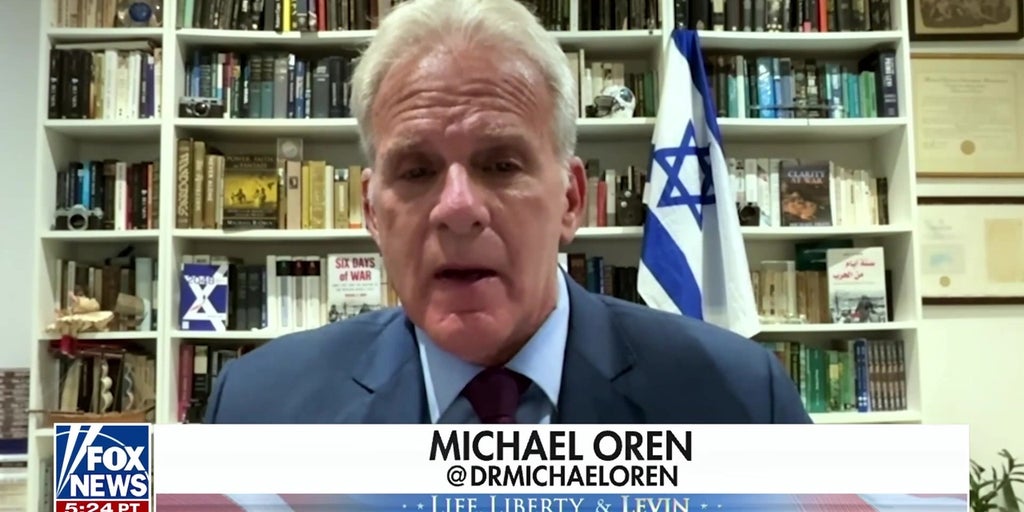
In a recent discussion on “Life, Liberty & Levin,” former Israeli Ambassador to the United States, Michael Oren, shed light on critical geopolitical issues concerning Israel, Iran, and the pivotal Strait of Hormuz. His insights provide a deeper understanding of the regional dynamics and the challenges facing Israel in its quest for stability and security.
The Strategic Importance of the Strait of Hormuz
The Strait of Hormuz serves as a strategic waterway for global oil shipments. Nearly a fifth of the world’s oil supply passes through this narrow passage, making it a key point of interest for not only Israel but also for world powers like the United States and Iran. As tensions in the region escalate, control and security of this vital corridor have become increasingly crucial. Oren emphasized that any destabilization in this area could have far-reaching consequences not just for neighboring countries, but for global economies reliant on uninterrupted oil flows. His perspective highlights the interconnectedness of energy security and geopolitical stability.
Israel’s Position in the Regional Landscape
Oren articulated Israel’s varied interests in the context of a volatile Middle East. With Iran continuously pursuing nuclear capabilities and engaging in aggressive regional tactics, Israel finds itself at a significant crossroads. The former ambassador discussed how Israel seeks to tackle the Iranian threat while also maintaining its alliances with the U.S., Gulf States, and other nations. The Israeli government, under Oren’s insights, aims to navigate these complex relationships while preparing for potential confrontations in a climate filled with uncertainty.
Challenges and Opportunities Ahead
Oren did not shy away from discussing the complexities facing Israel today. He noted that while threats abound, there are also opportunities for collaboration and innovation. For instance, the Abraham Accords have opened new channels for cooperation between Israel and some Arab nations. Yet, Oren cautioned that ongoing hostilities and uncertain political landscapes require continual vigilance. To ensure lasting peace and security, he calls for strategic partnerships and an unyielding commitment to achieving Israel’s national goals.
The Path Forward for Israel
In summarizing his views, Oren expressed optimism for Israel’s future amidst these challenges. He believes that through strategic foresight, robust alliances, and proactive diplomacy, Israel can bolster its security. The former ambassador insists that the international community must understand the stakes involved in the Middle East. Greater investment in diplomatic initiatives and stronger ties with allies will be indispensable as Israel faces both immediate challenges and long-term aspirations.
Oren’s remarks underscore the necessity for ongoing dialogue and collaboration to navigate this multifaceted geopolitical landscape. The complexities surrounding Israel, Iran, and the Strait of Hormuz highlight a broader narrative that demands the attention of policymakers, strategists, and citizens alike. As the world watches, the evolution of these relationships will undoubtedly shape the future of not only the Middle East but also global stability.