
Archaeological discoveries continue to captivate the world, and recent findings in Egypt are no exception. The unearthing of ancient artifacts, including significant Pharaonic funerary items and a striking marble head of Aphrodite, adds to the country’s rich historical tapestry. These revelations come at a time when Egypt is actively seeking to revitalize its tourism sector, which has faced challenges in recent years.
Significant Discoveries in Beni Suef
The recent excavation in Beni Suef, approximately 130 kilometers south of Cairo, has yielded remarkable artifacts. Among the notable findings is the remains of a Roman basilica, alongside the head of Aphrodite, the Greek deity associated with love and beauty. This discovery was made in the ancient necropolis of Ehnasiya, historically known as Heracleópolis Magna, a key urban center in ancient Egypt.
Archaeologist Mohammed Abdel-Badei, who leads the antiquities department at the Supreme Council of Antiquities, reported that large stone blocks, some weighing up to 45 tons, were uncovered. These blocks served as pillars for the basilica, with three blocks still standing in their original positions. The intricate details of the Aphrodite head, measuring approximately 24 by 25 centimeters, vividly capture the classical artistic traditions of Greek and Roman artistry.
Historical Context and Artistic Significance
Inscriptions related to Senusret III, a prominent ruler from Egypt’s 12th Dynasty, have also been unearthed. His reign, which lasted from 1837 to 1819 B.C., left a significant mark on Egyptian history. The inscriptions discovered include his throne name and birth names, showcasing the artistry and craftsmanship of that era. Accompanying these were fragments of wall statues and terracotta molds believed to have been utilized for crafting coins during the Roman period. Such findings underscore Ehnasiya’s status as an active commercial hub during the Roman Empire.
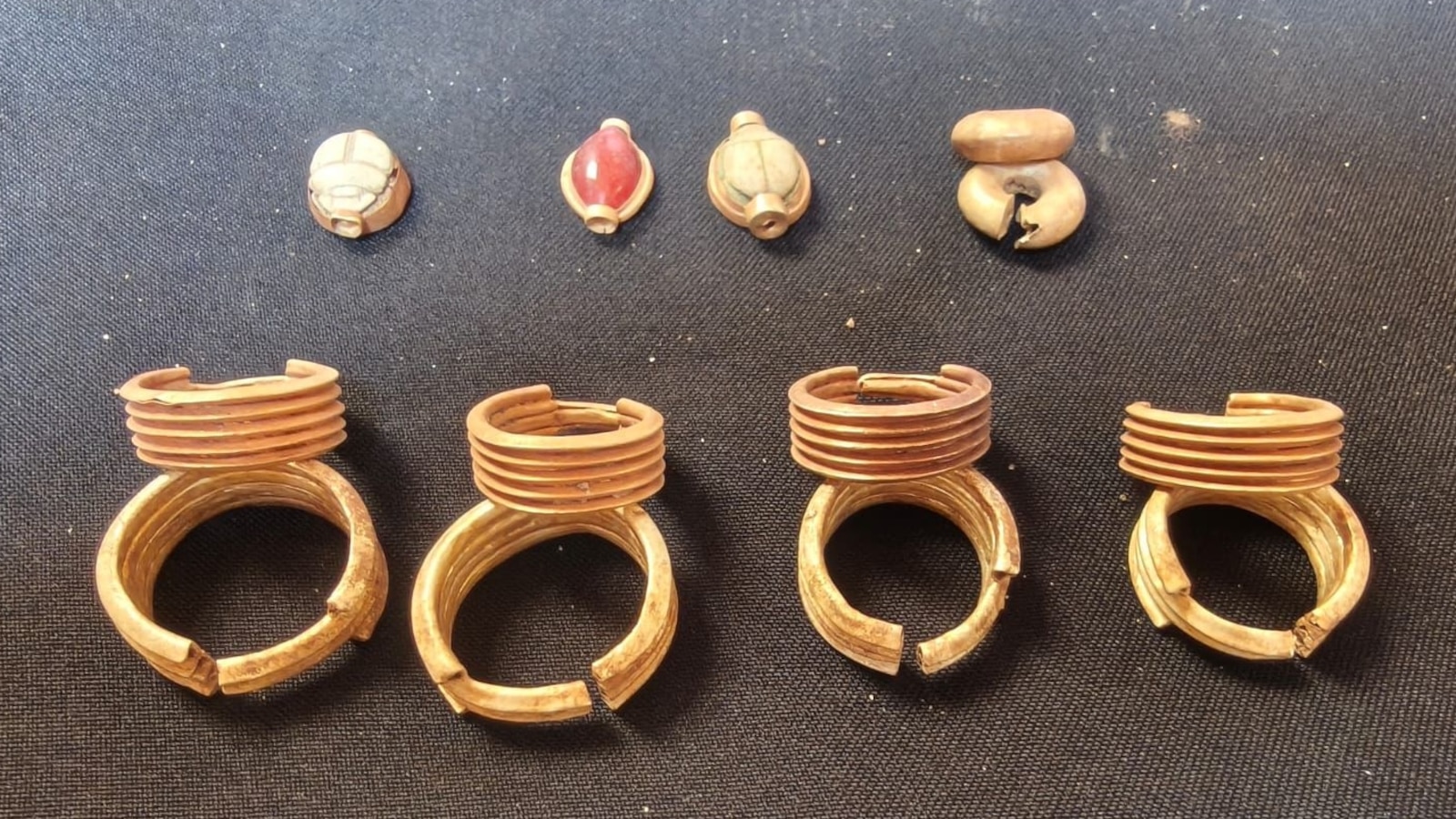
In Cairo, archaeologists made another significant discovery, uncovering a nearly complete set of funerary furniture in the Matariya neighborhood, once part of ancient Heliopolis. This site revealed a mudbrick burial with gilded remains believed to belong to a military figure, as well as a cache of cosmetic items, including a copper mirror and alabaster kohl containers. Further, five pairs of gold-colored earrings of varying sizes were also found, adding to the luxury associated with funerary practices of that time.
Tourism and Economic Revival Efforts
These archaeological discoveries are part of a broader initiative by the Egyptian government to boost its tourism industry, which has faced significant setbacks due to political turmoil and global events, including the COVID-19 pandemic. The recent inauguration of the Grand Egyptian Museum near the Giza Pyramids serves as a cornerstone of efforts to draw tourists and rejuvenate the national economy.
The impact of these discoveries on the tourism sector could be substantial. With a record of approximately 19 million visitors in recent years, reflecting a 21% increase, Egypt is witnessing a recovery in tourism. The early months of this year also showed promise, with 6.1 million tourists compared to 5.7 million in the same period in 2025.
As archaeological projects continue to unfold, they are not only enriching our understanding of Egypt’s ancient past but also playing a crucial role in the country’s economic revitalization. By showcasing its rich heritage, Egypt aims to attract visitors hungry for knowledge and adventure, ensuring that its historical narrative remains alive and vibrant for generations to come.