
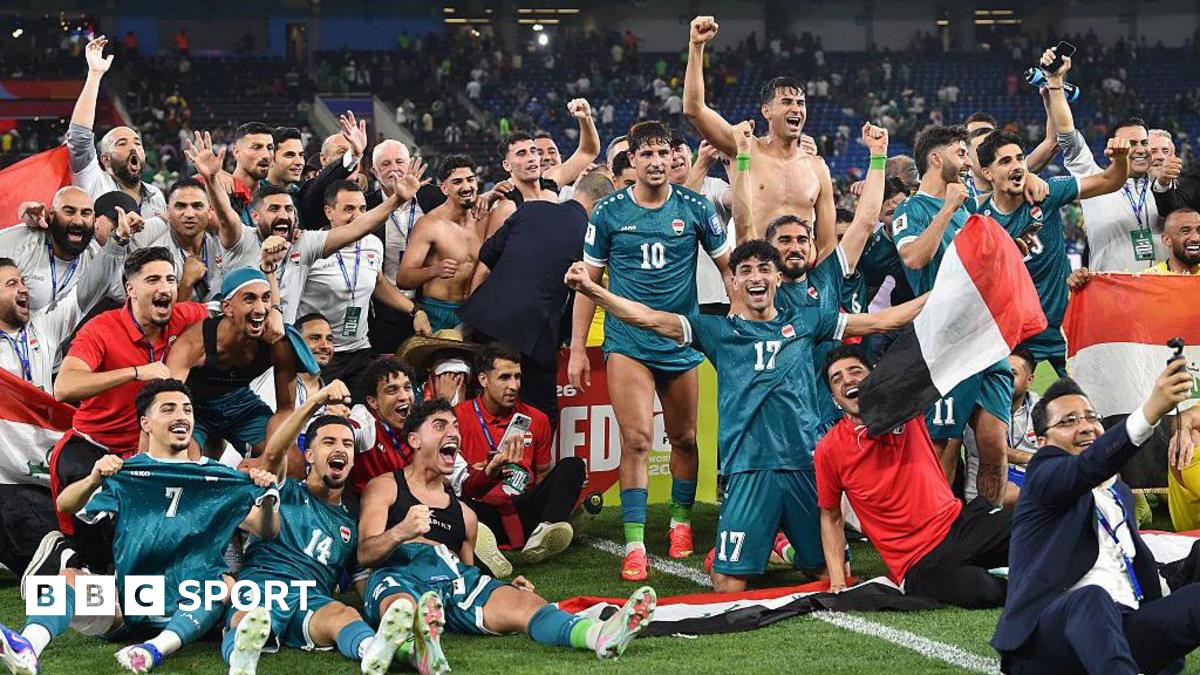
Iraq’s journey to the 2026 World Cup has become a momentous achievement as they secured their spot by defeating Bolivia in Mexico. This location holds special significance as it marks the site of Iraq’s inaugural World Cup appearance in 1986. The team’s previous experience was bittersweet; they faced formidable opponents and lost all three matches. However, the hope that now fills the hearts of Iraqis is palpable, amplified by the dreams of a younger generation eager to show the world their skills on this grand stage.
A Legacy of Hopes and Challenges
Karim Allawi, a former player from the 1986 squad, reflects on the past as he prepares to watch Iraq compete against Norway, France, and Senegal in their upcoming matches. Now a devoted fan, the 66-year-old is filled with anticipation for the games set to begin on June 16 in Boston. “This is a truly challenging group, perhaps tougher than what we faced in 1986,” Allawi said, acknowledging the capabilities of their formidable rivals. France, a frequent World Cup champion, Norway, a rising power in European football, and Senegal, a seasoned team with multiple World Cup qualifications, make this grouping particularly daunting.
For Allawi and the 46 million football enthusiasts in Iraq, this event represents more than just competition; it symbolizes unity, hope, and the possibility of success. “I hope our team can achieve better outcomes than we did four decades ago,” he added.
A New Generation of Talent
What distinguishes this iteration of the Iraqi national team is the wealth of European experience among its players. Ranked 57th in the world, Iraq’s squad features athletes such as Ali Al-Hamadi of Ipswich Town, former Manchester United midfielder Zidane Iqbal, now at Utrecht, and Kevin Yakob, who recently helped AGF clinch the Danish championship. These players bring invaluable skills and exposure to high-level football, greatly enhancing Iraq’s potential in the tournament.
In addition, the appointment of Graham Arnold as head coach has proved to be a pivotal decision. Arnold, who previously led Australia to the second round of the 2022 World Cup, has guided Iraq through essential phases of their qualification journey. Securing a vital playoff victory against the United Arab Emirates was crucial and paved the way to their thrilling win over Bolivia. After a demanding route consisting of 21 matches, the team’s resilience paid off.
Unyielding Optimism Amidst Pressure
While the celebrations of qualification might have subsided, the excitement remains undimmed. Nawar Faeq Al-Rikabi, a TV sports reporter, emphasizes that despite being perceived as the underdog, Iraq possesses the ability to surprise many. The prevailing sentiment is one of low pressure on the players, allowing them to focus solely on their performances. “We have quality players capable of rising to the occasion,” Al-Rikabi remarked. The addition of a seasoned coach like Arnold could also be the game-changing factor, as seen in the past when even top teams struggled against underdogs like Australia.
Looking ahead, the goals for Iraq are clear yet ambitious. “To score more than one goal would be an achievement; winning a match would be monumental, and qualifying for the next stage would be phenomenal,” said Allawi. With fan support and the promise of a new era for Iraqi football, the nation is ready to make its mark on the world stage, rekindling the spirit of hope that has long defined its footballing narrative.